A new draft bill intended to guarantee access to cash machines all over Belgium will be discussed in the federal parliament on Tuesday. Consumer rights organisations feel that the legislation does not go far enough.
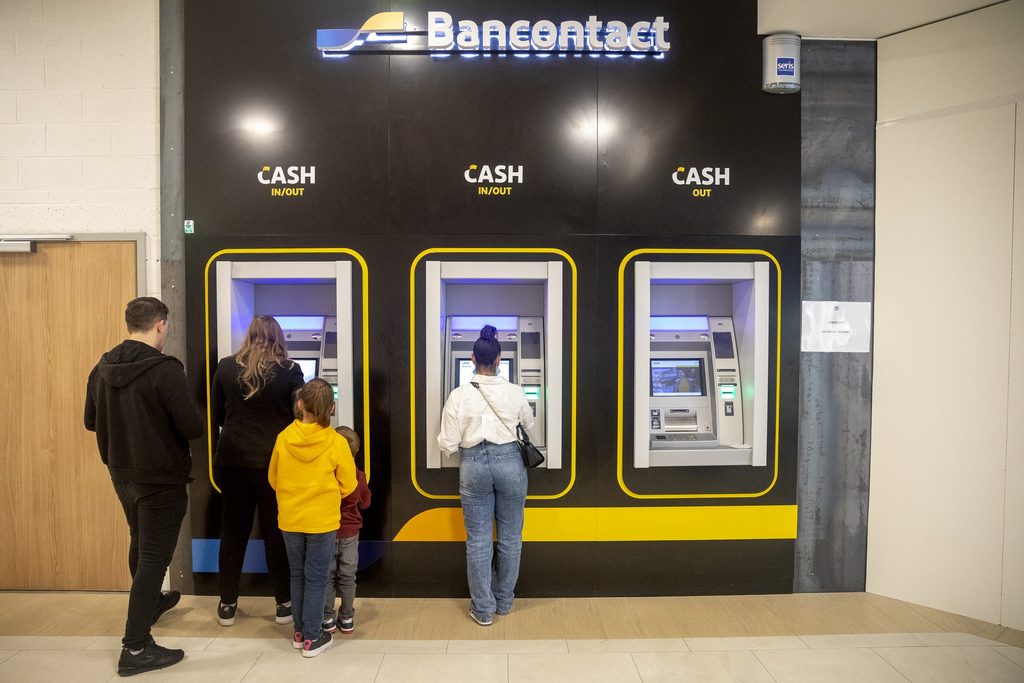
The draft bill to introduce a new chapter on cash machines into the Economic Law Code will be discussed in the Economic Affairs Committee. The aim is for the federal government and the banking sector to set out further rules on the geographical distribution, availability and accessibility of ATMs in the country.
“It is great that, after years of campaigning with SOS Cash, we are finally getting a legal basis for access to cash machines,” said Laura Clays, spokesperson for Testachats. “But unfortunately, we have to conclude that the agreements are too non-binding.”
“As the Council of State points out, the government would do better to impose the obligations regarding the accessibility and availability of cash machines on the banks via a Royal Decree, rather than through an agreement with the sector that is not even binding,” she said.
Missed opportunities and lacking safeguards
Consumer protection association Testachats stressed that the text does not state that finding an agreement is not mandatory, only that such an agreement may be concluded. Should no agreement be reached, there is no alternative provision to establish guarantees regarding the distribution, availability and accessibility of cash machines.
Fines are also only possible if the operators of the cash machines deliberately fail to comply with the rules set out in the agreement, and then only for those rules specifically designated by the federal government itself.
Testachats, along with organisations Financité and Okra, are pleased that legislation is finally on the way, but highlighted that the text is too vague. The organisations are therefore calling to be involved in the negotiations with the banking sector.
Additionally, they said that it leaves plenty of scope for removing even more cash machines, and misses the opportunity to enshrine a number of essential safeguards regarding access to cash machines in law.
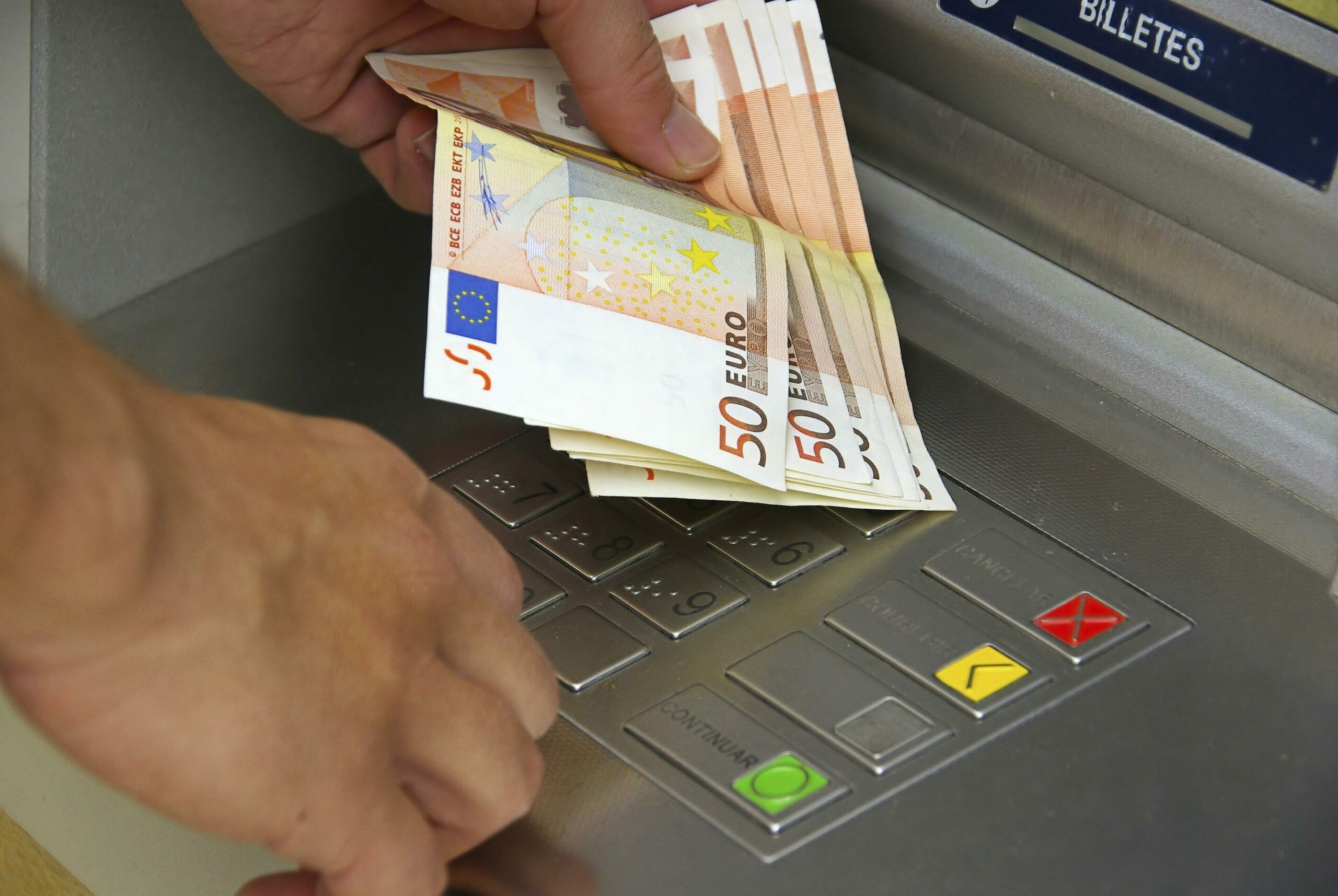
ATM, cash point. Credit: Belga
The draft bill once again raises the possibility of removing cash machines that are deemed insufficiently profitable. And if the number of cash withdrawals falls, the agreement can also be renegotiated.
For Testachats, Financité and Okra, this is a dangerous line of reasoning: access to cash is a right, they stressed. The banking sector must guarantee that right, even in areas where it might be less profitable.
“For older people who are digitally vulnerable, having a cash machine nearby is not just a matter of convenience,” said Herman Fonck, chair of OKRA Advocacy. “Their financial independence stands or falls on having easy access to cash in their immediate vicinity.”
Of people aged 75 and over, 30% of people do not have a smartphone and have no internet at home: without an ATM providing access to cash and allowing them to check their account balance, they have to rely on family members or third parties for all their financial affairs.
Additionally, according to the draft bill, cash machines could be removed if local authorities were to levy a tax on them. Such a regulation puts direct pressure on local authorities, particularly in Wallonia, where this type of tax is more common.
Cash is a right
The text of the bill therefore completely ignores all the points that Testachats, Financité and Okra have for years considered essential to continue guaranteeing access to cash machines:
- A maximum distance to the nearest cash machine. The organisations are calling for a maximum distance by road of 5km in rural areas, 3km in intermediate areas and 2km in towns and cities.
- A minimum number of ATMs in densely populated areas. The organisations are calling for city centres to have more ATMs to prevent queues.
- A reasonable supply of small denomination notes. €5 and €10 notes are, however, indispensable for people on a tighter budget.
- A guarantee of one cash machine per borough. According to calculations by Financité, 108 municipalities currently have only one cash machine, with 51 of these being bpost cash machines, even though bpost is not a bank. Yet it is the banks that must guarantee this geographical distribution.
“We call on the government to enshrine these guarantees in law, so that access to cash is guaranteed for all Belgian consumers,” said Laura Clays.
Additionally, the draft bill also sets out a remuneration structure for ATM operators. Testachats, Financité and Okra view this positively: banks that do not have their own ATMs, but whose customers do withdraw cash from other banks’ ATMs, will have to contribute to their funding.
Credit: Belga / Yves Boucau
The three organisations believe this could even go further. “Every institution should contribute in proportion to its actual market share,” said Anne Fily, a financial inclusion researcher at Financité.
According to Financité’s calculations, the four largest banks currently manage only 44% of ATM locations, while they represent around 75% of customers. Conversely, some banks have proportionally more ATMs than their market share would justify. This imbalance should be corrected.
The draft bill provides for an agreement to be negotiated between the federal government and the banking sector. “Previous negotiations have always led to questionable outcomes. Our organisations fear that the same method will lead to the same results,” said Fily.
Testachats, Financité and Okra are therefore calling on Parliament to take their comments into account when debating the draft bill, to involve them in the negotiation process with the banking sector, and to ensure that the new text resulting from the negotiations is resubmitted to Parliament so that it can exercise full oversight.
