
Armistice Day is commemorated across Europe, but only three countries on the continent observe the anniversary of the end of the First World War as a public holiday.
Belgium is one of them, as it had seen some of the bloodiest battles of the Great War. Commemorations are organised across the country, while various sectors close for the day and public services operate at a reduced level.
Marking the effective end of the First World War, Armistice Day is every year on 11 November, when the countries remember the millions of lives lost.
German and Allied forces officially signed the Armistice agreement at around 05:00 on 11 November 1918, following days of negotiations after heavy losses forced the Germans to accept an end to fighting.
The other European countries observing Armistice Day are France and Serbia.
Honouring the Unknown Soldier
The Armistice ordered both parties to "terminate hostilities on the Western Front, on land and in the air, within six hours of signature," ushering peace into Europe "on the eleventh hour of the eleventh day of the eleventh month."
The document also ordered the "immediate evacuation" of German troops in invaded countries such as Belgium, France and Luxembourg "within 15 days following the signature of the armistice."
It specified that German soldiers who failed to leave those territories within this period would be taken as prisoners of war.
Since the Armistice was signed, monuments were constructed in cities across Europe to pay tribute to those who died in the war, most notably the Tomb of the Unknown Soldier, which was erected to honour the unidentified soldiers.
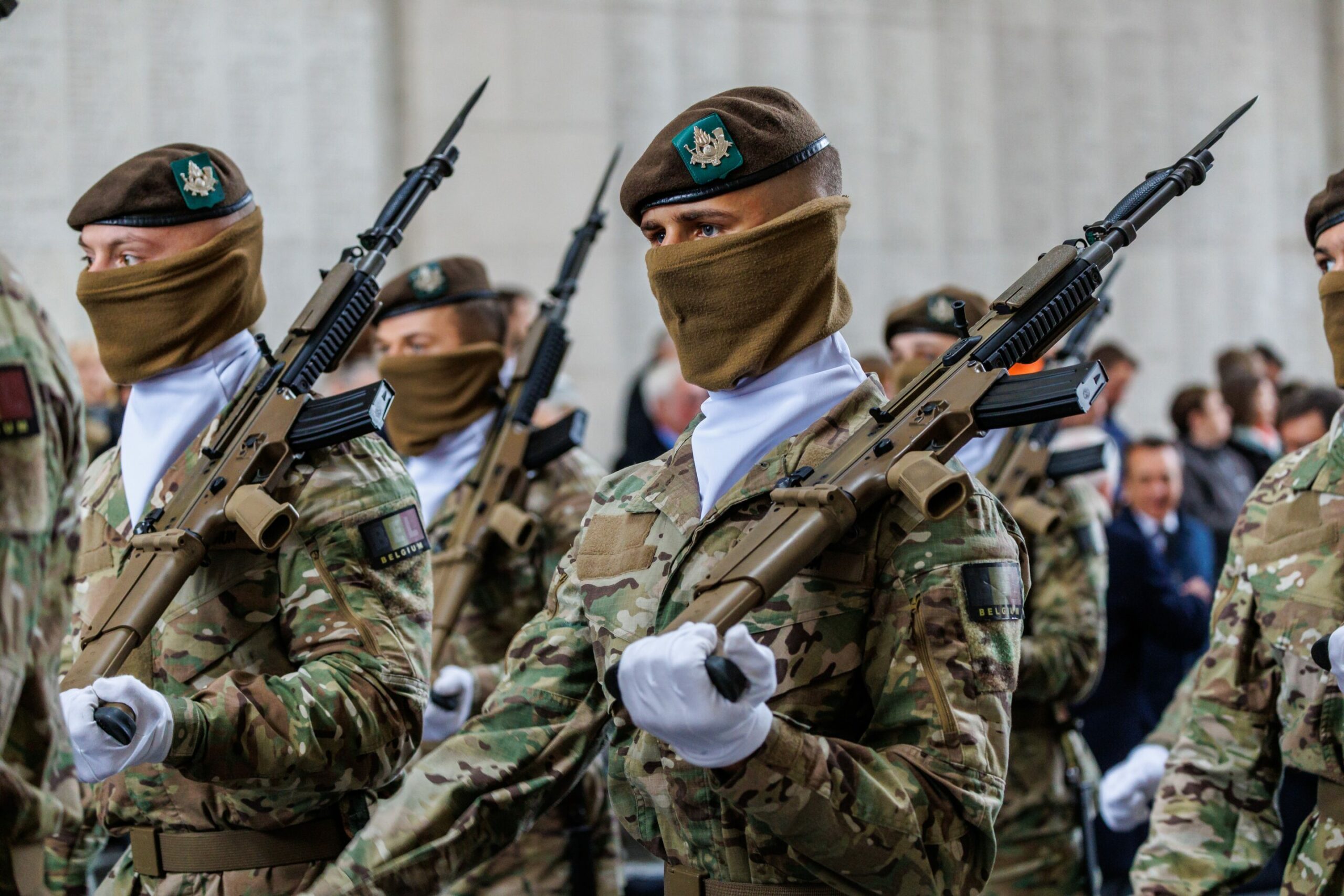
Belgian soldiers marching with rifles during the 'Poppy Parade' walk of the Last Post ceremony. Credit: Belga/Kurt Desplenter
In Belgium, this symbolic monument lies at the foot of the Colonne du Congrès in Brussels, which is crowned by a statue of Leopold I, the first Belgian monarch and celebrates the creation of the Belgian constitution.
On 11 November, commemoration events are organised throughout the country. Every year, Belgium's King Philippe takes part in a military ceremony in honour of the deceased of the First and Second World Wars, as well as soldiers killed in humanitarian and peace missions since 1945.
As well as the King, the Presidents of the House and Senate, and representatives of the federal and regional governments will also be present during the ceremony.
In the city of Ypres, the scene of one of the war's bloodiest battles as well as of the unofficial Christmas Truce between German and British soldiers, crowds usually attend a commemoration ceremony, during which army officers' rendition of the Last Post echoes through the Menin Gate war memorial.
What's open today?
As with other public holidays in Belgium, public and administration services will not operate on 11 November, and neither will banks. Postal services are also closed for the day, meaning no letters, packages or newspapers will be delivered.
Belgium's national railway service SNCB-NMBS, bus service De Lijn and Brussels public transport company STIB-MIVB will continue to operate during the bank holiday, but at a reduced Sunday service schedule.
For groceries, the vast majority of supermarkets across the country – Aldi, Cora, Lidl, Colruyt, Makro, and Okay – will also be closed. Shops that usually remain open on Sundays and public holidays are likely to be open, such as most Carrefour and Delhaize supermarkets, as well as some Intermarché and Spar shops, albeit with adjusted hours. The website of the store in question usually shows whether it is open.
Various smaller stores may remain open for the holiday, depending on the choices made by their independent shop owners. Many restaurants, bars and cafés will remain open to the public, unless they are usually closed on Wednesday.
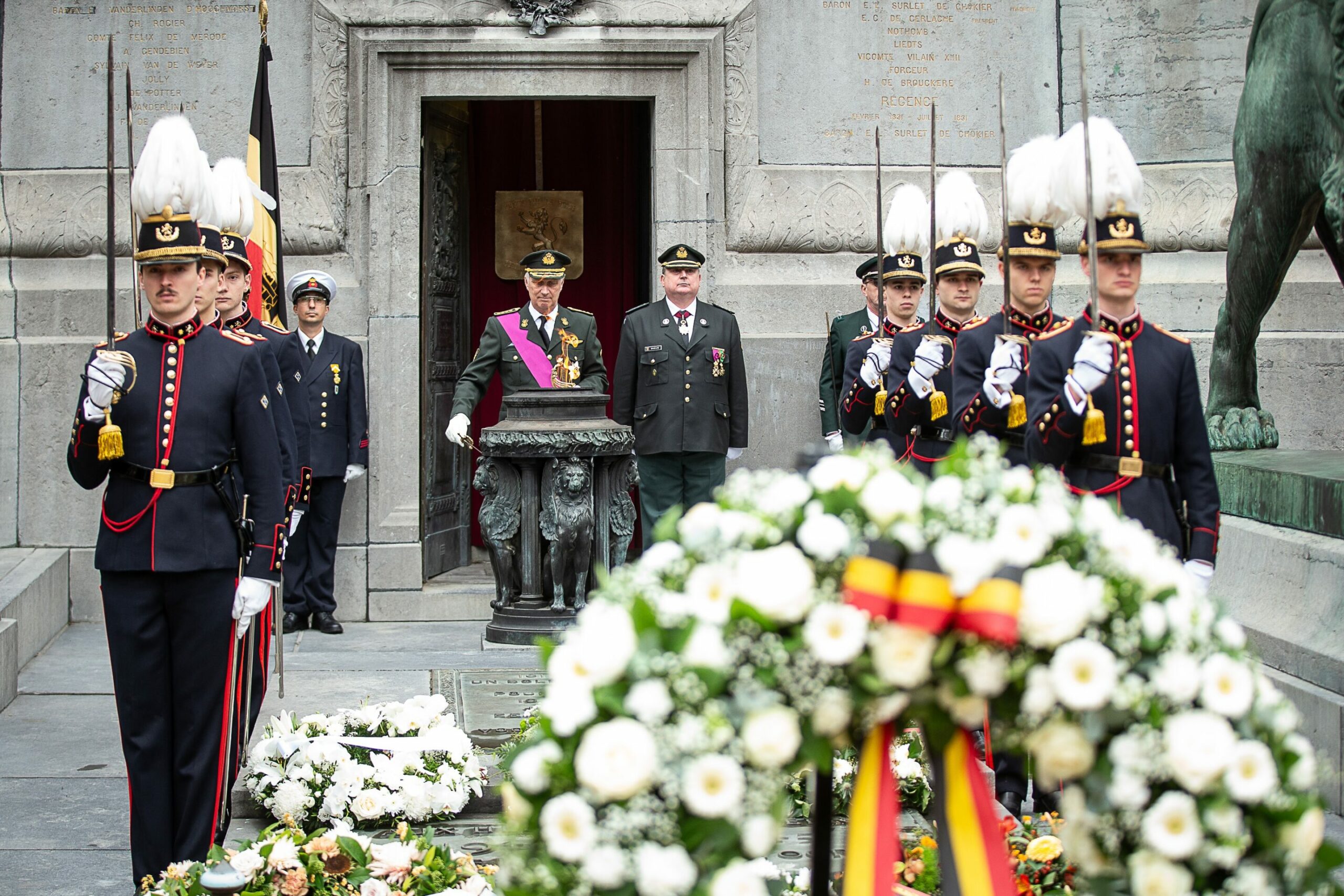
King Philippe of Belgium pictured during a World War I commemoration at the 'Tomb of the Unknown Soldier' monument in Brussels, Tuesday 11 November 2025. Credit: Belga/James Arthur Gekiere
Many shopping malls and retail shops across the country, such as City 2 and Docks Bruxsel, will also remain closed. Most other stores, such as those on Rue Neuve in Brussels, will be shut as well.
However, various smaller independent shops may open, depending on their management.
Most pharmacies will remain closed, but people can contact the pharmacist-on-duty in their municipality for urgent needs and medication. The nearest on-duty pharmacy can be found here.
While most doctors will not be working either, people in need of medical care on this public holiday can get help from an on-call doctor by dialling 1733 (possible in Dutch, French, German and English).
Police services remain accessible at all times, but district offices are closed, meaning they are not available for administrative matters. Those needing urgent police assistance should call the emergency number 112.
