
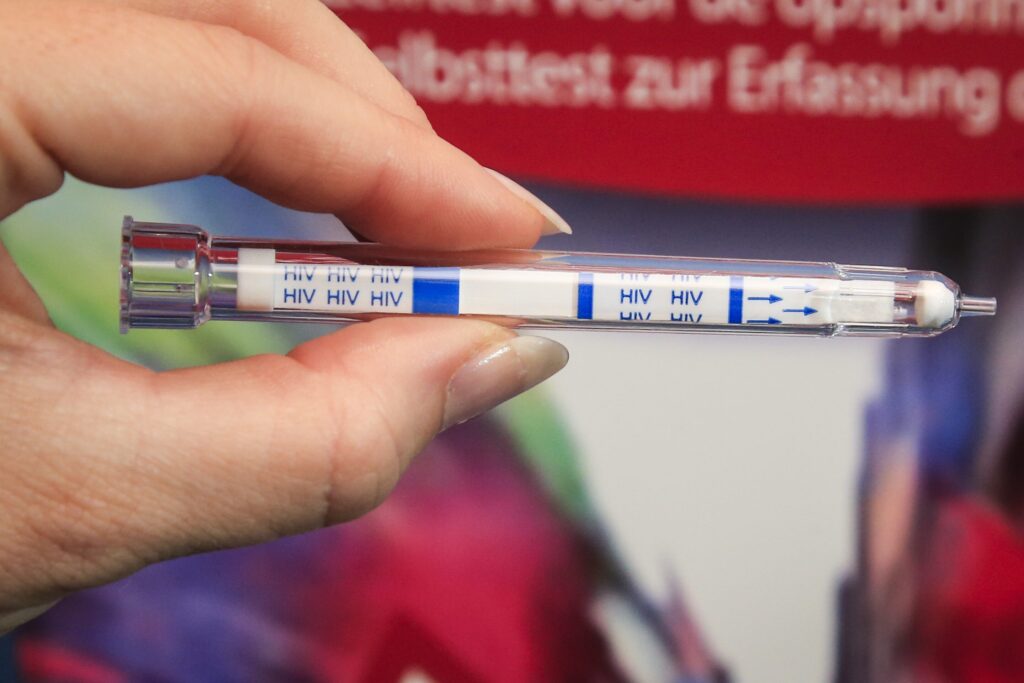
A total of 603 people were diagnosed with HIV in Belgium last year, down 7% from a year before, according to data from Belgium's national health institute Sciensano.
The decrease is in large part due to a reduction in diagnoses in men who have sex with men (MSM), who remain the largest group of new diagnoses in Belgium. Last year, 249 new HIV infections were detected among MSM in Belgium.
According to Sciensano, preventative strategies and awareness around medication like PrEP, which prevents HIV infections, have had a positive impact on the spread of the virus among MSM. Additionally, with one in five infections among MSM detected at an early stage, access to HIV testing remains relatively strong.
Another 312 HIV infections were diagnosed in Belgium as being caused by heterosexual intercourse. Women from sub-Saharan Africa made up a large part of this group, with 92 diagnoses, a higher number of which were detections in later stages, increasing health risks and complications.
Related News
- Rage-bait: Meet the influencers calling Brussels the 'worst city in Europe' just for views
- A roof in exchange for sex: The hidden cost of trying to stay off the streets in Belgium
- New rules push many more Belgians to work beyond retirement age
Belgium is on track to reach the targets set out by UNAIDS, which coordinates the global response to the HIV epidemic. The World Health Organization (WHO) aims to eliminate HIV as a public health issue in Europe by 2030, requiring the number of new infections to decrease at an accelerated pace.
Sciensano highlights the numerous preventive measures available in Belgium, but emphasises the need to raise awareness and access to condoms, regular testing, PrEP, PEP and HIV treatment.
Sensoa, the Flemish expertise centre for sexual health, is happy with the decrease. "The ongoing focus on prevention, testing and treatment is paying off, but there is still work to be done. Prevention is becoming increasingly tailored to individual needs."
The centre highlights two areas of improvement: making it easier for young MSM to have access to PrEP and raising awareness among African communities around HIV testing.
Sensoa will focus on young MSM who have recently settled in Belgium, with special attention to the Latin American community. Within African communities, Sensoa works with local partners to provide information and offer HIV testing outside of medical facilities.
