EU lawmakers agreed last month to ban meaty names, such as bacon and steak, for plant-based alternatives. How are Belgium's self-proclaimed 'vegan butchers' faring in the face of the controversial new legislation?
The EU Council reached a provisional agreement on 5 March to ban 31 'meaty' labels from plant-based products. These include drumstick, steak, ribs, liver, bacon, chicken and beef. Veggie burgers and sausages were also initially on the chopping block, but in the end, they were spared and will therefore remain on the menu.
The central reasons cited for the controversial decision were to protect farmers "against unfair competition" and avoid consumer confusion, according to French MEP Céline Imart of the centre-right EPP group. Imart spearheaded the clampdown on plant-based products and described the March agreement as an "undeniable success for our farmers", Euronews reported.
"By enshrining the use of terms 'steak' and 'liver' for our farmers' products and by committing to extend the list during the next negotiations, Parliament has taken a decisive step forward," she added.
German Chancellor Friedrich Merz also backed the ban, saying, "A sausage is a sausage. Sausage is not vegan."
But the decision has sparked heated debate across the board and divided opinion.
David Flochel, the chief executive of Quorn Food, said, "In 40 years, not once has a customer told us they bought a Quorn product believing it to be meat."
The familiar terminology makes it "easy for those who want to integrate these options in their diets, and the new rules will increase confusion and are simply not necessary," said Agustín Reyna, director general of The European Consumer Organisation.
"Europe should be backing innovative entrepreneurs, not putting new obstacles in their way," added Dutch Green MEP Anna Strolenberg.
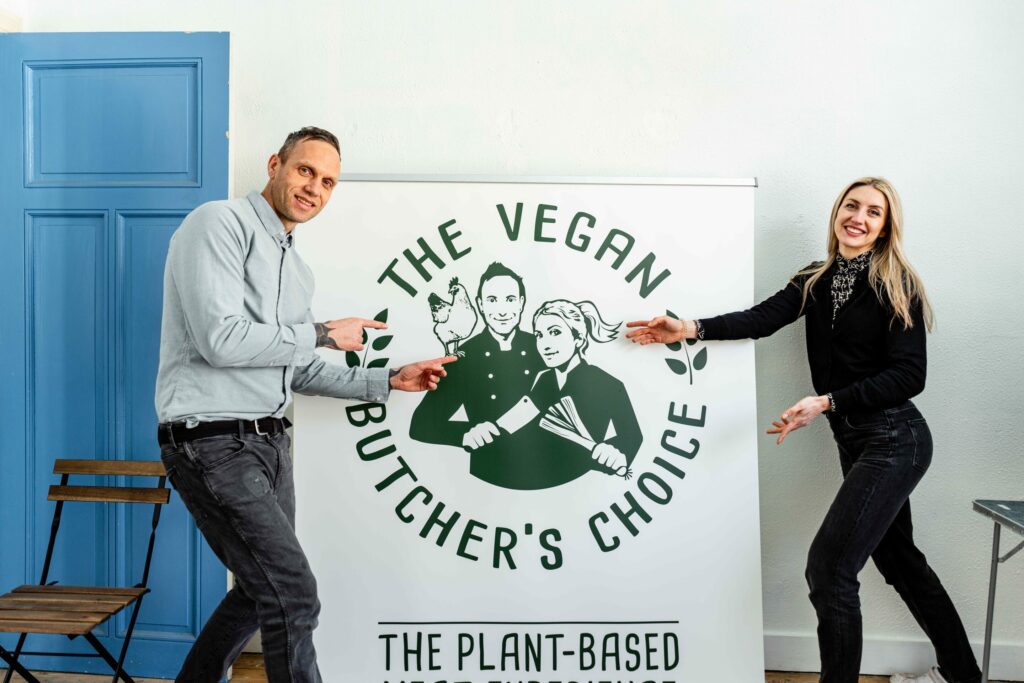
Two such innovative entrepreneurs are Federica Boddi and her husband and business partner Benoit Van den Broeck.
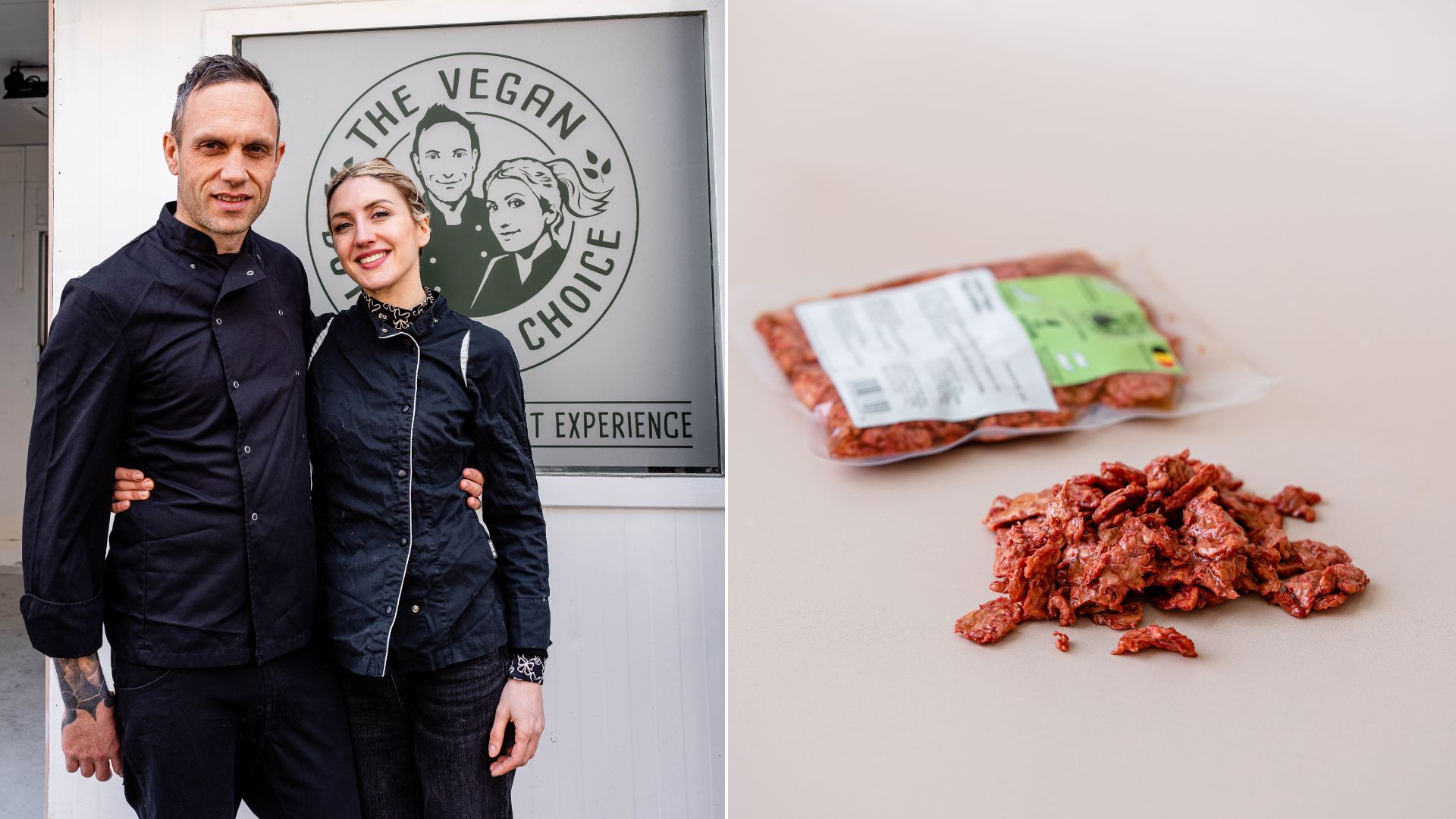
Benoit Van den Broeck and Federica Boddi. Credit: Pumpkin Agency
Boddi, 34, who hails from Genoa in Italy, previously worked in the EU bubble and became vegan 13 years ago. She met Van den Broeck, 47, from Bruges, on the vegan scene in Brussels. He had been volunteering as an animal rights activist, filming abused animals in Belgian slaughterhouses and exposing scandals.
In April 2019, the pair decided to pour their savings into becoming Belgium's first 'vegan butchers' – the only business of its kind in the country.
Van den Broeck had no prior culinary training, but with a great deal of research and testing, he developed his own recipes, which immediately became a hit. After a few months, they even won the Belgian Vegan Awards as the best newcomer, up against the well-established Liu Lin (now closed) and Plant A Pizza.
Corporate catering was a game-changer for the small business, and they got through Covid-19 unscathed thanks to their home delivery system, soldiering on from 05:00 until 23:00 every day. "Benoit was doing the deliveries. I remember that sometimes in one afternoon he had to deliver to 35 addresses," Boddi tells The Brussels Times.
Thanks to their web shop, they now deliver all over Belgium, and their products can be found on the shelves of Delhaize, Carrefour, and most Intermarché shops in Brussels.
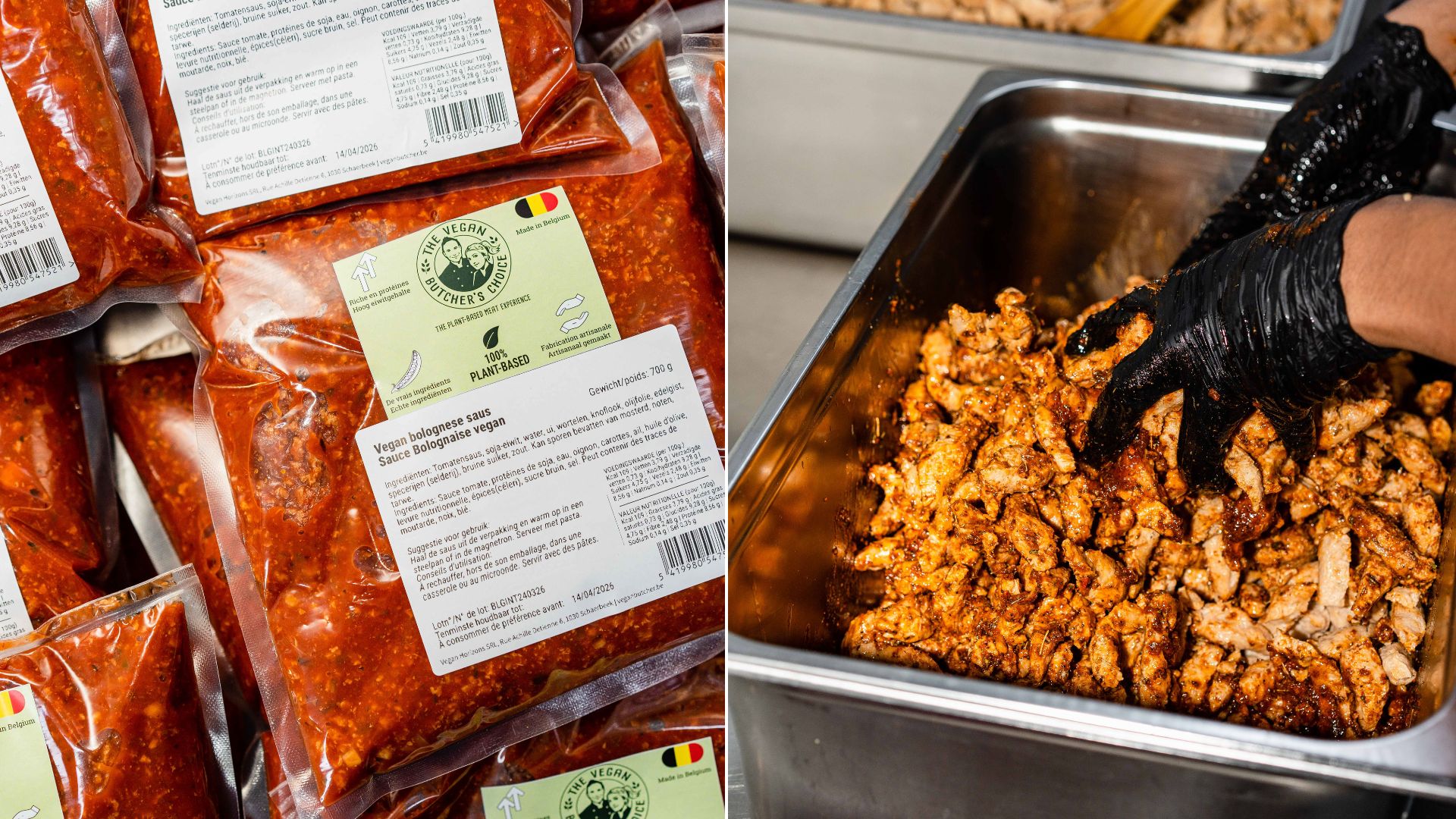
But what differentiates them from supermarket brands is the ingredients and nutritional value. "We make [our products] with really natural and as raw as possible ingredients," Boddi says.
In supermarkets, she says, plant-based products contain various oils, E-numbers, and artificial colourings and flavourings.
"We work with plain ingredients, like beans, chickpeas, gluten, cashew nuts and onions, and we use beetroot powder and tomato paste for the colour. So it's really simple ingredients, which are then just assembled and seasoned with spices."
Credit: Pumpkin Agency
Texture is also a priority: "The problem with a lot of the healthy alternatives on the market right now is that you can buy a veggie burger that is vegetables and potatoes, but when you eat it, it's like a croquette. It's mushy, it doesn't have any protein, and it crumbles."
Their bestsellers include the Belgian classic Américain sandwich spread, gyros, chorizo and drumsticks, which use rice paper to create a chicken skin effect. "I'm very proud of all the products we have right now," Boddi says.
'They wouldn't eat vegan when offered it for free'
Although non-vegans have said the products are almost unrecognisable from the real meat version, the negative perceptions of plant-based products persist.
Belgian healthy food chain EXKi, for example, decided to stock the vegan butchers' Américain baguettes at its Porte de Namur branch, but the meat-free option flopped. "They loved the vegan baguettes – but they sold it so wrong, even the person in charge admitted it was a complete failure."
Overnight, all the meat baguettes were replaced with 'Vegan Américain', which no one wanted. "They wouldn't even eat the vegan one when offered it for free."
Boddi believes that, had the label featured 'plant-based' instead, or listed the ingredients, customers might have been more open to the idea.
"I think the word 'vegan' can be very repulsive because I think it creates some negative emotions in some people."
The couple have even wondered about changing the name of their brand, The Vegan Butcher's Choice, but have kept it because it's recognisable and gets people talking.
"It's a bit of an oxymoron. People get angry and say, 'How can you be vegan and a butcher?' I tell them it's a joke, but that we do butcher beans. And they get even angrier," she laughs.
'Ridiculous' and 'insulting' EU ban
Boddi finds the EU ban on meaty labels equally laughable. She cannot accept that anyone in favour of the legislation believes consumers are confused.
"It's just so ridiculous. I find it quite insulting. Do you really think people are that dumb? By law, you have to write that it's vegan or plant-based – you can see it's not meat and it's written there."
"I also think, is it that important? There are such big issues that we need to address in Europe, in terms of food and farming. Do we really have to waste all this time and energy to discuss terminology?"
The entrepreneur says it's a sign that powerful meat lobbies are losing momentum, and the meat industry is feeling threatened by the growing shift in people switching to plant-based diets.
She agrees that farmers must be protected, but shutting down vegan companies is not the way to do it.
Related News
- Tasting the world in Brussels: Our pick of the city's best restaurants
- European Parliament votes to ban 'veggie burger' labels
- Have you tried these veggie restaurants and cafés in Brussels?
"Meat has always been such a subsidised industry. Farmers who have small stocks and sell to big producers make very ridiculous money on the animals, but they are subsidised. It's thanks to those subsidies that they keep surviving. So that is a flaw in the system," she says.
"Meat is also sold way too cheaply. People say they would eat more plant-based products if they didn't cost so much. But it's not that the products cost so much, it's that the meat costs too little."
For her small business, she says the impact will be minimal. They'll still sell the products, but will just have to be creative with their labelling. "There are a lot of tricks to do that and avoid legislation. Like Alpro's 'This is not m*lk'," she says, referring to the EU's previous label ban for plant-based dairy products in 2017.
She adds, however, that she and her husband haven't yet given the new labels much thought. "That's how much it bothers me – I haven't even seriously thought about it!" she laughs.
Changing attitudes
When she was younger, Boddi was a fierce activist. She says she had a "black and white mentality" and felt angry at others who weren't willing to switch to a plant-based diet.
Now, she is more measured in her approach and says communication is key to changing attitudes.
"Some people feel threatened and think we're trying to 'veganise the world'. They say, 'For every vegan, I'm going to eat double the meat'. But I just try to talk to people and explain our reasons and help them understand why we do it."
Most of the couple's clients are not vegan. They are mainly flexitarians who are trying to shift to meat-free options for health reasons and because of food waste and overproduction.
"It's much better if 20 people still eat some meat, than one strict, extreme vegan, who hates on everybody and creates that stereotype. Unfortunately, the vegan stereotype is perpetuated by some people, but a lot of other vegans are not like that," she concludes.
