For international couples, the road to residency often demands a wedding certificate. Belgium offers a progressive alternative: the statutory cohabitation visa. This pathway allows partners to live together in Belgium without getting married.
While the process avoids the altar, it still requires navigating strict income rules and the infamous "orange card" bureaucracy. Here is how to master Belgian immigration and prove your relationship is "stable and lasting" without saying "I do."
Where most countries around the world require a legal marriage for a partner to join their spouse in their country of origin, Belgium has a unique approach to this issue. Rather than forcing marriage, which could add stress to most relationships, even healthy ones, Belgium allows your foreign partner to join you for a life filled with beer, waffles, and rain, sans marriage, via the statutory cohabitation visa.
The Type-C visa (obtained in the applicant's home country) allows the beneficiary to arrive in Belgium, register at the town hall under the address that their partner lives at, and sign a statutory cohabitation declaration. This declaration acts similarly to a marriage under Belgian law, but is much more easily dissolved. If the applicant is from a country that allows visa-free travel, they can arrive without the Type-C visa.
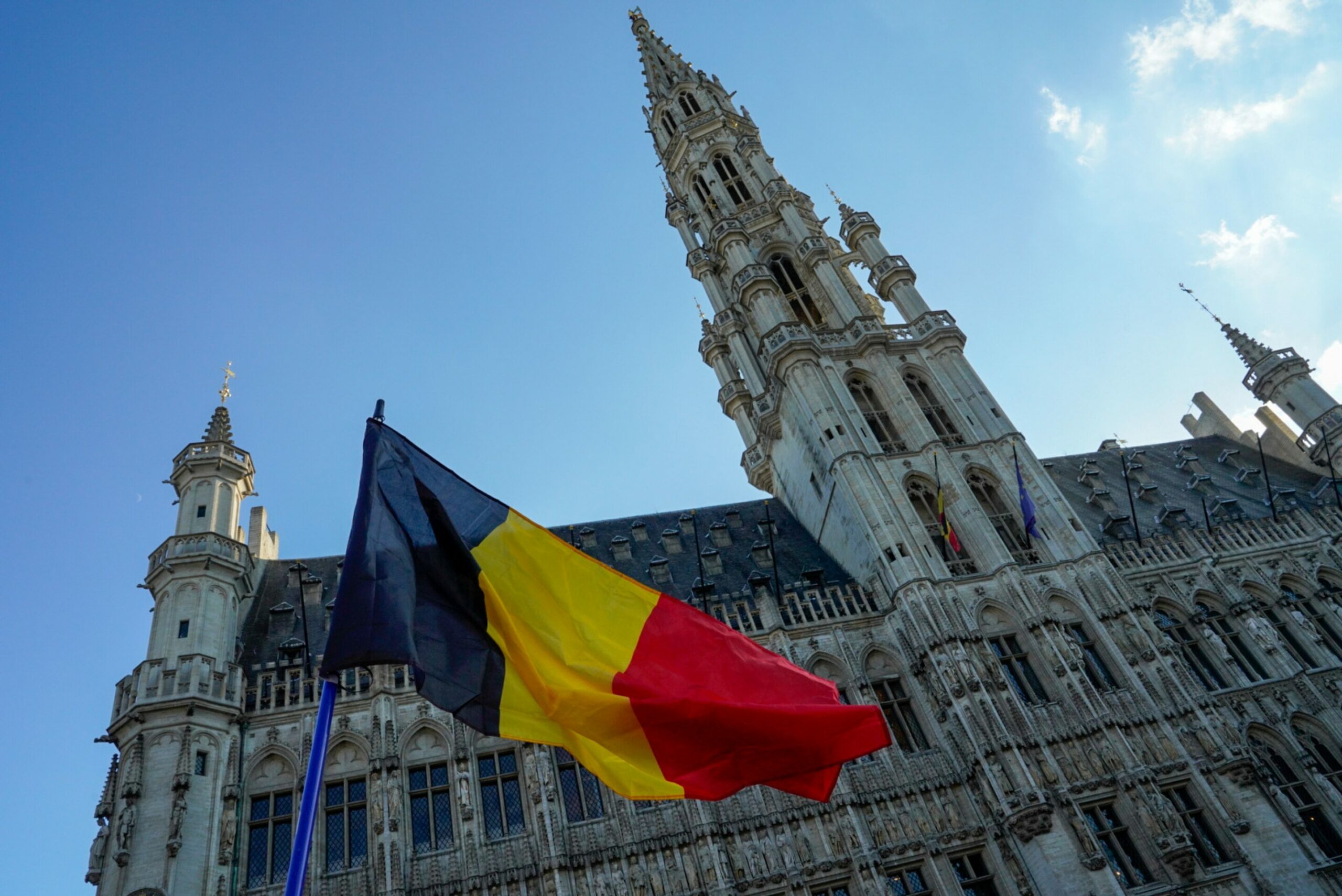
A Belgian flag flying in Brussels' Grand Place. Credit: Belga / Marius Burgelman
It is important to note that the Belgian Immigration Office recommends coming on a Type-D visa for applicants applying for legal cohabitation from abroad.
After signing the statutory cohabitation declaration, the non-Belgian partner will then receive their orange card (annex 19ter), a temporary residence status given for the time taken to process the application fully.
After a visit from the police to confirm that the party lives at the address given to the town hall, if no issues arise, they will then receive their F-card, a residence permit which is eligible for five years. If you complete five years of continuous residence in Belgium on an F-card, you can then apply for an F+card (permanent residence).
While other European countries, such as Germany or the Netherlands, offer similar schemes, the Dutch process requires much more proof of relationship, such as duration, exclusivity, lots of physical time spent together, etc., and the German version requires you to get legally married shortly after you arrive in the country.
Relationship requirements
According to the Belgian Immigration Office (IBZ), Belgium's relationship requirements are as follows. If you are not married, your partner can still join you in Belgium as long as your partnership is legally registered. This requires an official declaration of legal cohabitation made either in Belgium or through an applicable foreign authority.
Generally, both of you need to be at least 21 years old, though this age limit is lowered to 18 if you can prove you lived together for at least a year before coming to Belgium.
You must also prove your relationship is "stable and lasting" by showing that you lived together for a full year, or by proving you have known each other for two years with regular contact and at least three meetings totalling 45 days.
Having a child together also meets this requirement. Lastly, you both must be unmarried, not involved with anyone else, and your partner must live with you under the same roof.
Financial requirements
If you want to sponsor your partner's move to Belgium, you must prove you have a stable and regular income that is suitable to support everyone without needing any help from the government. As of April 1, 2026, your monthly net income must be at least €2,408.79, which represents 110% of the guaranteed minimum wage.
If you have other dependents, this amount increases by 10% for each person, regardless of whether they are already living in Belgium or are applying to join you.
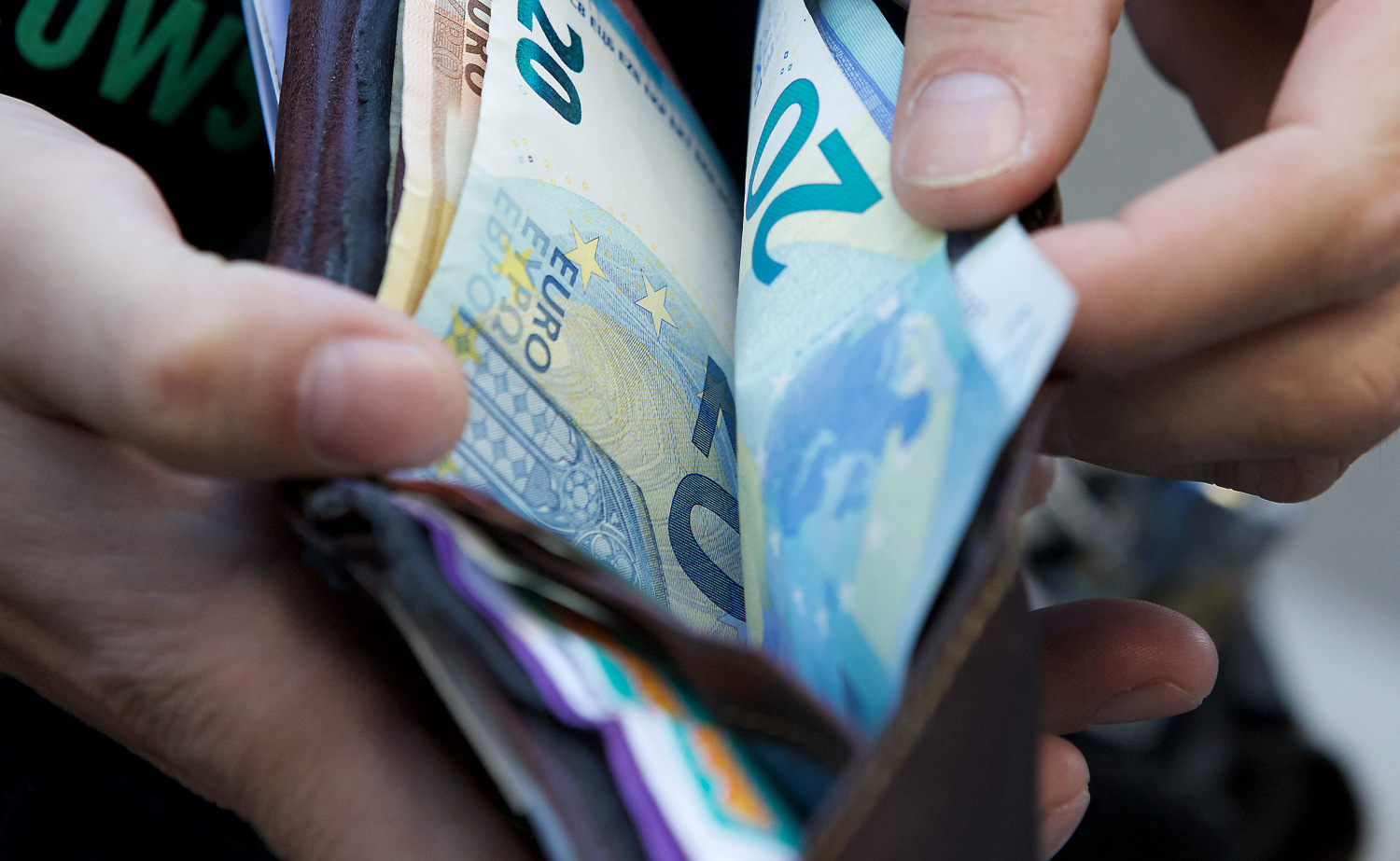
A wallet with euro bills. Credit: Belga
For example, if you are already in Belgium with one child and want your partner and two more children to join, you would need to earn the base 110% plus an extra 30% (10% for each of the three children). Generally, minor children and adults in your household who cannot support themselves are considered dependents.
Additionally, the Belgian half of the party will need to provide pay slips for 12 months to ensure that you have been making the required amount for at least one year, and the non-Belgian partner must also obtain a valid Belgian health insurance plan, which covers up to €30,000 of medical costs, before they can receive their residence permit.
Legal requirements
The person applying for the cohabitation visa must have a clean criminal record with no prior convictions or pending cases in their home country to be granted permission to reside in Belgium with their partner.
Mike's testimony from the process
Mike, a man in his mid-20s from the US, explained that the process was relatively straightforward but also more thorough than it seems on paper.
He claimed that the most time-consuming part was legitimising his relationship to the Belgian Government; they both had to submit photos of themselves together, boarding passes from trips they took together, and text messages to confirm the existence of their long-distance relationship. "The first part of the process was more time-consuming than difficult," he told The Brussels Times.
Once he was in the country, Mike said that the next steps were more stressful. He had to go to the town hall multiple times to receive his orange card, since the first two times he was told he didn't have the correct documents, despite being told different things by different workers.
"I'd go to one appointment, and they would tell us we needed something else, the next appointment the entire, the entire thing would be wrong. Like "Oh, the other worker gave you the wrong information, you actually need this document," he told The Brussels Times.

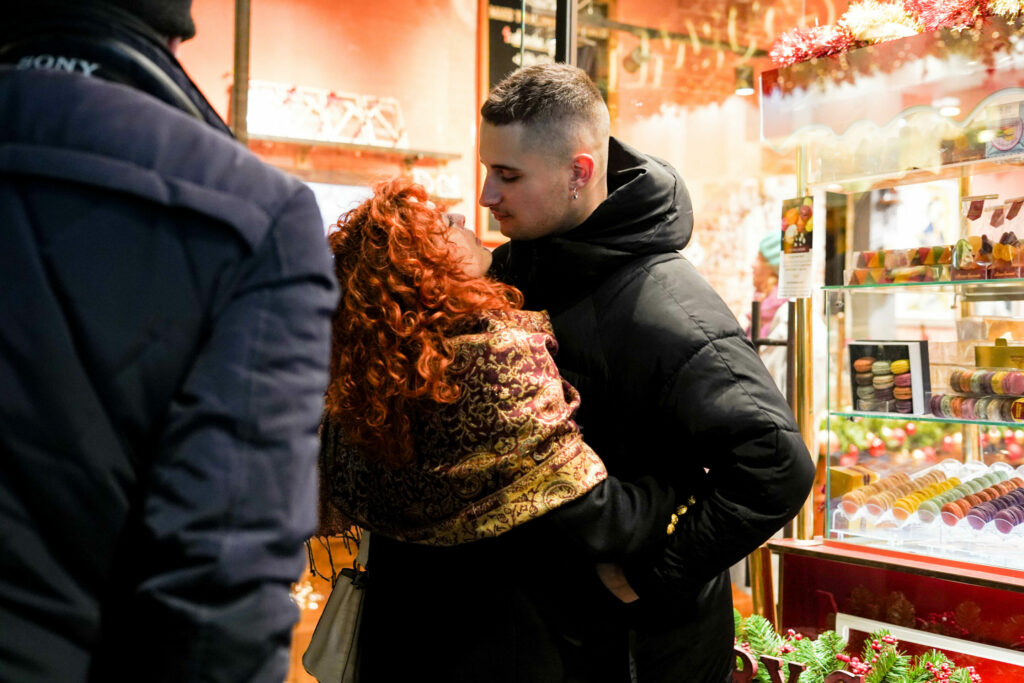
A couple sitting on a bench in Place Poelart, Brussels. Credit: Ugo Realfonzo / The Brussels Times
Despite the minor setbacks, Mike was able to receive his orange card within the month that he moved to Brussels.
Then he began his wait for full approval in order to receive his F-card. During this wait, he noted that no applicant is allowed to leave Belgium, so he just had to wait and hope that no emergencies arose in his home country.
"My F-card was supposed to be ready in August, but when I went to pick it up in August, they said it wasn't ready and to come back in September, so they extended my orange card," Mike explained. Then I went back in September, and they did the same thing, saying come back in October. I went back in October, and they told me to come back in November, and I finally got it in November."
With everything said and done, he was overall happy he had taken this route to live with his girlfriend, stating, "I would recommend this pathway to anyone looking for a relatively simple path to residence and potential permanent residence or citizenship in Belgium. From what I've heard from friends who are in the same situation, if I had gotten married instead of cohabitating, it would make no difference, whereas in the US, if you get married, it's a quicker process."
Must have documents
If you plan to move to Belgium on this visa, as Mike did, make sure to procure these documents to avoid any issues on arrival:
Passport: Must be valid for at least 3 months beyond the intended stay and have at least two blank pages.
Visa Application Form: Completed and signed (usually via the VisaOnWeb portal).
Passport photos: Recent (less than 6 months old) on a white background.
Birth certificate: Legalised (Apostille) and translated into English, French, Dutch, or German.
Certificate of celibacy: An official document proving you are currently single (e.g. CENOMAR in the Philippines, or a similar "Certificate of No Impediment").
Criminal record certificate: A "Good Conduct" certificate from your country of residence (valid for 3-6 months from issue).
Medical certificate: From an embassy-accredited doctor, proving you don't carry diseases that endanger public health.
Travel insurance: Valid for the Schengen area with a minimum coverage of €30,000.
Bedankt, Merci, Danke and good luck!
