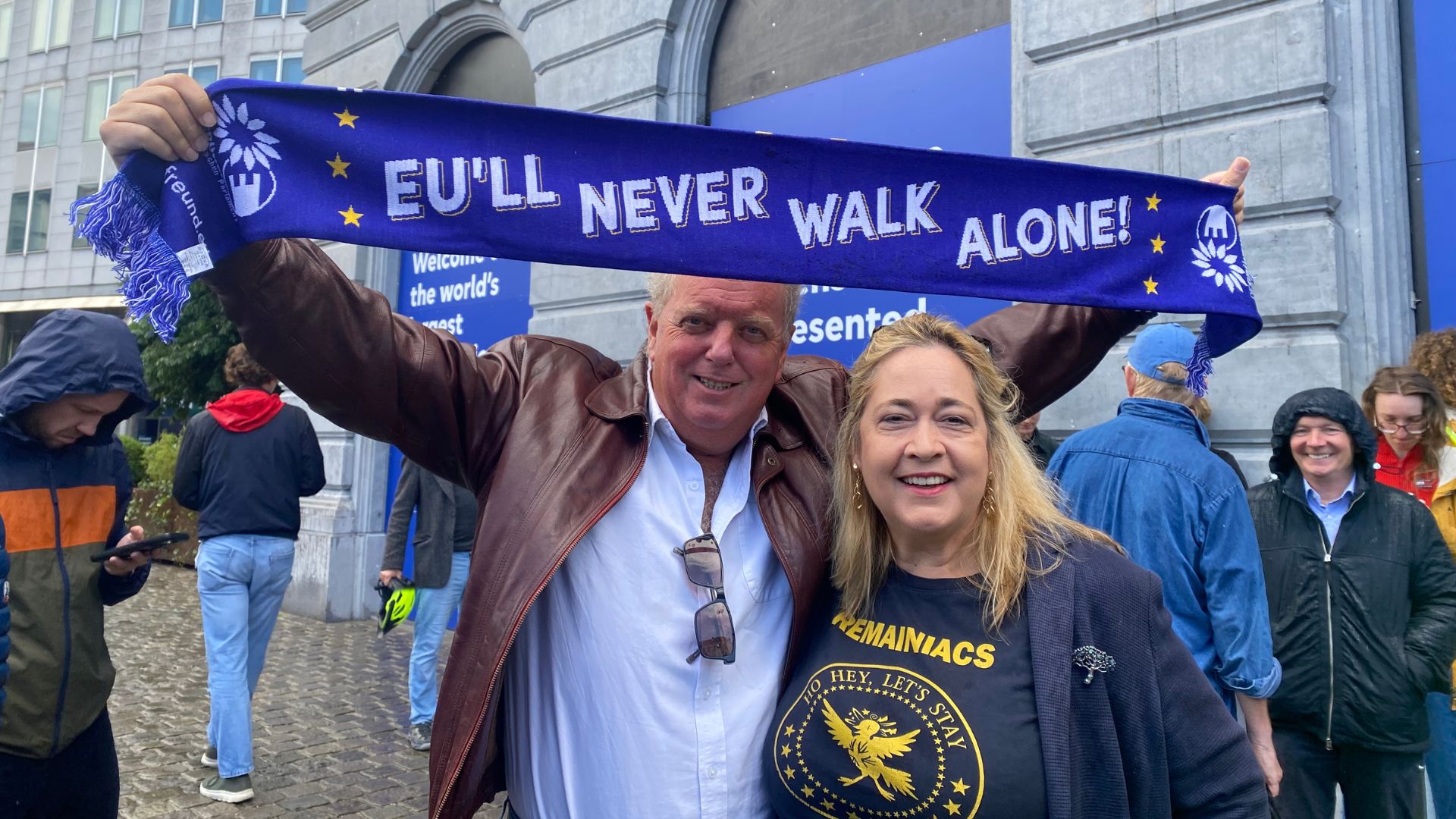
Today marks 10 years since the UK voted to leave the EU in a landmark referendum. What better way to celebrate (or commiserate) than by hearing from the man who coined the word that changed Britain?
Peter Wilding, 61, is a British political strategist and lawyer by training, who stood for public office on several occasions but was "resoundingly unsuccessful on all attempts". David Cameron, who was then leader of the opposition, first sent him to Brussels in 2006 as the Conservatives' media director to forge a positive agenda for the EU and stop the party's Eurosceptics from "banging on about Europe".
Wilding remembers the night of the EU–UK referendum on 23 June 2016 as if it were yesterday. He had voted in London in the morning and travelled back to Brussels to anxiously await the result alongside fellow Belgium-based Brits. He recalls the downpour at the start of the evening – perhaps pathetic fallacy of what was to come.
"It was quite a biblical moment," he tells The Brussels Times, "because the heavens opened and a torrential storm took place. Very Shakespearean, a bit Macbethy."
He was initially lulled into a feeling of false comfort when Nigel Farage, a former MEP and then-leader of the Eurosceptic UK Independence Party (UKIP), said he believed the campaign for Britain to leave the EU had lost.
But during that night, Wilding describes a "terrible sense of creeping doom" as the results trickled in and his fellow Europhiles peeled off. He recalls leaving the bar at around 04:00. "I didn't sleep for 36 hours after that, just seeing the fallout and having to comment on it. It was a very surreal experience at that time."
Brexit means Brexit
The Oxford English Dictionary's word of that year was Brexit – which Wilding had coined, somewhat flippantly, years earlier, unaware that it would change British history.
In May 2012, the political strategist wrote an article for EU policy news outlet Euractiv on Britain's place in Europe. This was around the time of the Greek euro crisis, and the idea of 'Grexit', coined by Citigroup economist Ebrahim Rahbari, had been floated. The final paragraph of the article read:
"Unless a clear view is pushed that Britain must lead in Europe at the very least to achieve the completion of the single market, then the portmanteau for Greek euro exit might be followed by another sad word, Brexit."
The piece was published, and he promptly forgot all about it. But then, four years later, he got a call from the Oxford English Dictionary telling him he had invented the word of the year.
He describes the moment as "bittersweet": sweet because it's "nice to be remembered for something", bitter because he has been remembered for "completely the wrong thing".
He never imagined Brexit would become a reality, but in hindsight, he feels it was almost inevitable.
A perfect storm
Wilding describes the run-up to the referendum as a perfect storm: "It was everything from a sexy word for the campaign, Brexit, to an arrogant prime minister, to a totally hostile press, to a 'Remain' campaign that didn't smell the coffee, to an opposition that was as Eurosceptic as the Tories," he says. "You couldn't have got a worse hand."
Like many others, Wilding recalls advising Cameron against holding a referendum. He went to 10 Downing Street in 2013 – three years after Cameron became prime minister – with the results of some widespread polling: 65% of the British public wanted Britain to lead in Europe, but 60% of them thought Britain was a "loser", not a leader, in Europe.
"I called it a kind of narcissistic victim syndrome that the British public had in their heads – that they wanted to be great, but they were surrounded by enemies," Wilding says.
He told the former PM that this was his "Churchill moment", and he had to prove that Britain was not a "loser" in Europe.
"But [Cameron] said, 'I won on economics for the Scottish referendum. And I'm going to win with economics for the Brexit referendum.' And he walked out of the cabinet room. So that was a real moment of truth for me," he says.
"Born out of his chutzpah, Cameron believed he was a winner. Eton and Oxford give you a tremendous sense of self-confidence. […] He misjudged the mood and mistook the narrative. And he went for it, as his moment of destiny […] and felt his own charisma could carry the day."
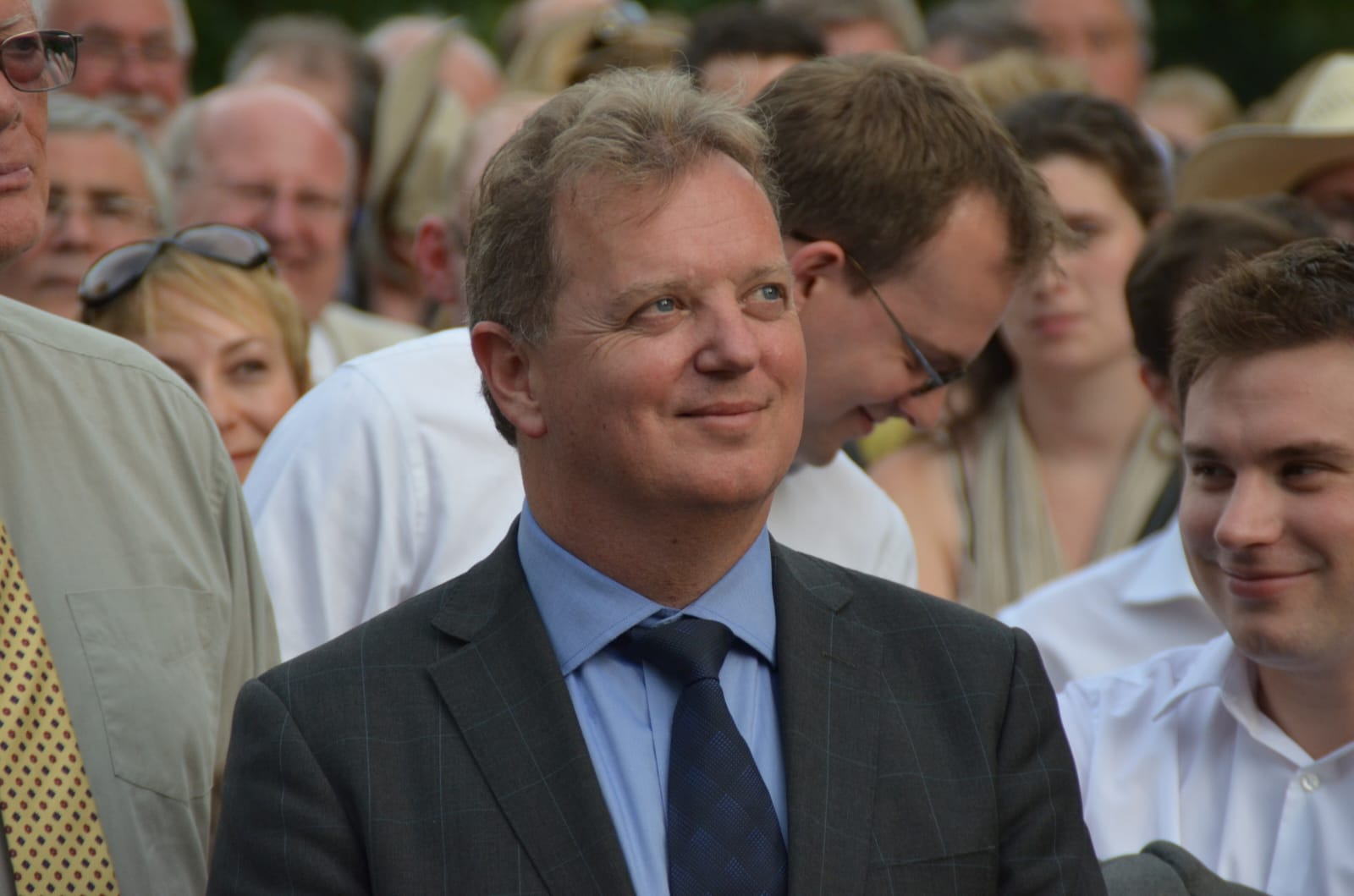
Peter Wilding in Westminster, 2016.
Wilding believes Cameron not only misjudged the mood but also the press and the power of social media, as Farage's Leave campaign had succeeded in rallying people online. "Remain was fighting an analogue campaign in a digital era. And they hadn't understood what their Achilles heels were."
In his view, the Remainers needed a more patriotic and emotional campaign to counter the Eurosceptics, because their economics-based approach was "a sure-fire way to lose it".
Four nooses
Cameron gave the Eurosceptics "everything they asked for", according to Wilding, as the Conservative leader felt any restrictions would result in his party members crying foul and calling the vote illegitimate.
This meant that British nationals who had lived abroad for over 15 years were not able to vote, nor were 16-year-olds. There was also no supermajority threshold, leading to an excruciatingly close simple majority result (with Leave winning by 52% to 48%). Furthermore, the question posed to the public was 'Remain or Leave', which Wilding describes as much more ambiguous compared to 'Yes or No' or 'In or Out'.
"All four were demanded by the Eurosceptics in his [Cameron's] own party, and he conceded on every single one of them. So, he put those four nooses around his neck," Wilding says.
Finally, the opposition Labour Party, with Jeremy Corbyn at the helm, "was equally, if not more hostile, to the EU than the Tory Eurosceptics", according to Wilding.
"If the Labour Party were led by another leader other than Jeremy Corbyn, they would have helped get the referendum over the line, but they were strictly neutral on it because of Corbyn."
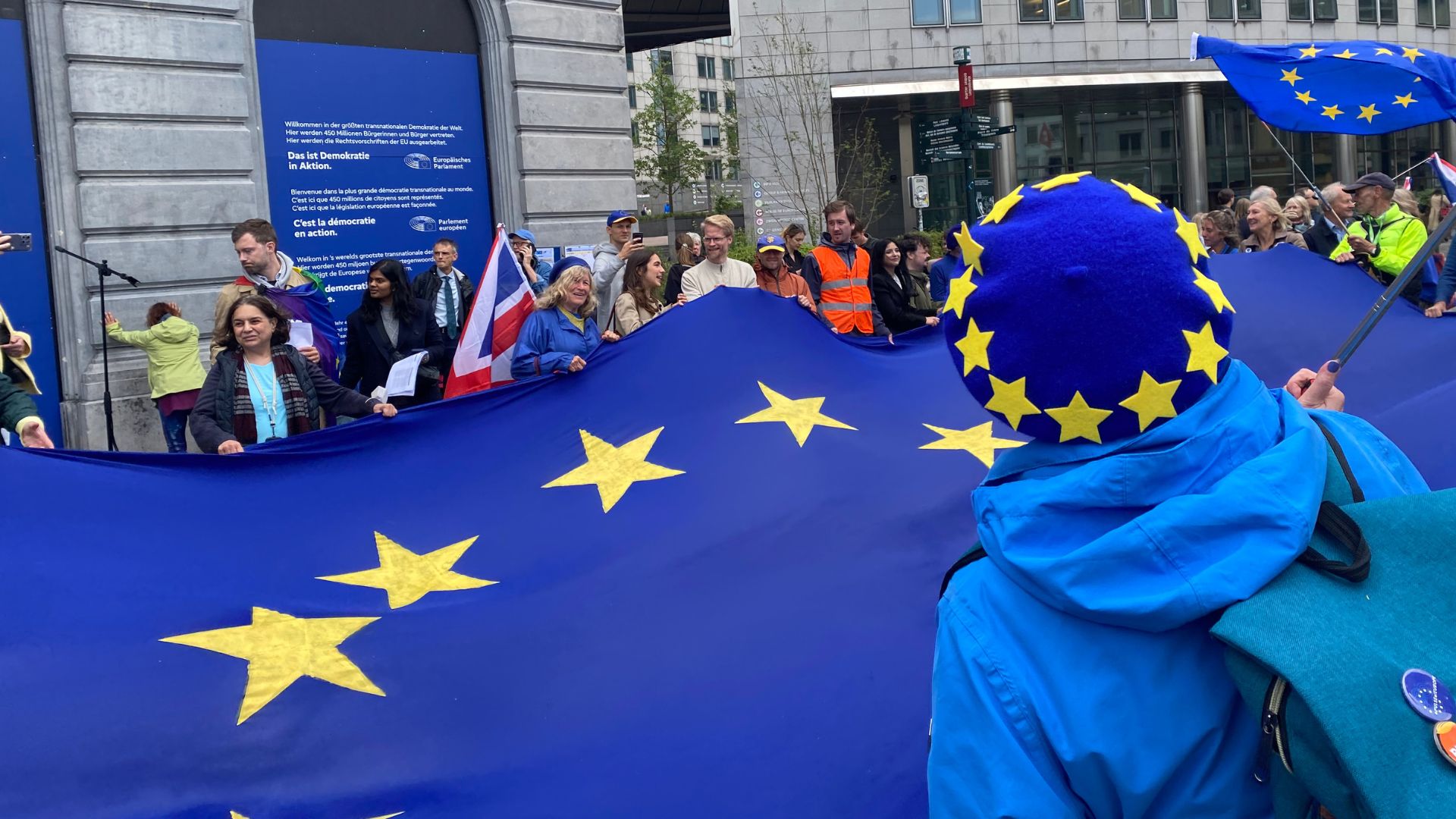
People protest Brexit in Brussels, 5 June 2026. Credit: Isabella Vivian / The Brussels Times
A decade on, prominent Labour Party members are more outspoken than ever on EU–UK relations, such as former Health Secretary Wes Streeting, who recently called Brexit a "catastrophic mistake".
Wilding believes that "with Farage breathing down their necks, a pro-European policy is the one way to unite the left."
What would such a pro-European policy look like? He thinks that Britain's best option moving forward is to join the European Economic Area, but that would mean the country is a rule-taker and not a rule-maker.
He adds that rejoining the customs union and the single market would be relatively easy, as the vast majority of British legislation is still aligned with EU law.
However, he imagines that in five years' time, joining the bloc may be a very different prospect, now that concepts such as an associate membership for Ukraine have been floated.
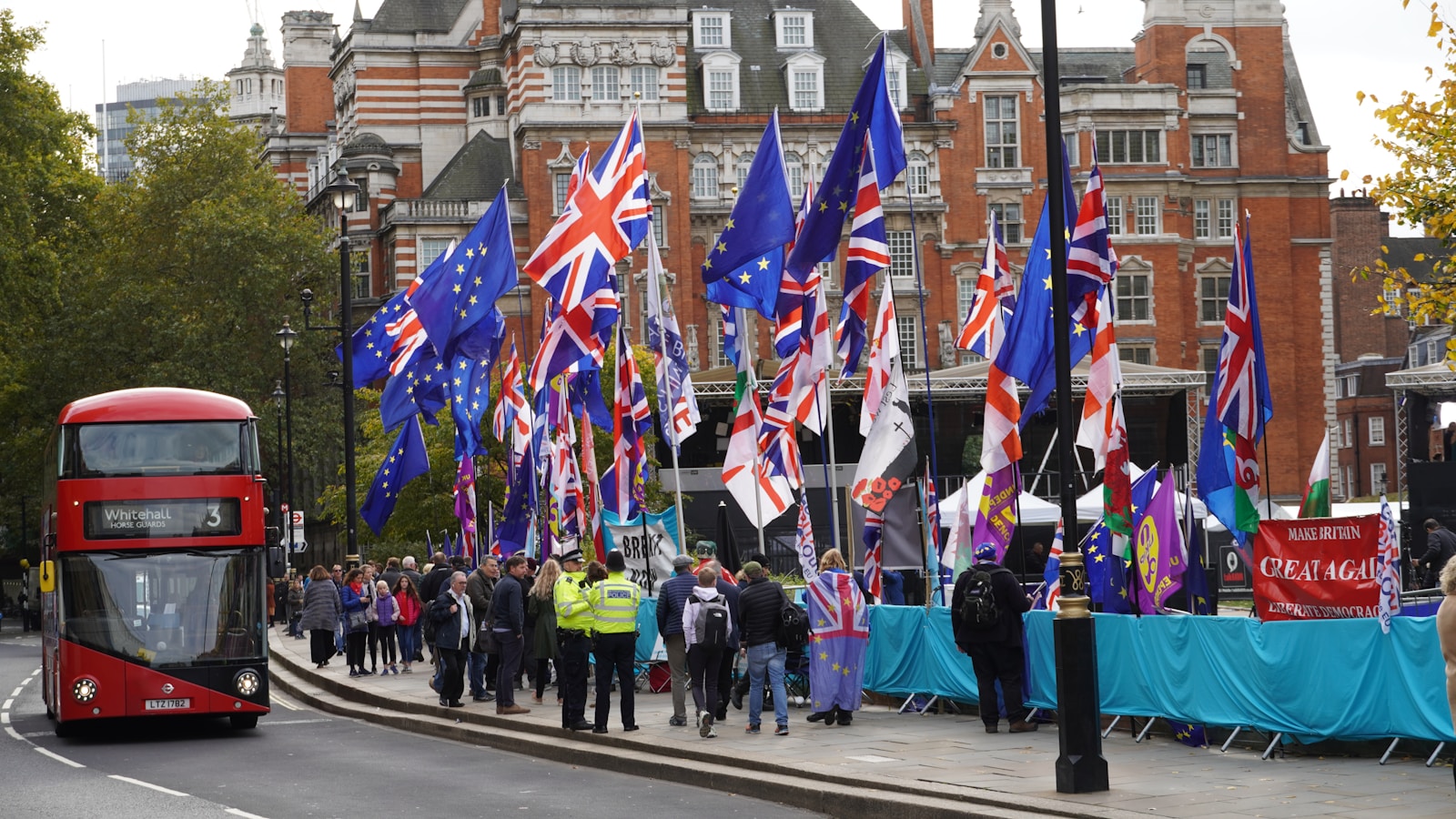
Credit: Unsplash
Many who voted to leave the EU in 2016 have said that another vote would be undemocratic. But "a democracy can change its mind," Wilding says. "It's the very essence of the thing called democracy."
And the British public are changing their minds: three-quarters of the British electorate now want closer ties with the EU, including Reform UK voters, and 66% believe Brexit has been "negative" for the UK and worsened the cost of living, economy, opportunities for young people, trade and managing immigration, according to the European Council on Foreign Relations.
A YouGov poll from May also showed that 56% of Brits support rejoining the EU, compared to 51% in January 2024. Among those who voted to leave the EU in 2016, 22% now support rejoining.
Moreover, of the roughly 48 million people who are eligible to vote in the UK today, six million were not able to vote in 2016, and 83% of 16- to 24-year-olds would vote to rejoin in a new referendum, an ITV poll from February found. Over six million who voted a decade ago have also now died.
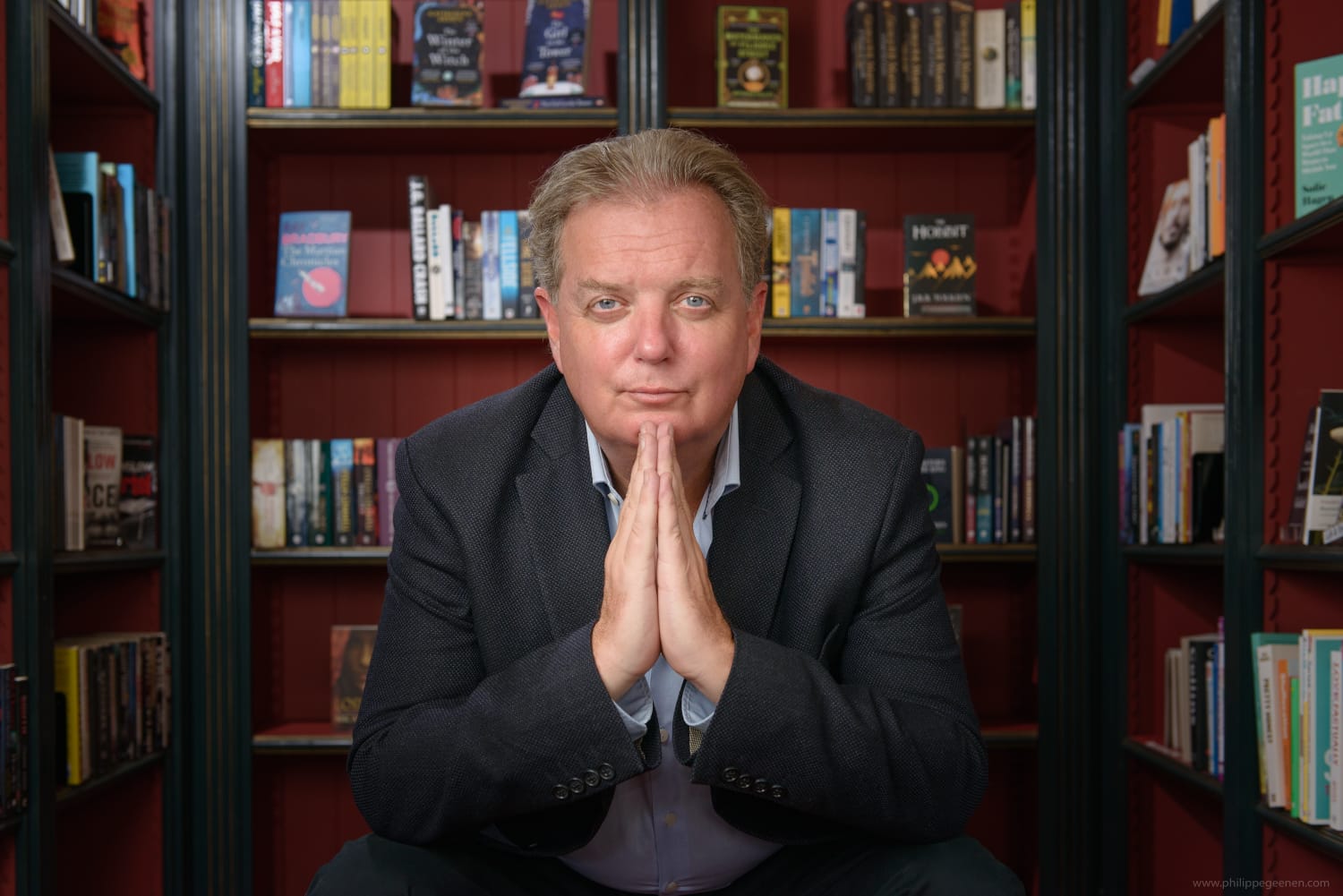
Brussels-based British political strategist and inventor of the word 'Brexit', Peter Wilding.
Two years ago, Wilding created a football-inspired league table for countries called the 'League of Nations'. The 'games' the nations play are based on metrics from the IMF, the World Bank, and Eurostat, among many others.
His algorithm judges whether a country is winning or losing, and Britain has tumbled from second to fifth place in the last 10 years, predominantly due to recovering poorly after the pandemic – figures he wishes he could have shown Farage a decade ago.
According to his algorithm, Britain is set to drift further by 2030, a core argument in his new book 'Brexit at 10: The Reckoning'. "If you want to avoid drift," he says, "you're going to have to make a reckoning with the European Union."
Sovereignty, but at what cost?
In his book, a sequel to 'What Next?' from 10 years ago, Wilding examines what British diplomacy could have achieved after withdrawing from the EU.
Since leaving the bloc, he says, Britain could have amplified its voice in the Council of Europe and NATO, among other bodies. But aside from stepping up momentarily when Russia invaded Ukraine, the country "never seized the opportunity".
"The British could have said we're going to now move our diplomatic chess pieces into these areas. And they never did," he says. "Britain left the European Union, and, frankly, they left Europe as well."
Overall, Wilding believes Brexit has failed in its objectives to make Britain a global, leading nation state. Equally, he thinks losing Britain has diminished EU power. "So, it's been no good for either of us," he says. "Britain got sovereignty but did not have the mechanism to profit from it."
And unfortunately for Wilding, labels stick. He will always be associated with a word that, in his view, is synonymous with the decline of his country – something he has spent his career trying to prevent.
"I'm a quiz question these days. Who invented the word 'Brexit'? Is it Boris Johnson, Nigel Farage, or an obscure failed politician-solicitor called Peter Wilding?"
