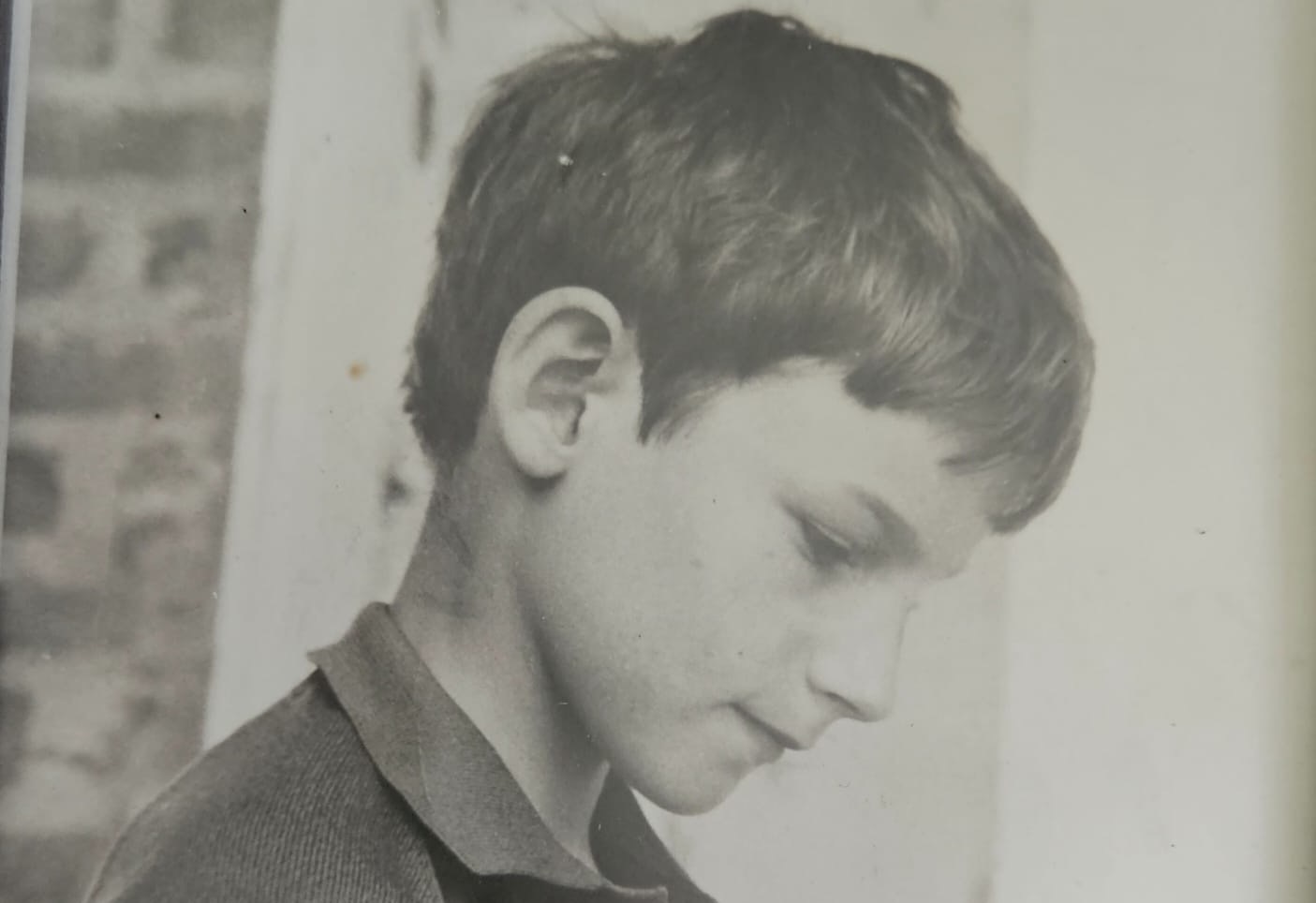
Christophe De Neuville, 66, spent decades looking for his mother. All he knew was that a woman had given birth to him somewhere in northern France before he was quietly brought to Belgium as a newborn.
A DNA test gave him his first solid clue, so he started pulling on a thread. "In 2015, I did my first test and found a cousin in the United States," De Neuville tells The Brussels Times. "It was the first time in my life that I had spoken to someone from my biological family."
The cousin, a man in his seventies, confirmed to him that his grandmother had emigrated from Belgium and was of Flemish origin. De Neuville became utterly engrossed in the quest of reconstructing his ancestors' genealogical tree.
Nearly 11 years later, he says he has identified relatives on both sides of his family. His biological father had died before they could meet, but his biological mother is alive and now in her late eighties. However, she does not want to meet him.
"She denies everything, but it is scientifically proven that she is my mother," De Neuville says. "She does not want to know. For her, it never happened."
His story is only the tip of the iceberg and is part of a much wider and still unresolved chapter in Belgian adoption history.
The Dunkirk route
On 3 March 2024, French newspaper Libération published a thorough investigation that revealed this dark chapter of Belgian history.
Between the 1950s and the late 1980s, thousands of pregnant women from Belgium and the Netherlands were sent to private clinics in northern France to give birth anonymously. Their babies were then taken separately across the border and placed with adoptive families in Belgium.
Many of the women were single, very young or living in Catholic institutions where pregnancy outside wedlock was sacrilegious. Some had been raped, including, allegedly, by members of the Catholic clergy.
Back then, unwanted pregnancies could be seen as a dishonour to the entire family; women were then hidden away, sent across the border secretly and in dodgy clinics, they delivered their babies, who were taken from them shortly after delivery.
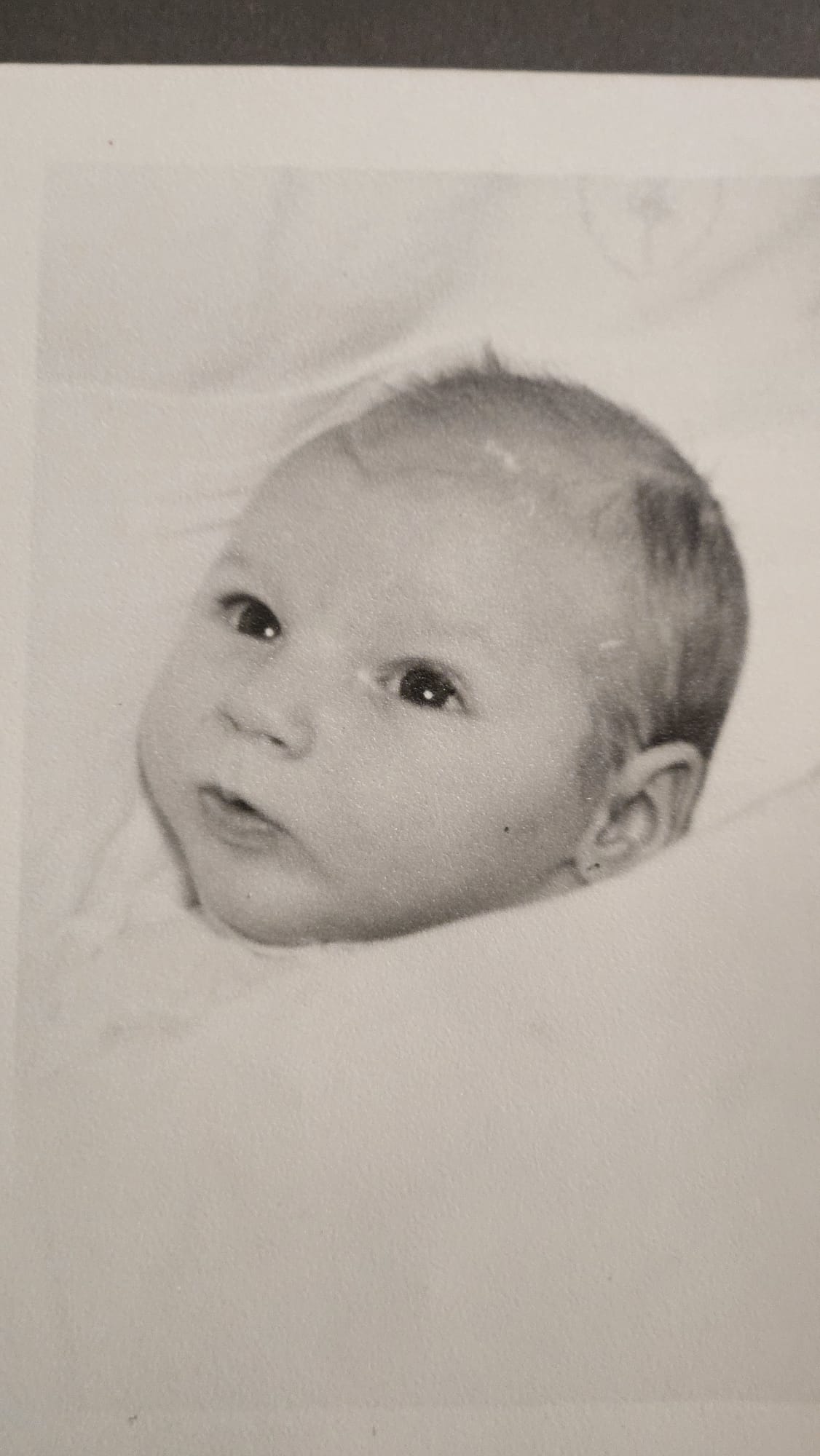
The first-ever baby picture of De Neuville, and the only one he has of himself. Credit: Handout.
The children were then taken to Belgium and placed with adoptive families. The system took advantage of French law, which, to this day, allows women to give birth anonymously.
Belgium does not have an equivalent system. An anonymous French birth did not mean that newborns could just disappear across international borders. Children born in France were meant to be registered and placed under the care of the French state before any adoption process began. "In many cases, that did not happen," says De Neuville.
To this day, the only document De Neuville initially has is a French birth certificate stating that he had been born to unknown parents. He was adopted several years later, but says he had no official Belgian address or civil registration for part of his childhood. "For three years, I did not exist at all,” he says.
His first formal appearance in Belgian civil records came years after his birth. "My parents could have found a child in the street and presented themselves at the municipality, saying, 'Here is our child.' The result would have been exactly the same," he says.
At the age of 18, members of the Belgian military arrived at his home following a request from France. Born on French soil, he was considered a French citizen and was being sought for failing to report for compulsory military service. It was the first time he fully understood the legal confusion surrounding his identity.
The operation became known among some Belgian families as the "Dunkirk route", although the births also took place in Lille, Cambrai, Charleville-Mézières and other towns close to the border.
De Neuville and other adoptees believe the system relied on Catholic organisations, medical staff, civil servants, notaries and judges on both sides of the border. They say children were moved without the documents and safeguards normally required under French and Belgian law.
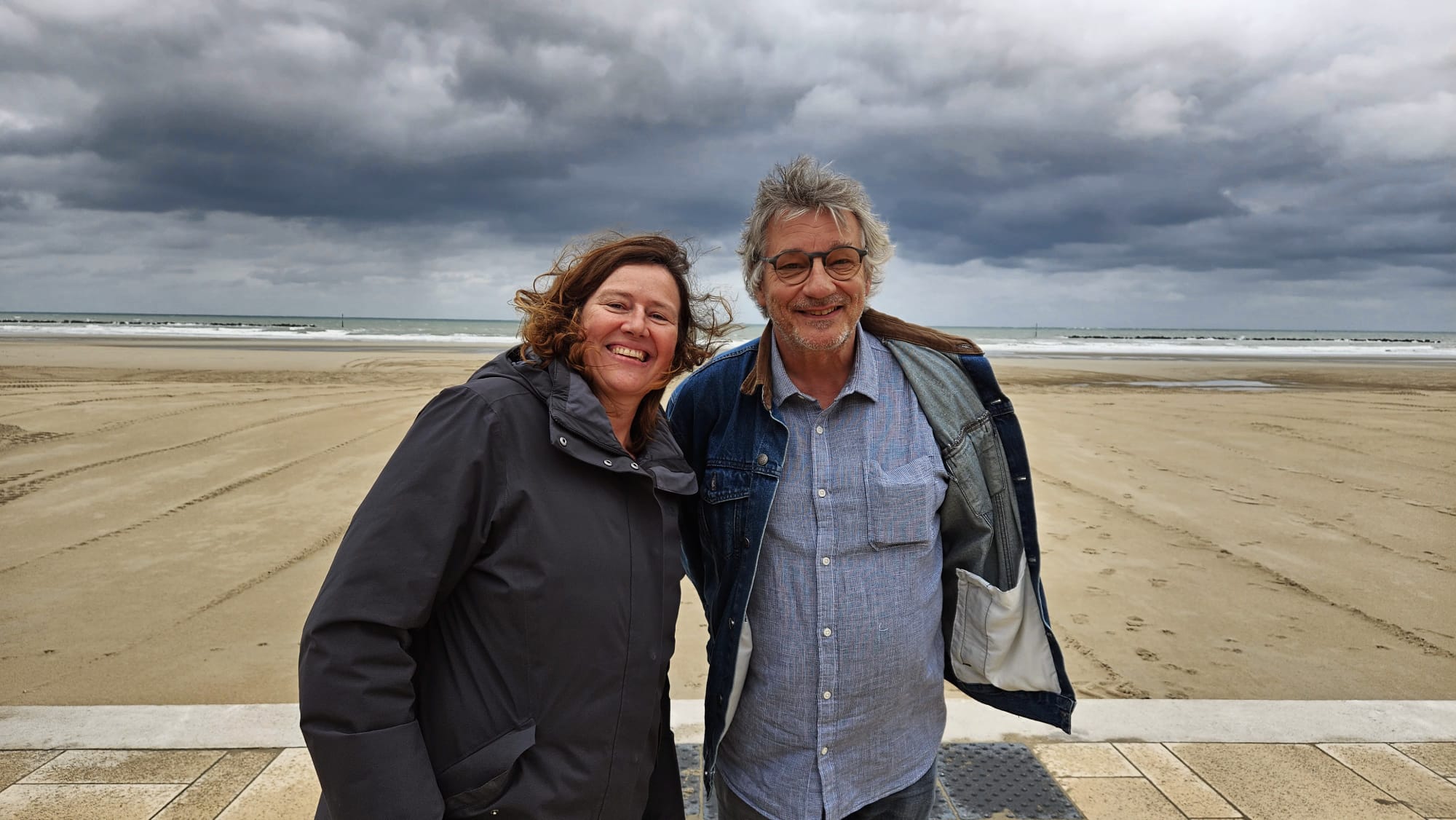
Christophe De Neuville, pictured in northern France, Dunkirk, with another woman, Marie Claire Spits, both were born anonymously and allegedly smuggled by the same network. Credit: Handout.
The central figure in one of the networks was Thérèse Wante. An Antwerp woman who founded an adoption organisation in 1950, Le Monde reports. Her organisation, then known as the Œuvre d’adoption, arranged births in France and placements in Belgium. Wante died in 1977.
De Neuville now runs an association dubbed Nés sous X via Wante (Born under X via Wante), which helps adoptees investigate how they were born, transported and adopted. He estimates that between 30,000 and 40,000 babies might have passed through several such networks between 1950 and the end of the 1980s. Other, even higher figures have circulated, but the real total might never be known.
Today, where records exist, they are patchy. Some organisations kept their archives private. Others claim the documents have disappeared. Many of the doctors, midwives, judges, notaries and religious figures involved have since died, De Neuville explains.
Hidden under a blanket
According to his own account, he believes he was around three days old when transported from France to Belgium. Years later, when his adoptive parents collected another child, he witnessed how the border crossing was carried out. "They asked me to put a blanket over the baby carrier to avoid problems at customs, because everything was illegal," he explains.
He was around five or six years old at the time. Other adoptees have described similar journeys to French media, with babies concealed beneath blankets in cars while their biological mothers travelled separately, ready to claim the child as theirs in the event of a border check.
"We all have the same memory of having been hidden at the French-Belgian border," De Neuville says. "That was not done for no reason."
For adoptees and people born anonymously, DNA databases have transformed the search for biological relatives. MyHeritage, the company used by De Neuville, compares users' genetic information with samples in its international database.
Shared segments can indicate a common ancestor and identify relatives ranging from parents and siblings to distant cousins. The test that De Neuville took involved rubbing a swab inside the cheek and sending the sample to a laboratory.
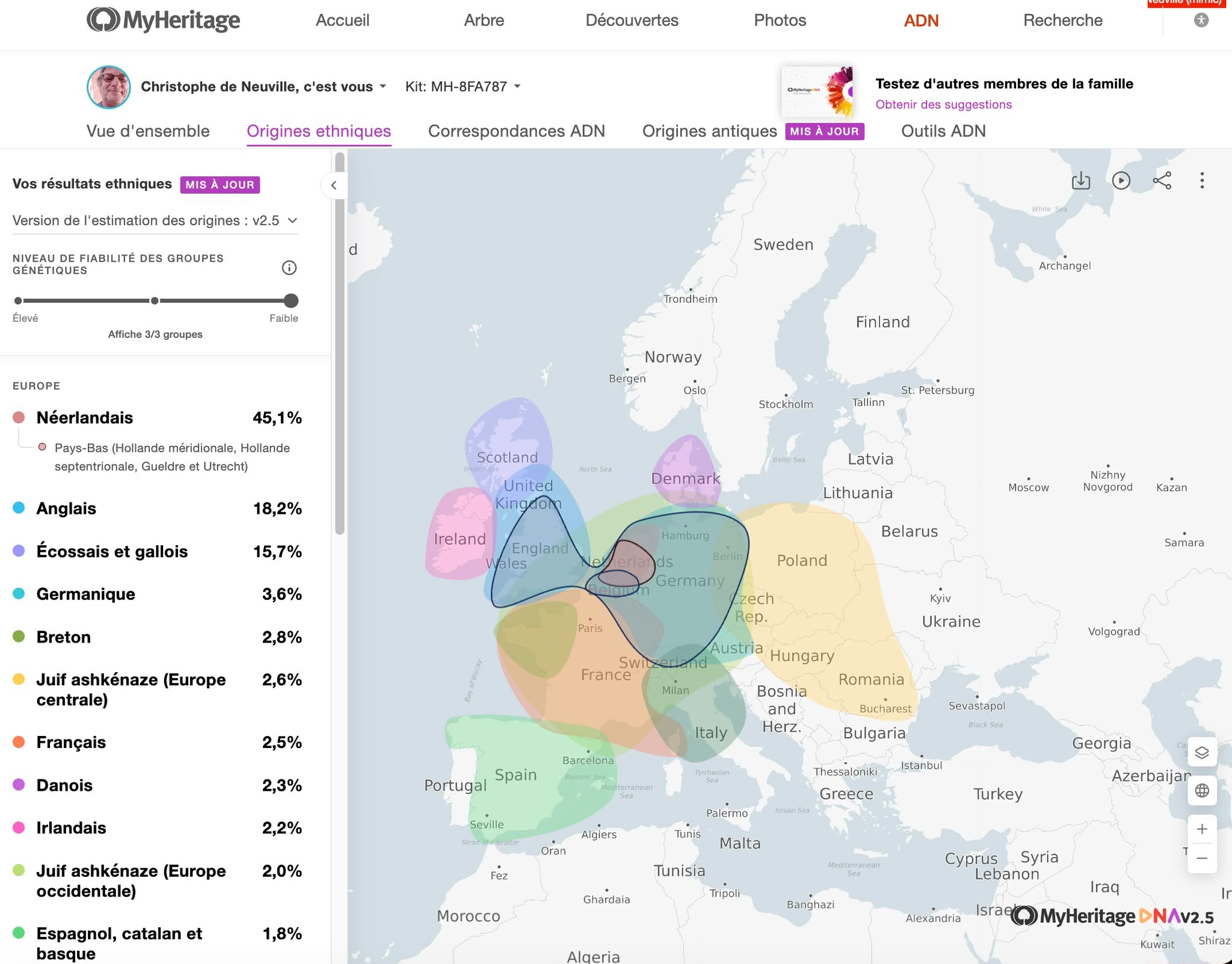
Christophe De Neuville's MyHeritage DNA results. Credit: MyHeritage.
"For most people, family history is a puzzle that is relatively easy to assemble," MyHeritage head of PR Margaux Stelman told The Brussels Times. "For adopted people, and especially people born anonymously, such as Christophe, many pieces are missing. DNA can help find those missing pieces."
A close relative does not necessarily have to take the test. A match with a third- or fourth-degree cousin can be enough to begin reconstructing a family tree.
Importantly, MyHeritage does not work with any country's justice system, and it is intended solely for consumers, not for legal proceedings, as commercial DNA results do not constitute legal proof of parentage.
For example, De Neuville tried to present his DNA results to Antwerp's municipality and asked them to recognise his biological father, but in vain.
A second rejection
To make the situation harder, De Neuville's adoptive father was completely against his attempts to find his biological mother. He says that his adoptive father described her as "an immoral woman who had sinned".
"I was often told that I was an added piece in the family, that I was not of their blood," De Neuville regrets.
Those attitudes can leave adoptees imagining an eventual reunion as a moment of recognition and acceptance. "We all dreamed of the day we would find them, and they would open their arms and say: 'Come here, my child. I have looked for you all my life," De Neuville says. But reality is often rather different.
Of roughly 30 to 35 biological mothers found through the association’s searches, De Neuville says only one immediately welcomed the child who contacted her.
"Our appearance in their lives is often a second trauma for them," De Neuville explains. "We had not expected that at all."
Some women had concealed the pregnancy for 60 or 70 years and built families whose members knew nothing about it, De Neuville explains. Contact from an adult child can force them to revisit a period marked by shame, coercion, violence or grief.
The man had prepared himself for that possibility after witnessing what had happened to others. He is now in contact with a half-sister on his mother’s side and another on his father’s side, but still hopes that, one day, his mother may agree to meet him.
He is keen to know how his parents met. His father was married and aged 37, while his mother was 21. "Was it rape? Was it a one-night encounter? Was it a beautiful love story?" he wonders. "Did my father even know that I existed?"
Above all, De Neuville today wants his mother to tell him about the pregnancy and the months before his birth. "I would like her to put into words what she experienced, so that I can put my despair into words too."
Locked archives
Even after DNA identifies a likely relative, adoptees often need official documents to confirm dates, addresses and family connections.
De Neuville claims he fought tooth and nail to have access, but "it is routinely blocked by privacy rules and archive restrictions."
"The laws are made to protect people's identities, but when we find a lead, we immediately come up against a closed door."
Archives should not simply be released publicly, he explains, but examined through trained intermediaries capable of contacting biological relatives and handling sensitive information.
"There may be a possibility for perhaps a hundred adoptees to find their biological family," De Neuville explains. "That seems important to me."
Today, he wants Belgium and France to investigate the role of public institutions. France, he argues, must explain how children born on French soil were transferred abroad without the procedures required by French law.
Belgium must explain how babies could be registered and later adopted despite the apparent absence of abandonment records and other legal documents.
Complaints have been filed against the French and Belgian states. De Neuville claims former Belgian Prime Minister Alexander De Croo promised an inquiry or a full parliamentary investigation, but the adoptees are still waiting.
