
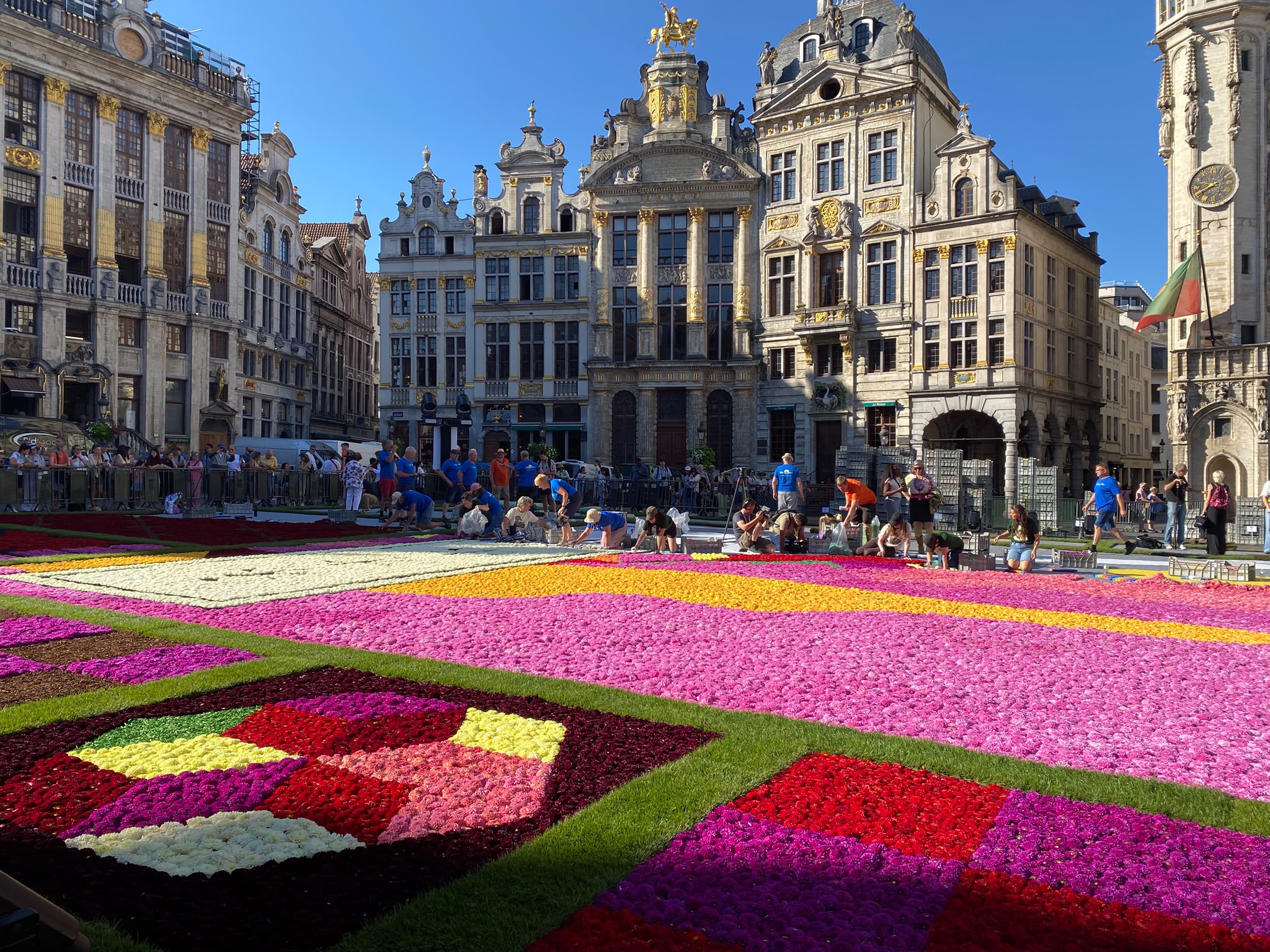
If you thought nothing happens in Brussels in August, think again! One of the highlights of the cultural calendar is returning to the cobblestones of the Belgian capital today, 13 August – and it is not one to be missed.
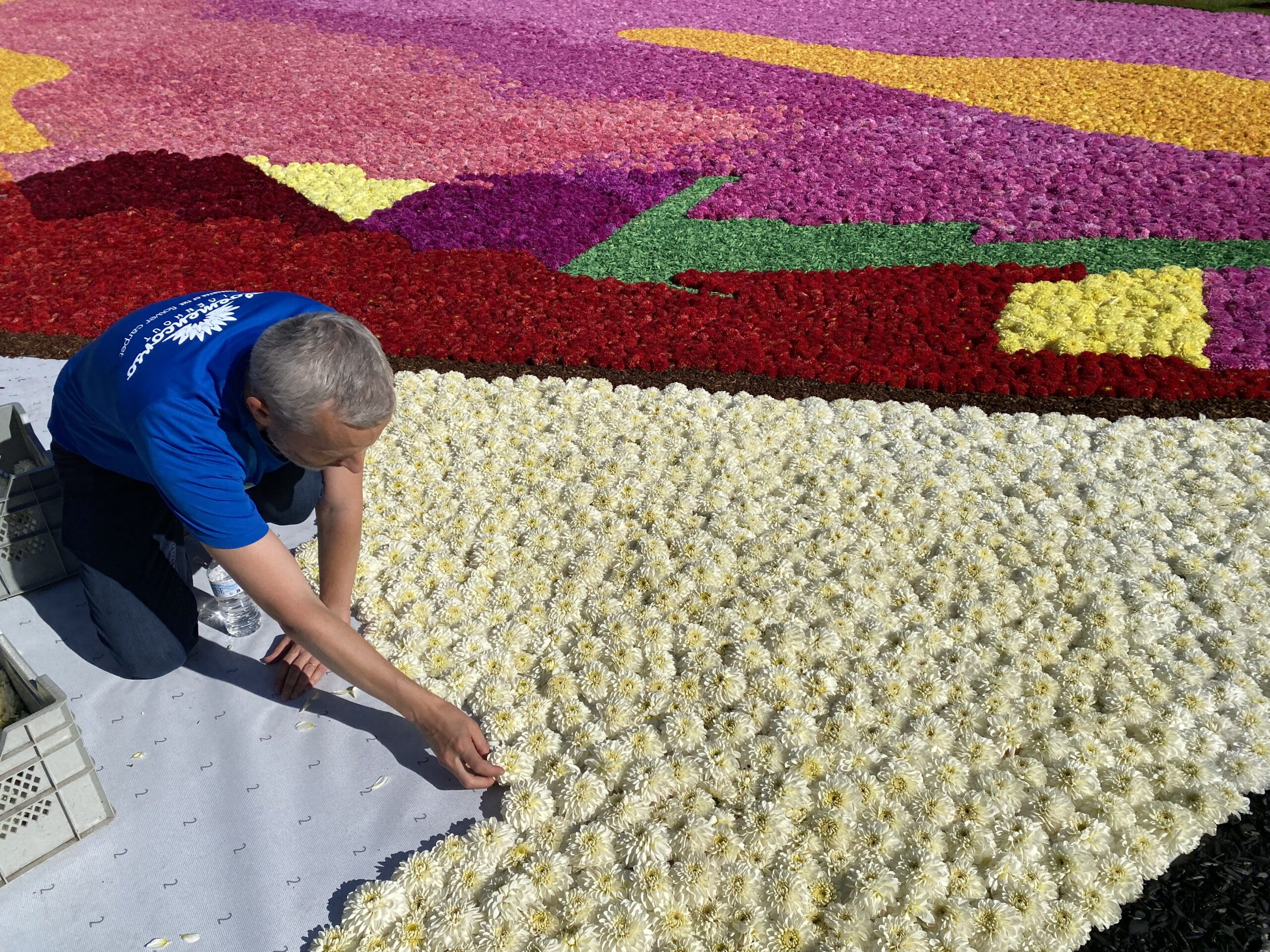
A total of 140 volunteers – the youngest of whom is just nine years old – are currently busily preparing the 2026 Flower Carpet, the beautiful biennial floral artwork which spans Brussels' Grand Place and draws visitors from across the globe.
Covering 1,680 m², it will once again be the world's largest flower carpet, featuring over 700,000 dahlias of 20 different species, all grown in Belgium near the Dutch border. The ephemeral artwork will remain on the square for just four days.
Belgium making waves
The Flower Carpet organisers choose the design each edition, according to press spokesperson Dennis van der Meer. The last design, two years ago, was created by local Brussels artists, but in previous years there have been collaborations with Japan, Mexico, and Africa.
This year, the floral display is inspired by the iconic Japanese painting, 'The Great Wave off Kanagawa' by Katsushika Hokusai, created sometime between 1830 and 1832. The collaboration marks the 160th anniversary of diplomatic relations and friendship between Japan and Belgium.
Japanese artist and lecturer at Kyoto University of the Arts, Hiro Sugiyama, has reimagined the painting for this edition of the Flower Carpet, putting his own unique spin on it and giving it a contemporary edge with striking colours.
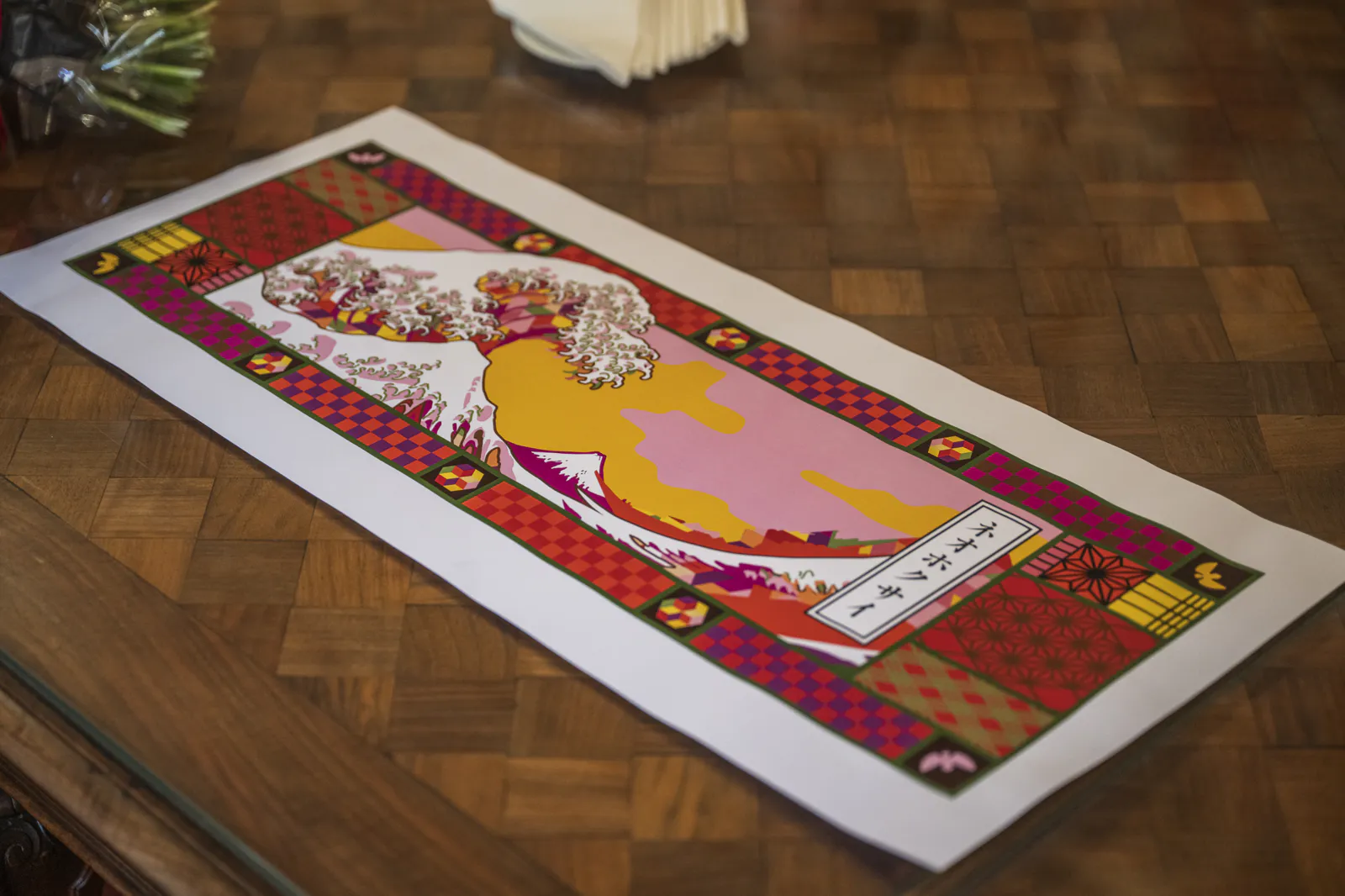
The 2026 Flower Carpet design by Hiro Sugiyama. Credit: Jeroen Willems
"Through this synthesis, I seek to connect the past and the future, the analogue and the digital, Japanese culture and contemporary art," Sugiyama stated in a press release.
"In this pivotal year marking 160 years of friendship between Belgium and Japan, I am delighted to bring this work to life in the form of a Flower Carpet."
The decision to make Japan this year's guest of honour comes ten years on from the two countries' first collaboration in 2016.
"A love of flowers is a universal language. In Japan, as in Belgium, flowers hold a special place, deeply rooted in our cultural and social lives," said Takeshi Osuga, the Japanese Ambassador to Belgium.
Credit: Isabella Vivian / The Brussels Times
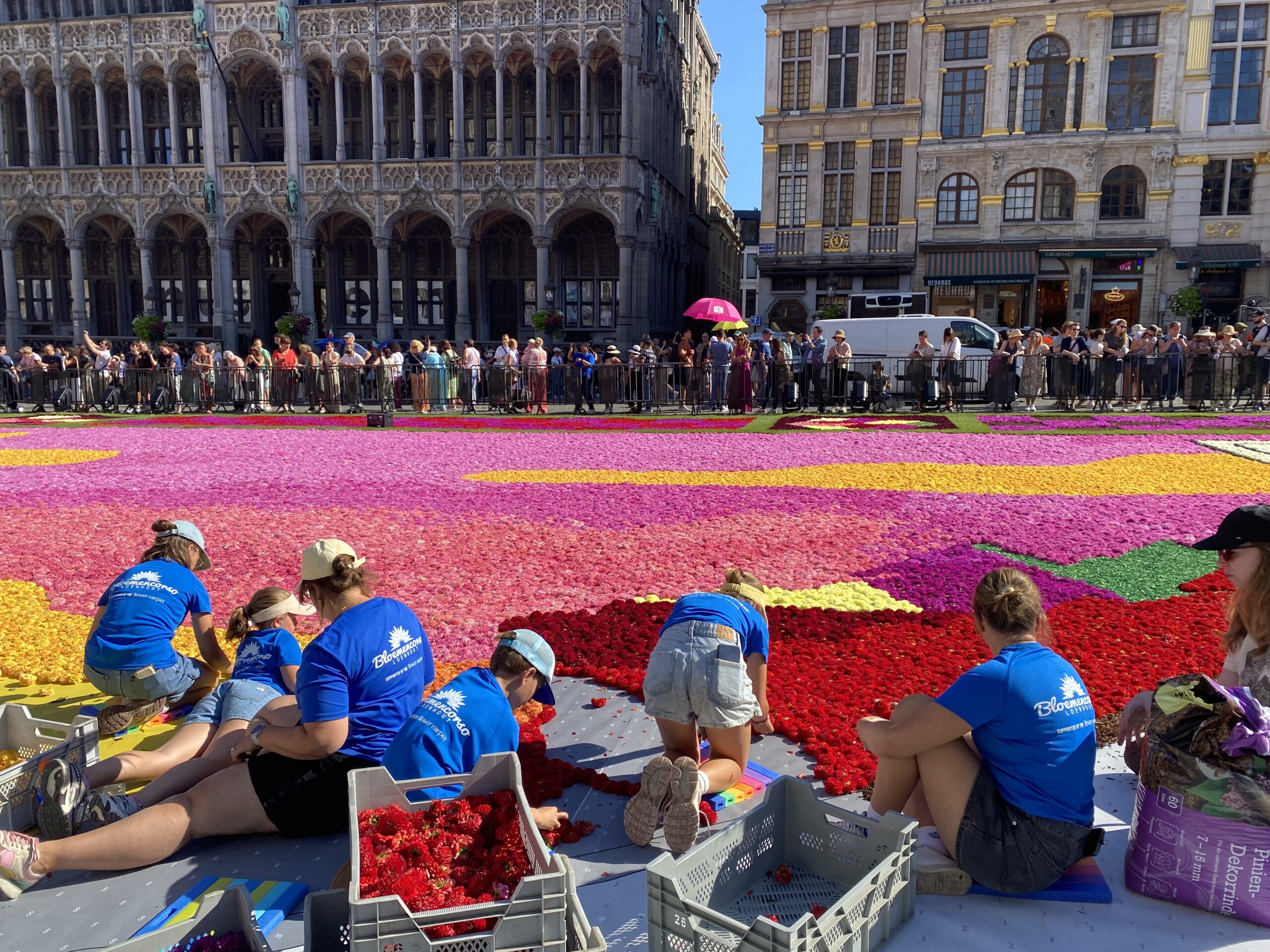
One hundred volunteers came from Loenhout in Flanders to Brussels on Thursday morning, and 40 have travelled from Japan. They started work at around 07:00 and are aiming to finish by noon.
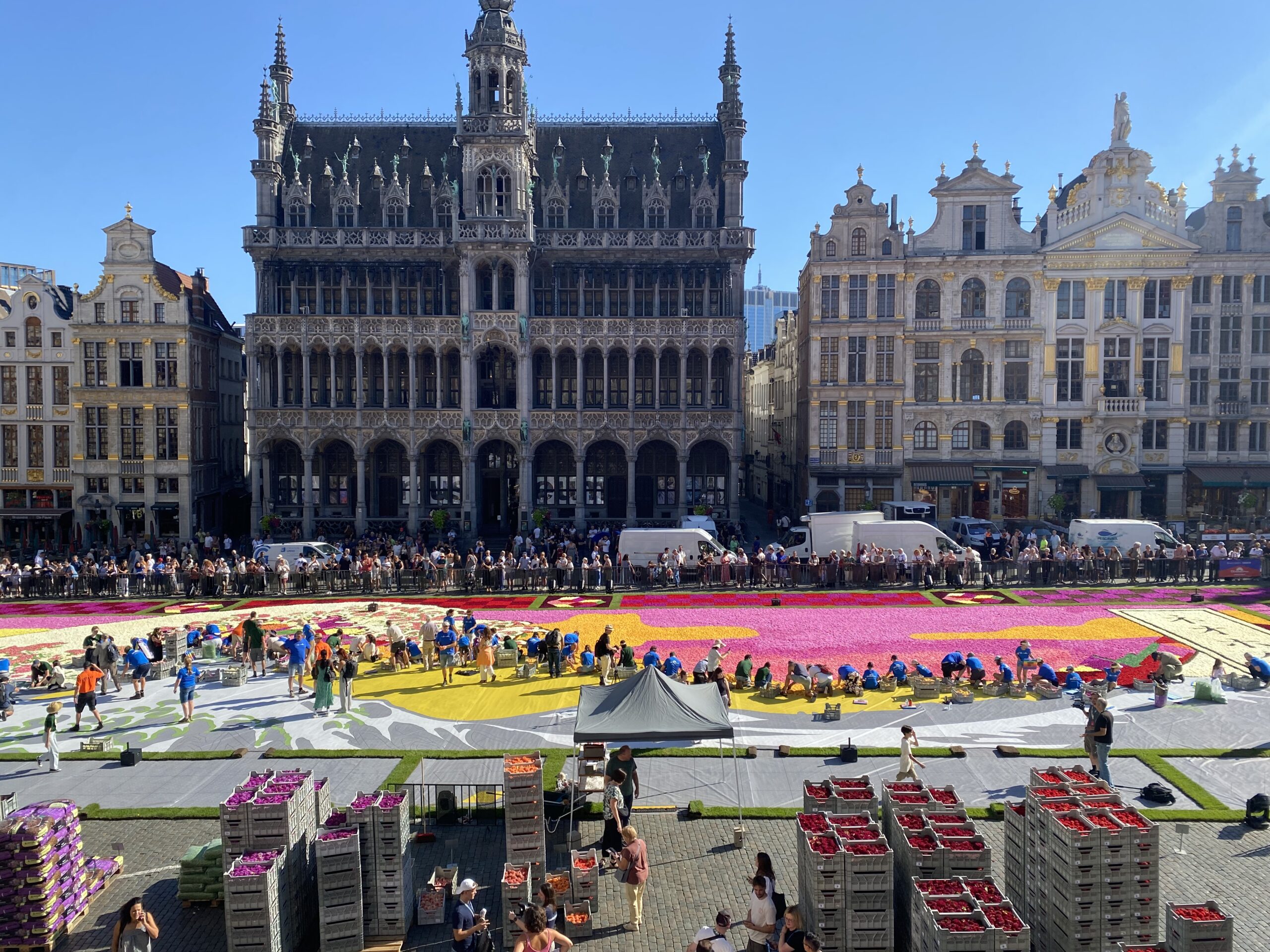
The view of the 2026 Flower Carpet from the City Hall balcony in Brussels. Credit: Isabella Vivian / The Brussels Times
"It's a great honour for the [Japanese volunteers] to help us," van der Meer told The Brussels Times.
He added that many Belgian volunteers decided to take annual leave to help today, whereas in 2024, the opening day of the Flower Carpet fell on a public holiday.
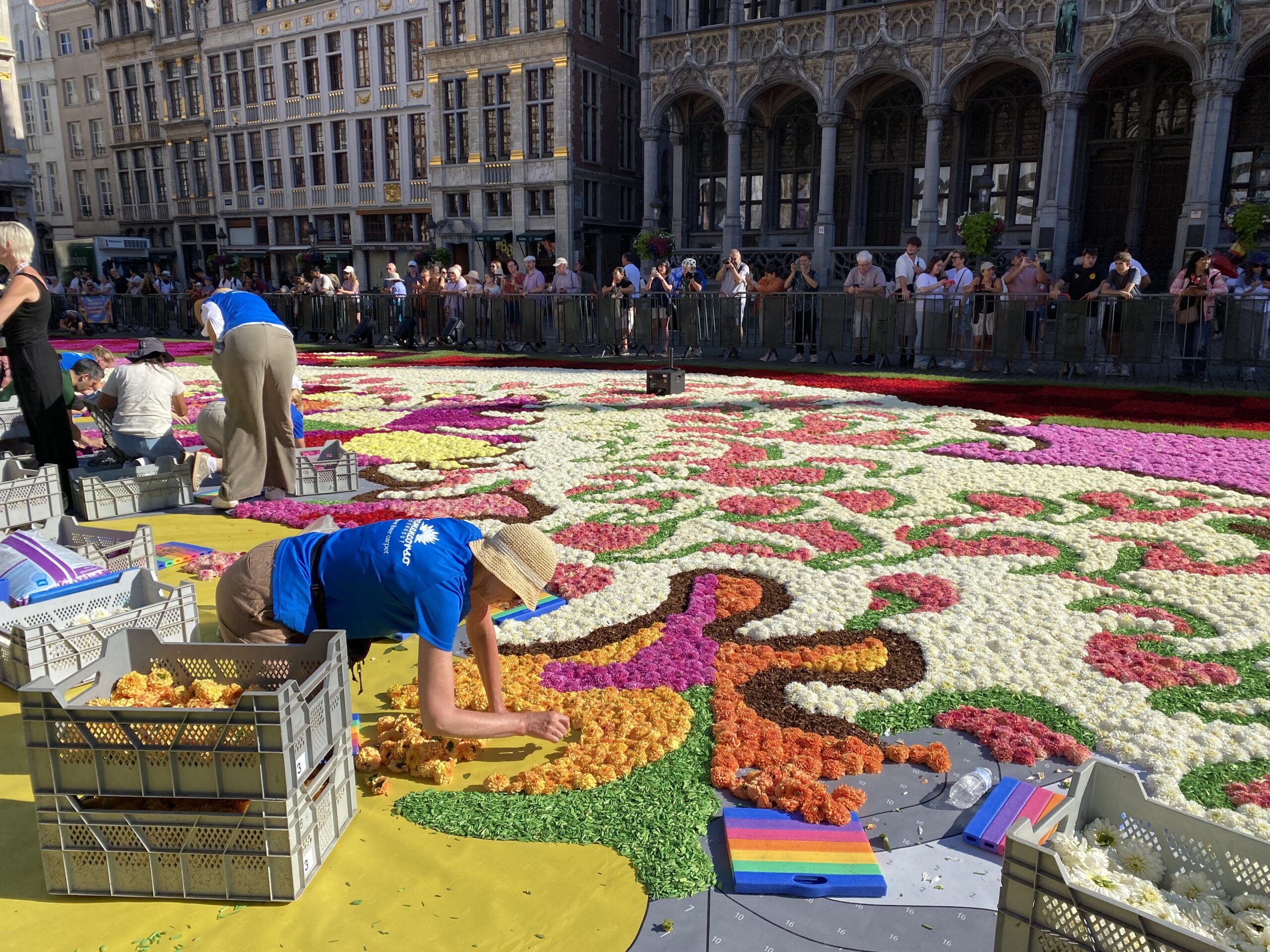
Credit: Isabella Vivian / The Brussels Times
The Great (heat)Wave
In terms of whether the heat has affected the flowers this year, van der Meer said, "The Dahlia is a very strong flower. It's originally from Mexico. So it likes dry heat. But not the rain; then they won’t survive. Heat for four or five days is okay."
After the dahlias have been in the sun for a few days, they shrink in size, so the teams place them tightly together to avoid gaps when they dry out.
Despite the 30°C heat and having left home at 05:00 to be here, a group of beaming teens told The Brussels Times they were still full of energy at 10:00. They all became friends through working together on the flower parade in their hometown of Loenhout.
When asked whether she would do it again, Louisa, 14, said, "Of course", without hesitation.
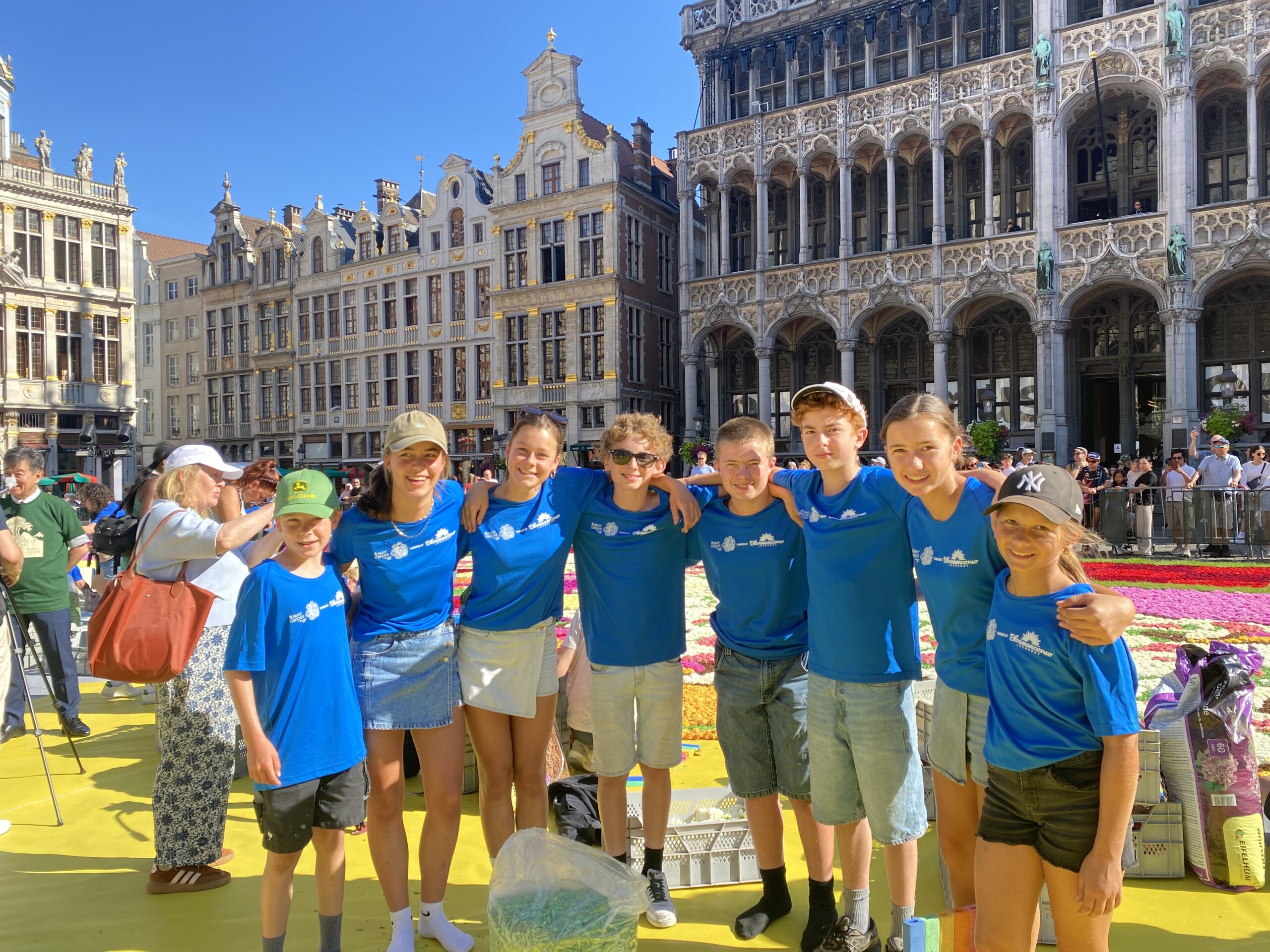
Floris, 15, Kasper, 14, Flor, 13, Louisa, 14, Jutta, 15, Frauke, 11, and Dieuwke, 12, all travelled from Loenhout to Brussels early on Thursday morning to work on the flower carpet. Credit: Isabella Vivian / The Brussels Times
Sugino Yoichiro, 51, is from Japan but moved to Brussels a year ago with his family for work. Yoichiro, his wife and their two children, aged 13 and 14, are working on the carpet today.
"I'm so proud to be involved in this traditional event," he told The Brussels Times.
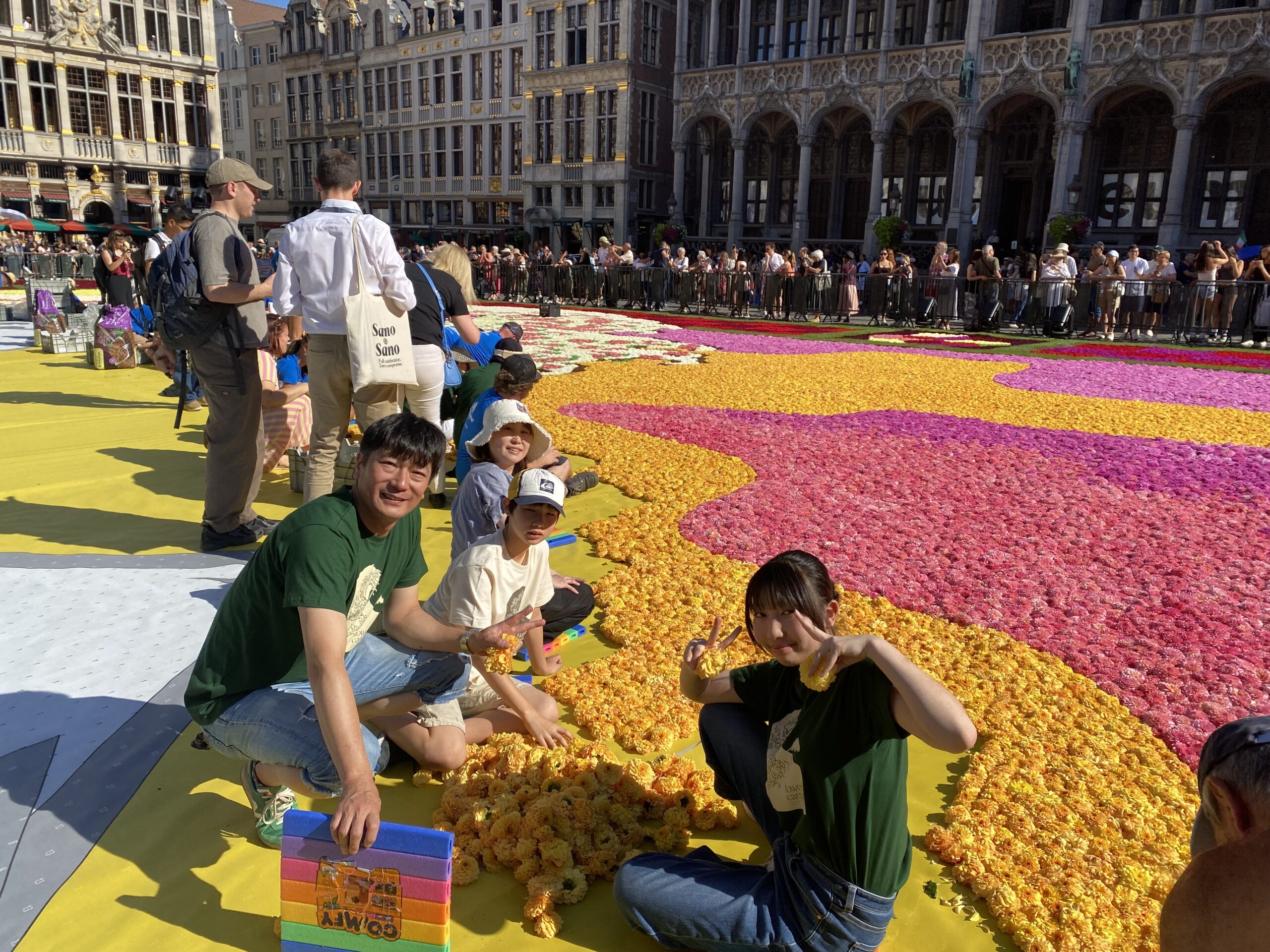
Sugino Yoichiro and his family. Credit: Isabella Vivian / The Brussels Times
Second flower carpet
For the first time in the event's history, a second display will also be laid outside the Bourse building from 13 to 16 August.
Inspired by hops, a symbol of Belgium's brewing heritage, it will create a floral trail linking the capital's two iconic sites and extending the event's reach beyond the Grand Place.
The Bourse flower carpet is smaller but more intricate, so the flowers need to be cut to fit the design, according to van der Meer.
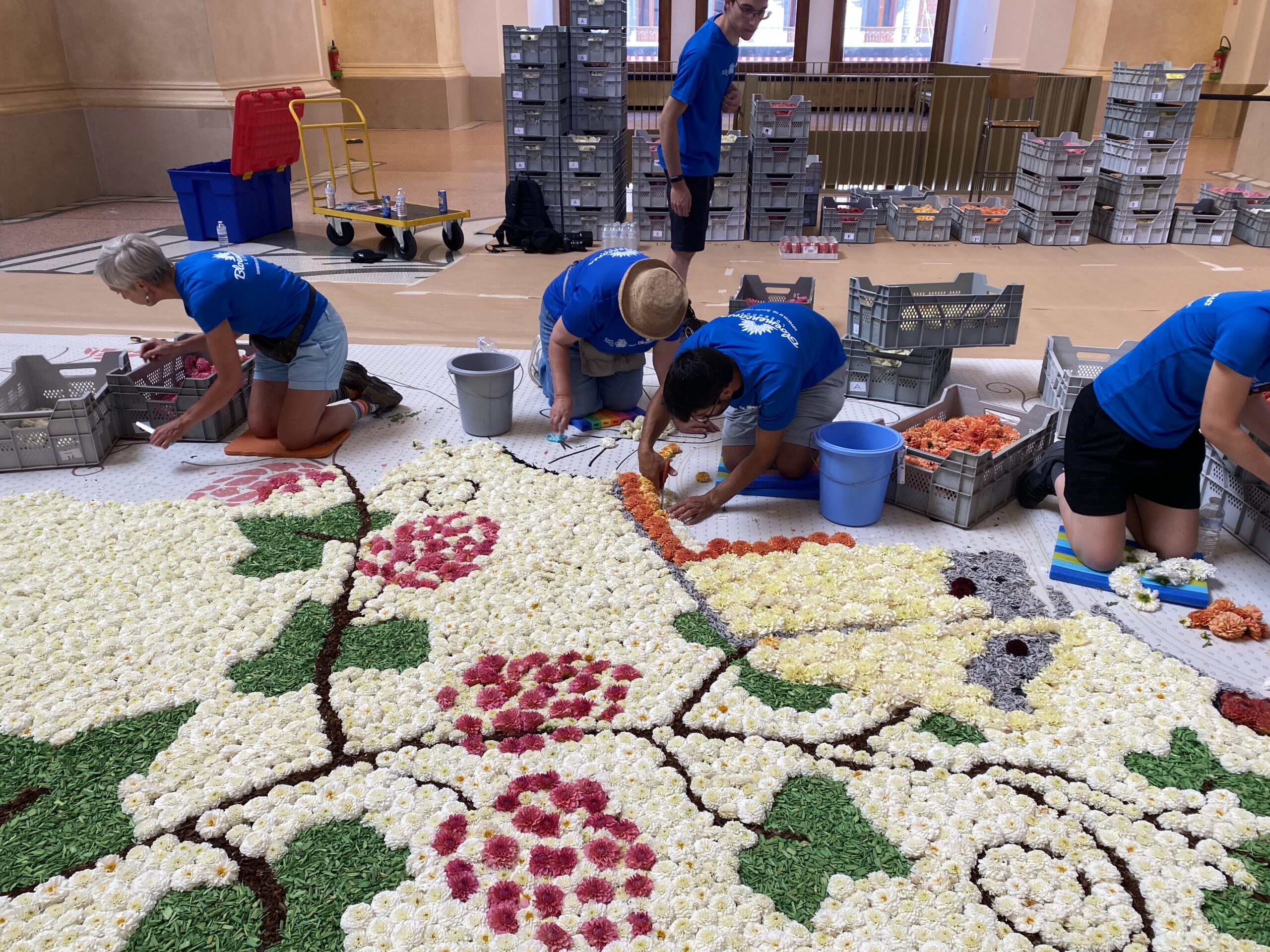
Volunteers working on the second flower carpet at Bourse. Credit: Isabella Vivian / The Brussels Times
The Grand Place will remain freely accessible on Thursday morning, and visitors will be able to watch 'The Great Wave' gradually come to life.
The Flower Carpet can be viewed for free until Sunday 16 August at 22:00 (final entry at 21:30). A light and audio show will also take place every 30 minutes in the evening, between 21:00 and 23:00. The first will be at around 22:00 on 13 August.
Visitors can also buy tickets to admire it from both the City Hall balcony and the building's tower, offering an even more impressive view of the artwork. All tickets for the tower are now sold out. Tickets for the balcony will be available on the day at the Flower Carpet reception desk for €9. Under-10s go free.
Credit: Isabella Vivian / The Brussels Times
