
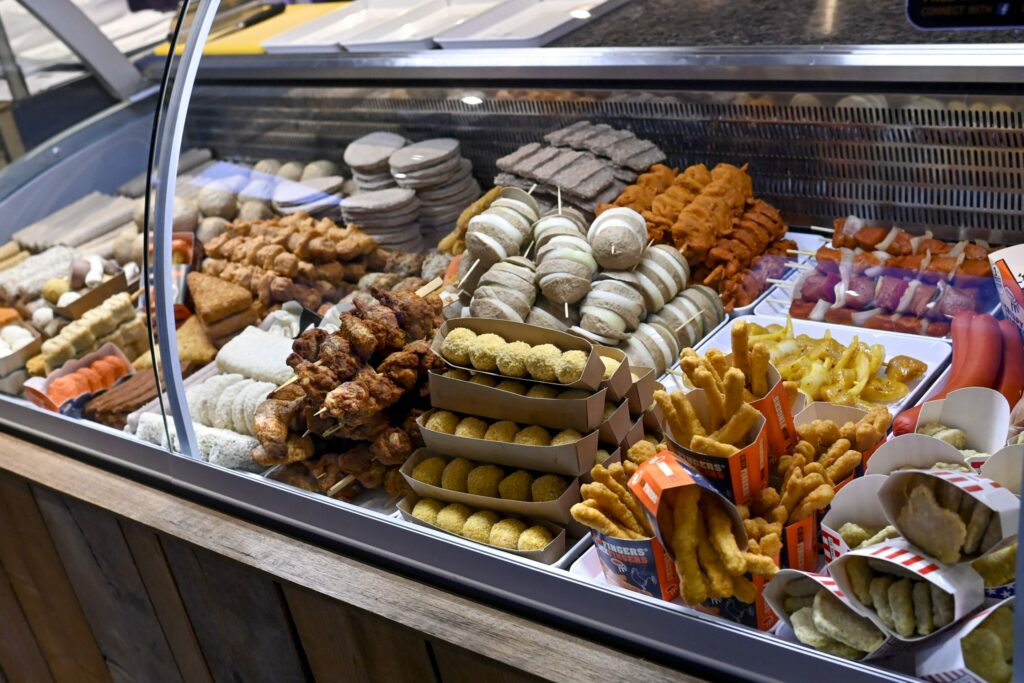
If you have ever ordered a snack containing meat from a Belgian friture on a cold day or after a night out, chances are you may have eaten horse meat.
Horse DNA was detected in 27% of the products analysed, and at least one product containing horse DNA was found in 76% of the chip shops sampled by animal rights non-profit GAIA. Their Director of Operations Sébastien De Jonge said in a press release that the findings are a prime example of a lack of transparency over what Belgian and international consumers are eating.
GAIA has recently commissioned an investigation in which an independent accredited lab analysed 123 products, including Belgium's most popular snacks - meatballs, meat croquettes and frikandels - from 25 chip shops across the country in late August.
De Jone told The Brussels Times that GAIA deliberately selected different types of chip shops across the country, from small independent neighbourhood friteries to larger group businesses.
In Brussels, GAIA tested five chip shops, De Jonge confirmed, as well as 10 in Wallonia and 10 in Flanders.
80% of the Brussels fritures tested had at least one product containing horse DNA.
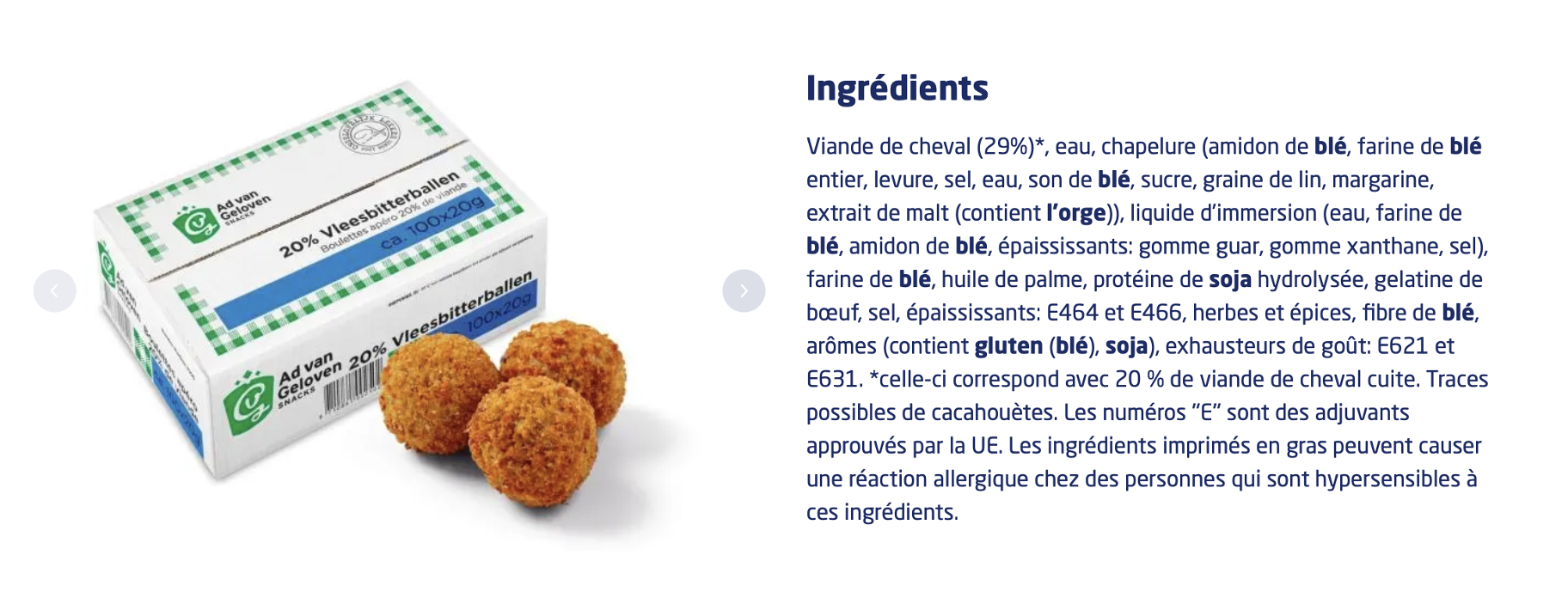
Screenshot of a product page on Van Geloven's Belgian website showing horse meat among the listed ingredients. Credit: GAIA/Van Geloven.
Related News
- GAIA protests against slaughter without stunning in Brussels
- Call for closure of Walloon slaughterhouse following accusations of animal abuse
Not communicated at the counter
Nonetheless, there is an important distinction: GAIA is not alleging that chip shops are illegally substituting another meat for horse meat, nor that the owners of these shops deliberately conceal ingredients.
Rather, the problem lies in the gap between information available to the business and what customers see when ordering. De Jonge says horse meat is identified in the list of ingredients on the packaging supplied to friteries, but when a snack is sold to the customer over the counter as, for example, a "meat croquette", they are generally not told which species of meat it contains.
"The customer does not know that they are eating horse," De Jonge explained.
Not wanting to place a responsibility on individual chip-shop owners, GAIA declined to identify the 25 establishments in their study for fear of singling them out. De Jonge said operators might themselves be oblivious to the exact meat composition of every product sold, especially when ordering prepared snacks through wholesalers.
Why horse meat?
Cost does not appear to be the reason why horse meat is used. De Jonge told us that whether horse meat is cheaper than beef is not important as it usually isn't, saying instead that it might be characteristics such as providing texture and colour which give the final processed meat the desired result.
The investigation also points out the place horses play in Belgian society. GAIA said Belgium has around 400,000 horses which are predominantly kept for leisure as pets and for sports. De Jonge explained that it makes their presence in the food chain more and more difficult to reconcile with the way Belgians relate to the animal.
De Jonge also explained the dual status under which horses can either be designated for consumption or excluded from it. GAIA says 1,662 equines were slaughtered in Belgian slaughterhouses in 2025.
The country has also imported 12,268 tonnes of horse meat that year, equivalent to around 38,500 animals according to GAIA.
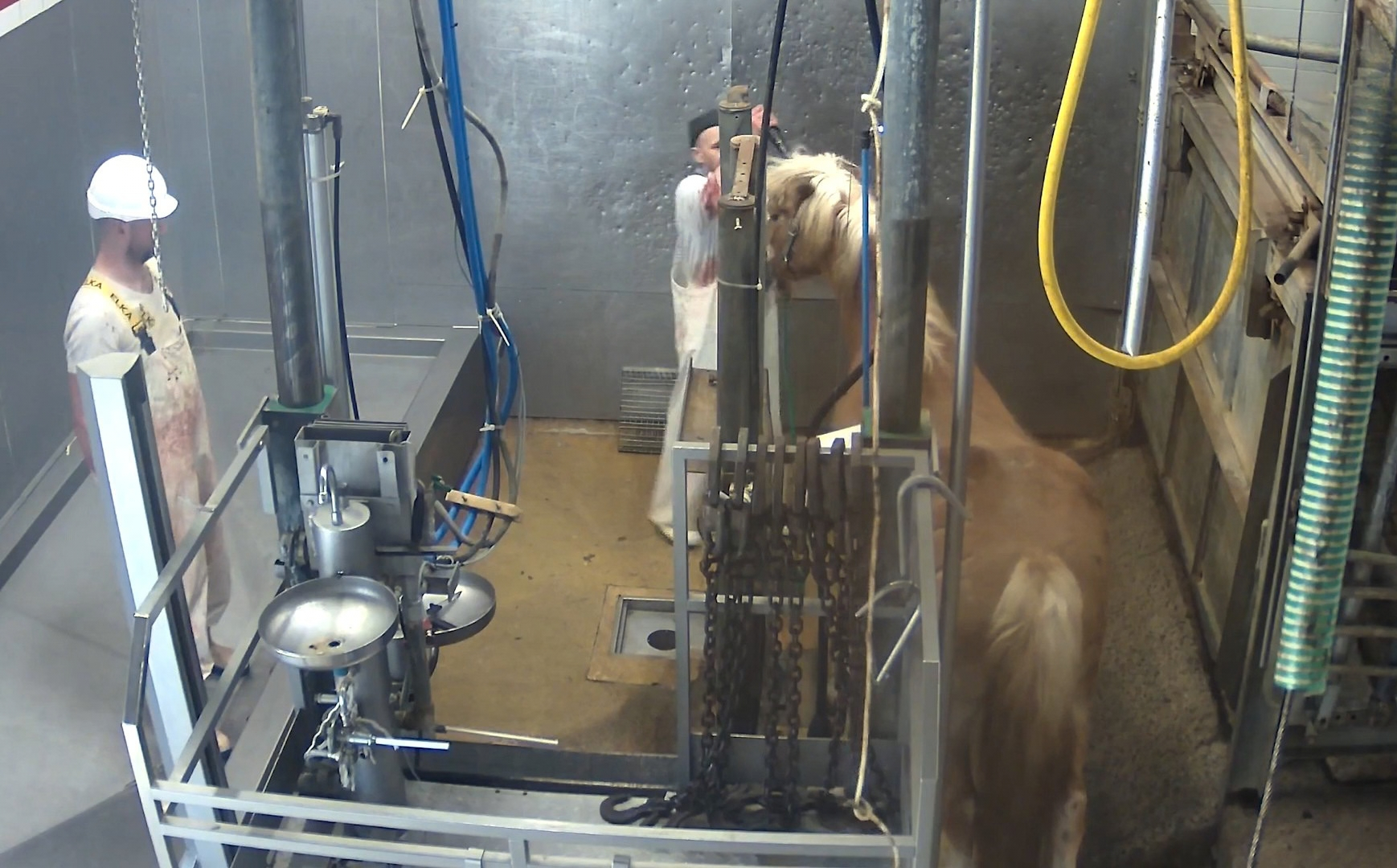
A horse being brought to a slaughterhouse in Ath, Belgium. Credit: GAIA.
Blanket ban on horse meat
De Jonge said that the findings were discussed with Belgium's Federal Agency for the Safety of the Food Chain (AFSCA). However, "it is not a breach of food safety rules."
GAIA noted in the report that requiring restaurants and chip shops to display the entire composition of every non-prepacked item would be difficult.
Consumers normally understand what they are eating when ordering meat. "When you go to a restaurant and order a steak, you know it's beef," De Jonge explained. "They're not going to sell you horse behind your back."
Rather than simply demanding new labels on chip-shop menus, GAIA is going a step further.
Ahead of World Animal Day on 4 October, it is calling for horses to be recognised as companion animals and removed from the food chain altogether.
It wants Belgium's three Regions to prohibit the slaughter of equines for human consumption and their export for that purpose, alongside a blanket ban on the sale of horse meat in Belgium, including in processed foods.
"We have already made the horse a companion in our lives. It is time for the law to reflect that," De Jonge said.
"No more slaughterhouses, no more horse meat in our shops or on our plates."
