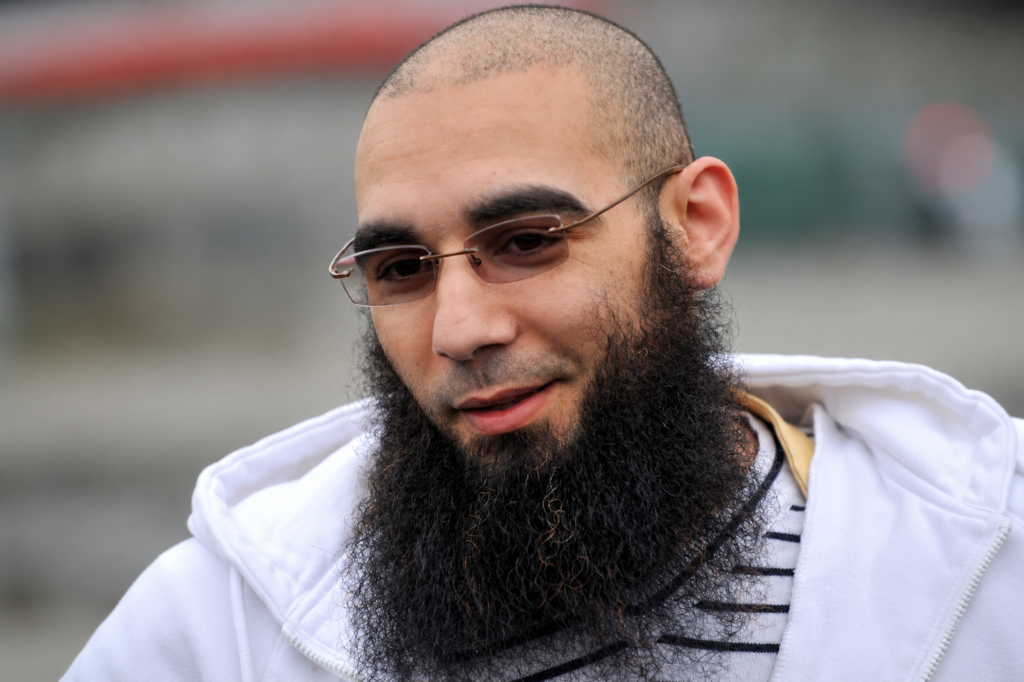
The man responsible for indoctrinating and sending several young Belgians to their death in Syria will soon be out of prison. Ahead of his release, he is asking the Belgian state to offer him protection, fearing extradition to Morocco.
Fouad Belkacem, 44, born in Rumst, next to Antwerp, father of four children, led Sharia4Belgium, the terrorist organisation that rattled Belgium in the early 2010s.
He is now applying for asylum in Belgium, confirmed Asylum and Migration Minister Anneleen Van Bossuyt (N-VA) to The Brussels Times.
Fear of being sent back to Morocco is the sole reason why the man is asking for refugee status, according to her office. Belkacem lost his Belgian citizenship in 2018 and now only holds the Moroccan one.
He has been serving his 12-year sentence since 2015, and has reportedly been an exemplary prisoner following his conviction. He is guilty of recruiting and indoctrinating young Belgians and preparing them for armed combat in the Levant region. He is due to reach the end of his sentence in May 2027.
Far-right Vlaams Belang MP Francesca Van Belleghem told VRT NWS that she has heard that Morocco “does not want to take him back," but the law says that "want' had nothing to do with it.
Lawyer and Université Catholique de Louvain (UCL) law teacher Sylvie Sarolea explained that considering Belkacem is a Moroccan national, the country is legally required to allow him to return.
“Nationality carries a right of return to one's own country; Morocco could not simply refuse him because it did not want him back,” Sarolea told The Brussels Times.
His asylum request could therefore be pivotal in what happens to him after his release.
Van Bossuyt said she wants to use all means available to remove him from Belgium. She has, however, clarified that his asylum application must be first independently examined by the Commissioner General for Refugees and Stateless Persons (CGRS).
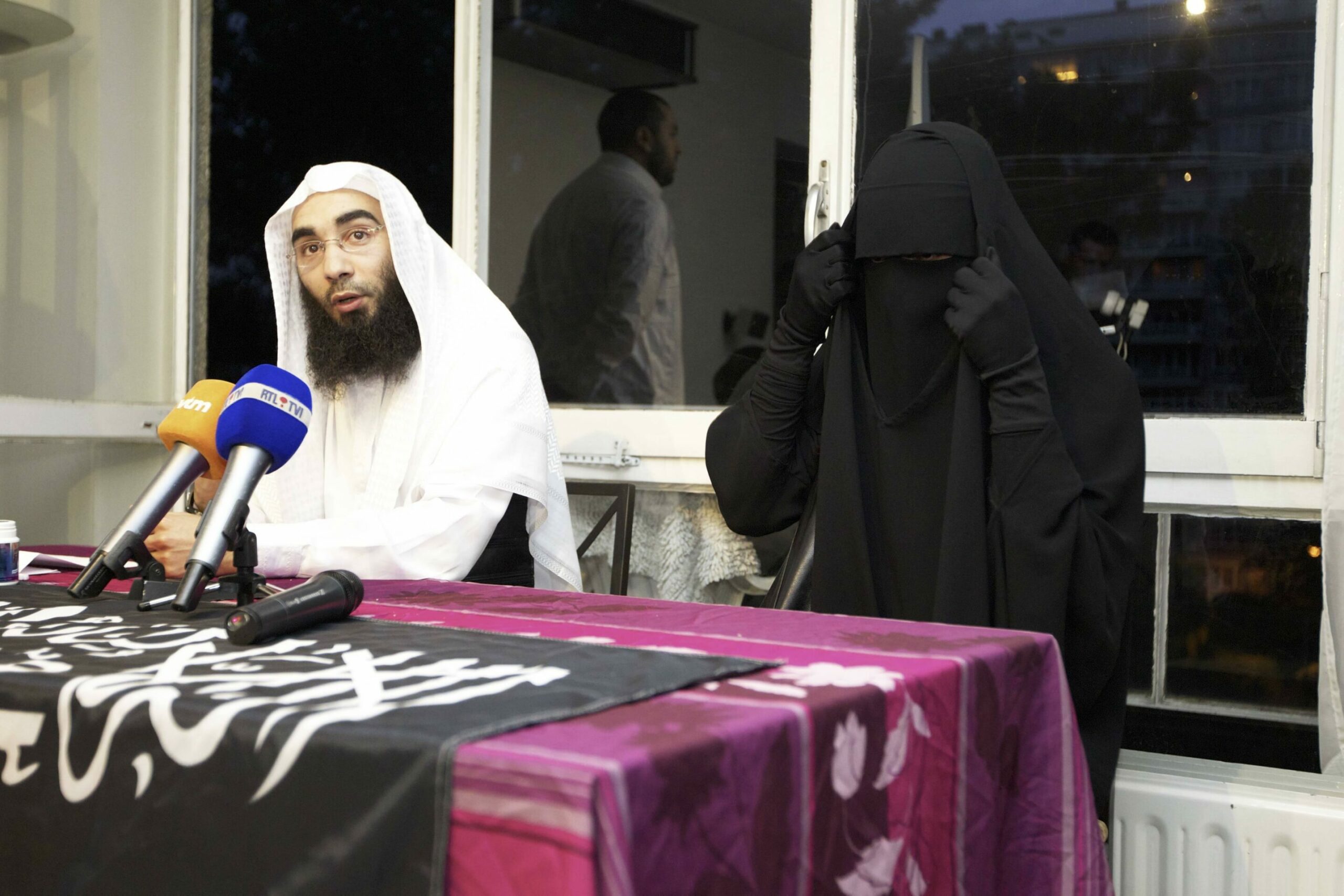
Sharia4Belgium's Fouad Belkacem, also known as Abu Imran, and Stephanie Djato pictured during a press conference in Asse, on 1 June 2012. Belkacem openly promoted the wearing of the niqab and opposed Belgium's ban on face-covering clothing in public. Credit: Belga/Nicolas Maeterlinck
In Belkacem's case, obtaining asylum is far from straighforward. Sharia4Belgium was plotting terror attacks in Europe and Belgium; Belkacem himself encouraged violence against the Molenbeek police station.
The European Court of Human Rights later also noted his calls for followers to fight and overpower non-Muslims.
Lawyer Sarolea laid out the legal terms: any person on Belgian territory has the right to apply for asylum; this, however, does not mean that they will receive it.
The Geneva Convention contains exclusion clauses for people responsible for certain serious acts: these can include serious non-political crimes, crimes against humanity, and acts contrary to the purposes and principles of the United Nations.
In Belkacem's case, Sarolea argued there is a “solid risk” that he could be excluded from refugee status. In the worst-case scenario, he would have to show that he could face persecution in Morocco.
Asylum and removal are different questions
Even if Belkacem is refused refugee status, this would not necessarily mean that Belgium could automatically send him to Morocco.
Sarolea explained that if a person can show that they face a real risk of torture or inhuman or degrading treatment in another country, Belgium could still be prevented from sending them there.
“Obtaining asylum means having a status and a residence permit,” Sarolea explained. Protection against removal can instead amount to “a form of tolerance while another solution is found.”
Because he fathered four children in Belgium, a link to the country could be taken into consideration. He was also born here. According to Sarolea, the judge would have to balance the strength of those family ties against the risk that he could pose.
If the risk is considered more important, she said, his family connections would not necessarily prevent removal.
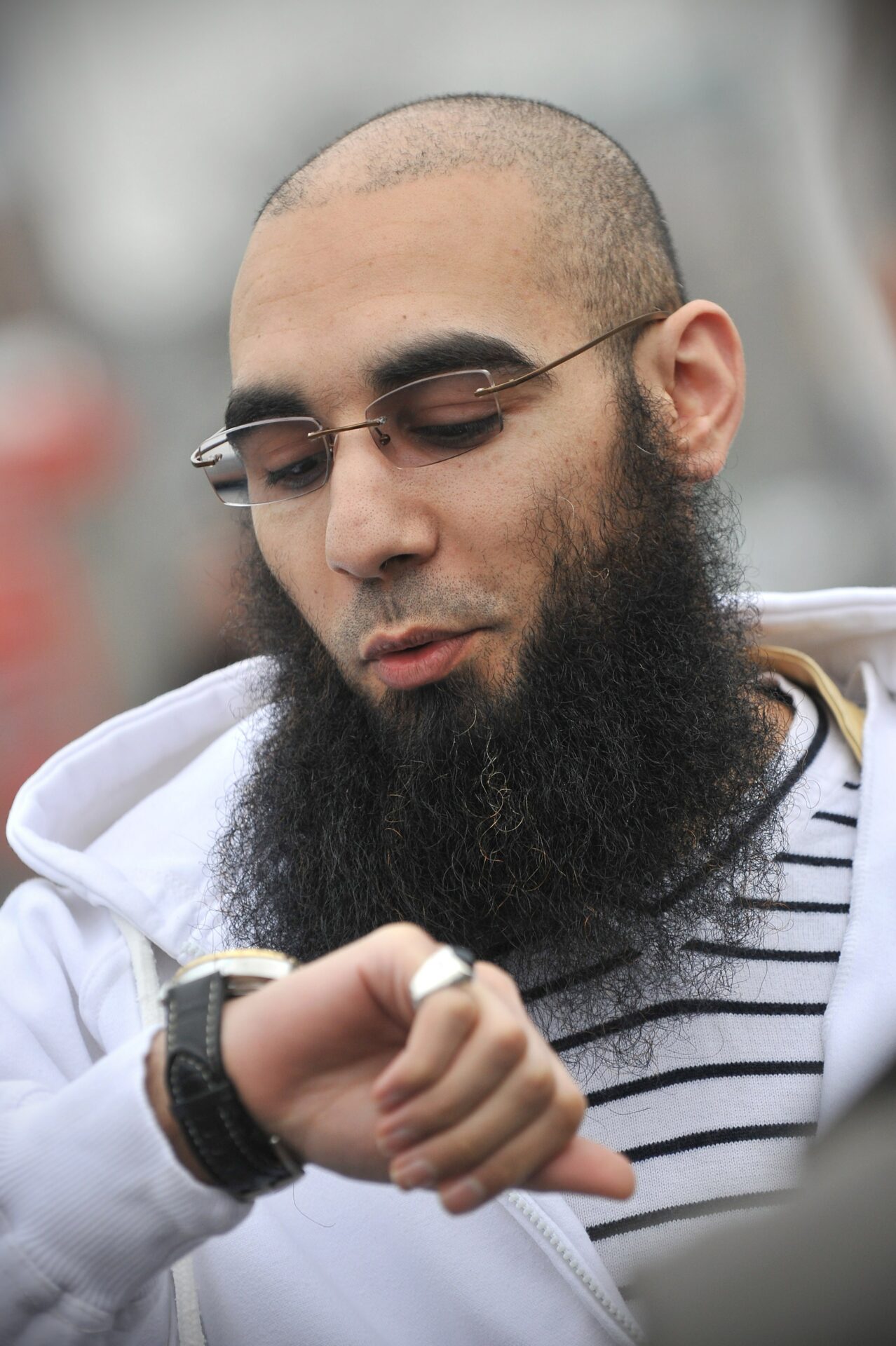
Belkacem arrives at Antwerp Criminal Court on 16 March 2012. The Sharia4Belgium leader advocated sharia law, urged Muslim women to cover themselves fully, compared gay people to paedophiles and called on Muslims to fight non-Muslims. Credit: Belga/David Stockman
Maligning democracy
Retired journalist Claude Moniquet, who previously worked for France’s foreign intelligence service, now heads the Brussels-based European Strategic Intelligence and Security Centre (ESISC).
Therefore, Moniquet knows a thing or two about what he describes to The Brussels Times as “tactics people convicted of Islamist terrorism can use, such as legal protections available in a democracy.”
He said that he found Belkacem's request “completely unbelievable.”
However, Moniquet acknowledged that the rule of law gives everyone the right to defend themselves, bring their case before a court and use the appeals available to them. He is adamant that these rights must also be respected in Belkacem's case.
Belkacem's release might not be without risk; the man is well connected, and his influence could potentially extend very far. However, Moniquet thinks that today, it is much harder to establish that influence. Sharia4Belgium has practically evaporated. "He, himself, has been forgotten; he has been overtaken."
Even if Belkacem wanted to become active again, Moniquet said he was unsure if he would still find someone who would listen to him. Many people from the networks that existed at the height of the Syrian conflict have either died, been imprisoned or disappeared from the scene.
Yet, Moniquet said Islamist terrorism “never really dies”; it only changes faces and tactics.
Belkacem was an important figure during an earlier period of jihadism in Belgium. It emerged during a period when Al-Qaeda was the main international jihadist organisation. While Sharia4Belgium was inspired by Al-Qaeda's ideology, it was not part of the organisation.
The rise of the Islamic State (ISIS) later changed recruitment tactics, which allowed groups such as Sharia4Belgium to attract and send people to Syria.
Moniquet said Belkacem is now “one of the last historical figures” from that period. But whether he would still have influence after leaving prison is much harder to establish.
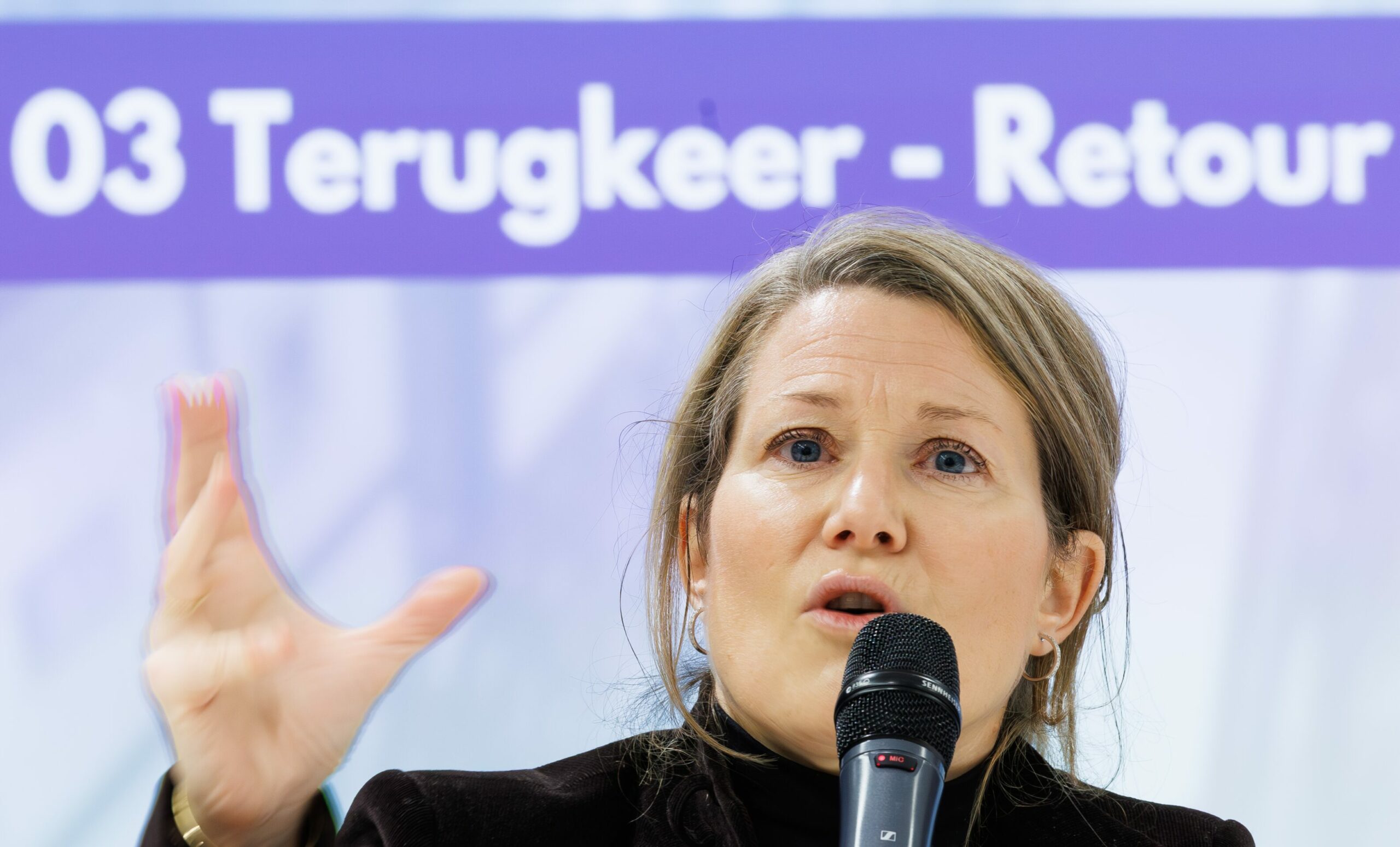
”We will soon present an arsenal of measures aimed at tackling the various forms of procedural abuse initiated from prisons or closed detention centres,“ Van Bossuyt told The Brussels Times. Credit: Belga.
The threat is still prevalent
Jihadist networks are now less visible and less structured than they were during the Sharia4Belgium period. Moniquet argued that recruitment and propaganda take place online now and through informal networks rather than through identifiable organisations or physical meeting places. “It is more diffuse, less structured,” he said.
French political scientist Gilles Kepel has described this new phase as “jihadisme d'atmosphère” or “atmospheric jihadism”: unlike structured networks of Al-Qaeda or ISIS, it does not necessarily rely on an organisation or direct orders.
Instead, extremist ideas circulate through social media and informal networks, creating an environment in which isolated individuals can radicalise and act on their own. Kepel described it as a form of contagion, with one act potentially inspiring another.
This also makes it difficult to imagine Belkacem leaving prison and simply recreating a movement similar to Sharia4Belgium, Moniquet argued.
He explained that the state’s ability to monitor such groups has also changed. Intelligence services, police and prosecutors now have greater experience dealing with jihadist networks, while legislation has also evolved.
Assessing whether an individual convicted of terrorism still presents a danger after years in prison nevertheless remains difficult.
