
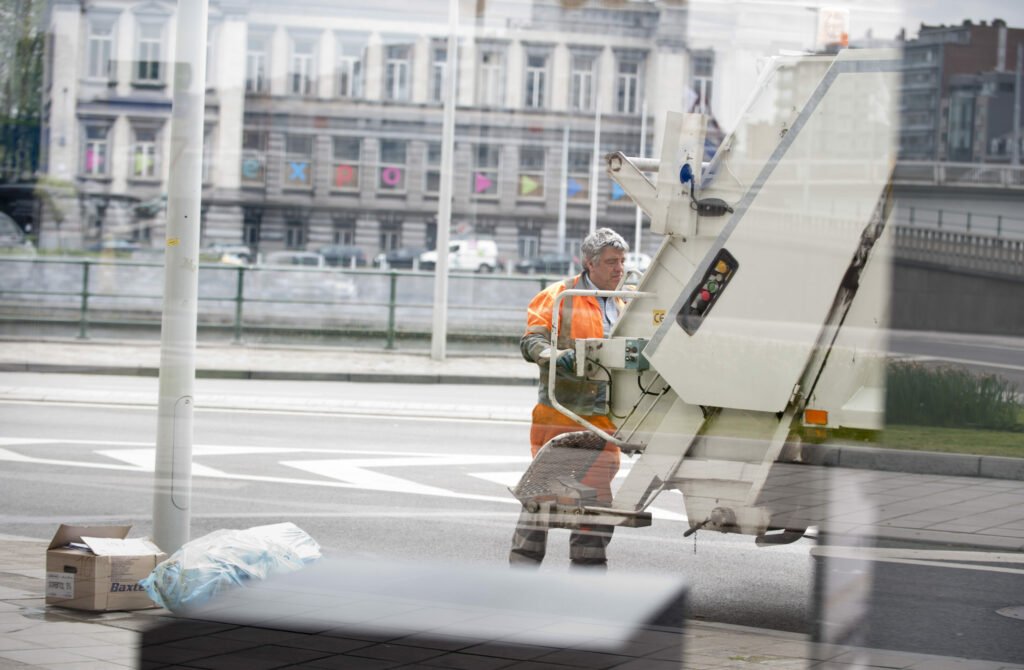
The Brussels municipality of Ixelles is going to examine installing underground waste containers as an alternative to people putting their rubbish bags out on the streets, as part of its municipal cleanliness plan.
Although cleanliness and waste collection are largely Regional compentences, many parties in Brussels took firm stances on the topics in the run-up to the local elections in October. In Ixelles, the socialist PS-Vooruit list included the intention to explore the solution of underground waste containers.
"Rubbish bags on the streets are out of date. We should look at the many examples of European metropolises where they put waste underground," said Ixelles councillor Gerard Oosterwijk (Vooruit). "It is good to see that the municipality of Ixelles is taking a serious look at this and wants to take steps."
On behalf of the Ixelles municipal council, councillor for cleanliness Geoffroy Kensier (Les Engagés) indicated that Ixelles wants to take the lead within the Brussels-Capital Region in terms of cleanliness.
'All options on the table'
When drawing up the local cleanliness plan, Kensier said that "all options are on the table" and waste collection systems in other European cities are also being looked at to find solutions.
In concrete terms, underground containers can already be incorporated in the plans for new neighbourhoods and new building projects, he stressed. Plans for a pilot to use waste containers for merchants in the neighbourhood around the Ixelles cemetery are already being considered, to reduce the number of rubbish bags on the street.
However, for a general introduction of underground containers in Ixelles, there are still many obstacles to overcome – both financial and operational, said Kensier.
On this subject, the Ixelles council wants to enter into consultation with the Brussels-Capital Region and explore the possibility of private-public partnerships to come up with creative solutions that are an alternative to rubbish bags in the street.
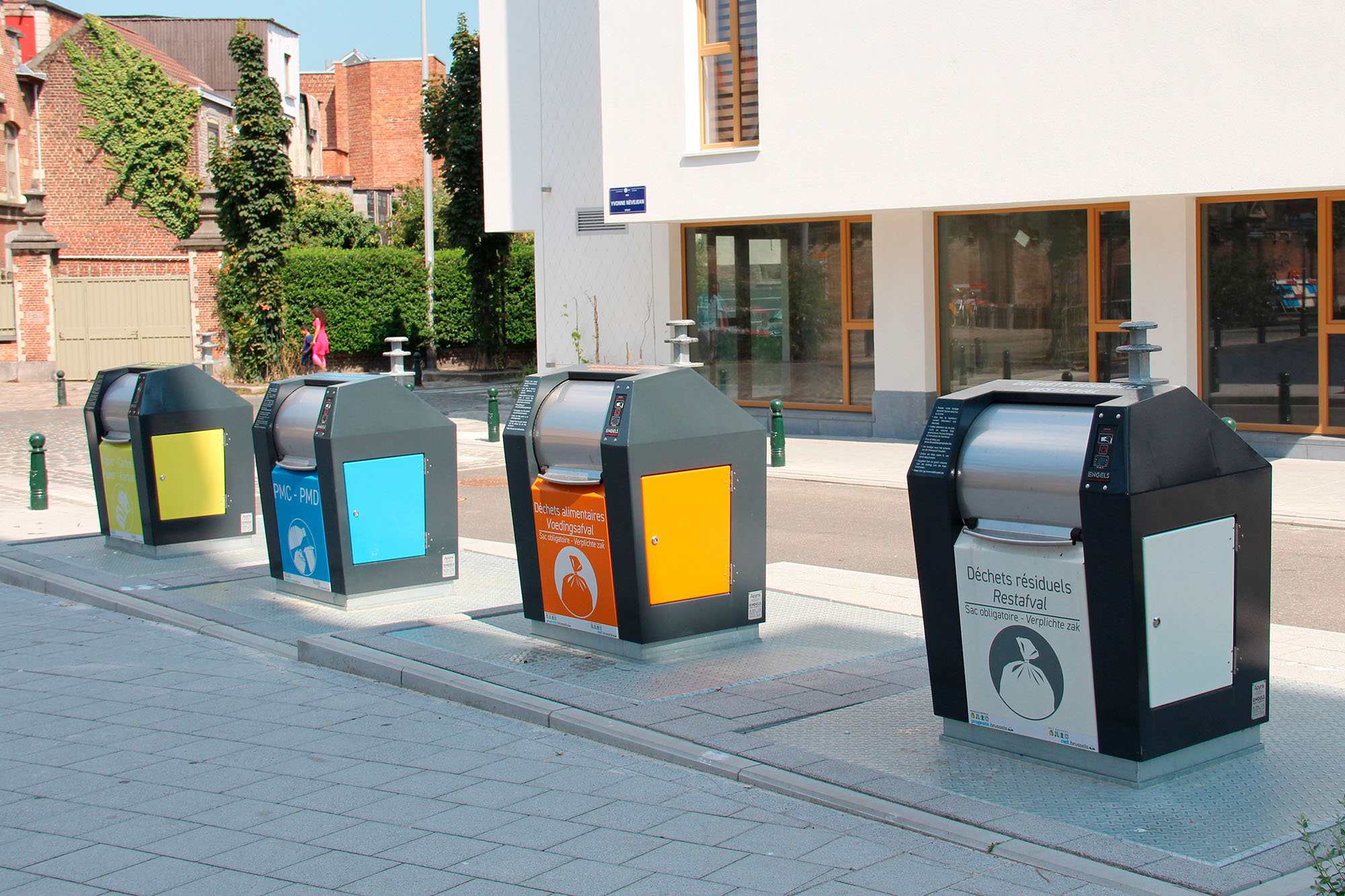
Underground bin systems in the Tivoli neighbourhood in Laeken. Credit: Engels
In March last year, Brussels Minister for Public Order Alain Maron (Ecolo) requested a study looking into a possible switch to the use of underground containers. While the study found that the system has many benefits, there are also several problems that still need to be worked out before it can be introduced in the Belgian capital, he said.
In addition to taking away the rubbish bags from the streets, underground containers have a large capacity (especially if they have a compression system) but a small bin size above ground – making them particularly suitable for densely populated areas.
However, finding space to create an underground waste collection spot is a key challenge. Additionally, these sorting areas also come with significant investment and maintenance costs: rolling out such a system in Brussels would require 3,000 to 4,000 sorting areas with four containers for various waste each – accounting for 12,000 to 16,000 containers.
Maron stressed that the initial study results showed that, above all, a lot depends on how such a container network is introduced, including information given to residents using the system, and incentives to motivate them to do it correctly.
Overall, however, he noted at the time that the Capital Region would likely move towards an underground system, but stressed that the decision ultimately lies in the hands of the next government. Nearly a year after the elections, however, the government is no closer to being formed.
