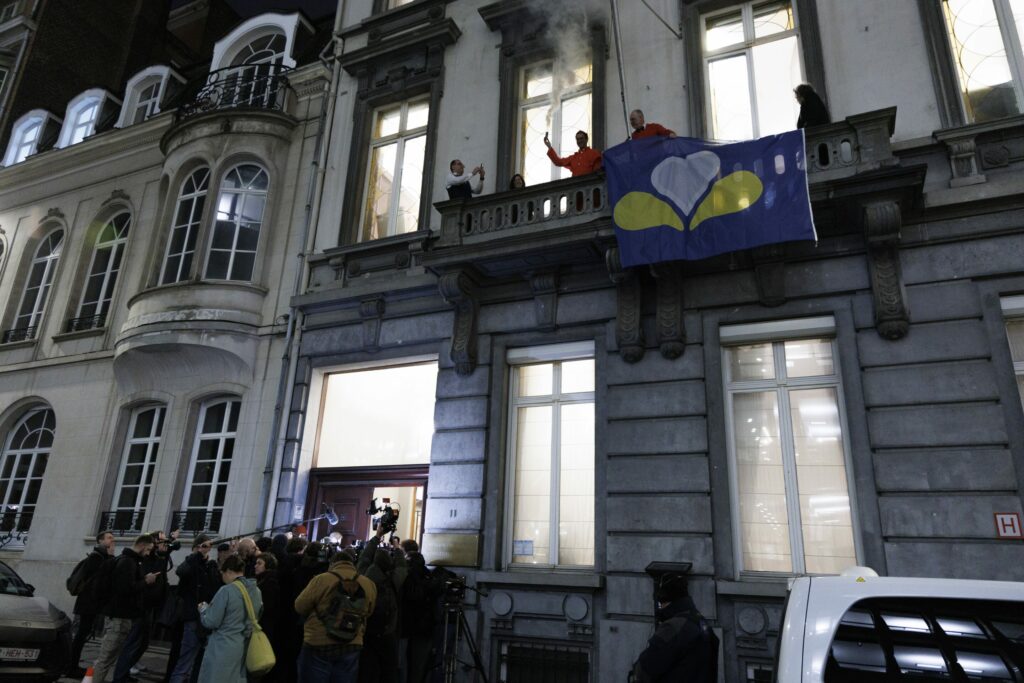
The seven parties that form the new Brussels Government have been meeting in Parliament to divide up the ministerial positions since early Friday morning.
After 613 days of negotiations – of which the last three were in a successful conclave – the French-speaking MR (liberals), PS (socialists) and Les Engagés (centrists), and the Dutch-speaking Groen (greens), Anders (liberals), Vooruit (socialists) and CD&V (Christian Democrats) finally reached an agreement on Thursday evening.
After long days and nights of talks, the parties are meeting again on Friday for a final technical review of the coalition agreement in the Brussels Parliament. The distribution of competencies is also on the agenda.
Strikingly, after over two decades of socialist-led coalitions in Brussels, the biggest party is now the liberal MR party, which received the most votes in the regional elections in June 2024.
Mystery Minister-President
The names of the new proposed ministers are slowly trickling in, but it is still unclear who will become Brussels' new Minister-President.
With MR leader Georges-Louis Bouchez having brokered the deal after over 600 days, it is anyone's guess who will be heading the new Government.
Former formator David Leisterh and current Interior Minister Bernard Quintin, both fellow MR members, have reportedly both declined the offer. Current Minister for the Self-Employed Eléonore Simonet is being mentioned as well, although at just 28 years old, some suggest she may lack the experience to guide a region as institutionally complicated as Brussels.
On Thursday evening, Bouchez told RTBF that his choice had not yet been made, having also not ruled himself out for the job. He will have to make a decision by Saturday at the latest, as that is when the new government members will be sworn in.
In addition to the Minister-President, MR will also appoint one state secretary, whose name has not yet been revealed either.
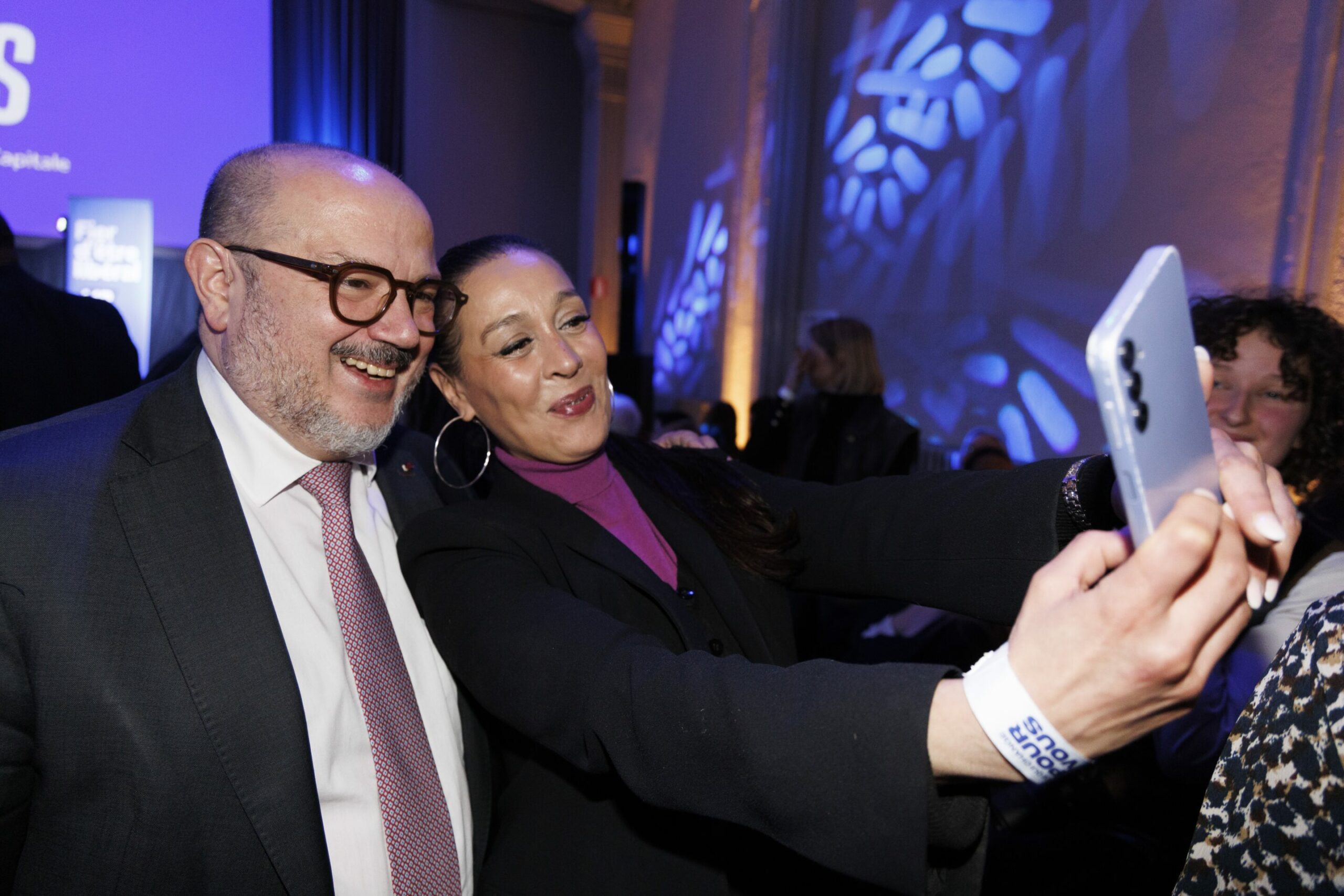
Minister of Interior Bernard Quintin poses for a selfie, at the participation congress of French-speaking liberals MR after the negotiations regarding the formation of a Brussels government, Thursday 12 February 2026, in Brussels. Credit: Belga/Nicolas Maeterlinck
For the other government members, the decisions seem to be more straightforward.
For PS, Brussels leader Ahmed Laaouej seems to be the obvious choice to fill a ministerial role (although the name of former Federal Pensions Minister Karine Lalieux is also going around).
Who will take up the ministerial position for Les Engagés is less certain; as a Brussels native, party leader and MEP Yvan Verougstraete is being talked about. However, he would have to give up the party leadership and his seat in the European Parliament for that.
Former MR member Michel De Maegd also seems to be an option, as is group leader in the Brussels Parliament, Gladys Kazadi.
On the Dutch-speaking side, all ministers seem to have been chosen already: Groen will most likely again go for Elke Van den Brandt as Mobility Minister, Anders will keep Dirk De Smedt (likely in the same position as Budget and Finance Minister).
For Vooruit, Ans Persoons will return to the government as State Secretary, having been in charge of urban development and heritage in the previous coalition.
'Nice democratic gesture'
The fourth party on the Dutch-speaking side of the government, CD&V, will not join the government, Bouchez told reporters on Thursday.
However, the party's Brussels leader Benjamin Dalle will be given a position "that makes it possible to be invited into the government," he said, adding that this is "a nice democratic gesture by CD&V."
Bouchez also said that he "regrets" the absence of N-VA (Flemish nationalist), the party of Prime Minister Bart De Wever, "but we had to take note of the PS's veto."
When the agreement was announced on Thursday evening, De Wever immediately expressed "a little scepticism" about the new Brussels government's ability to put its finances in order. Meanwhile, Bouchez said that achieving a balanced budget by 2029 would make Brussels "the best pupil in the class in Belgium."
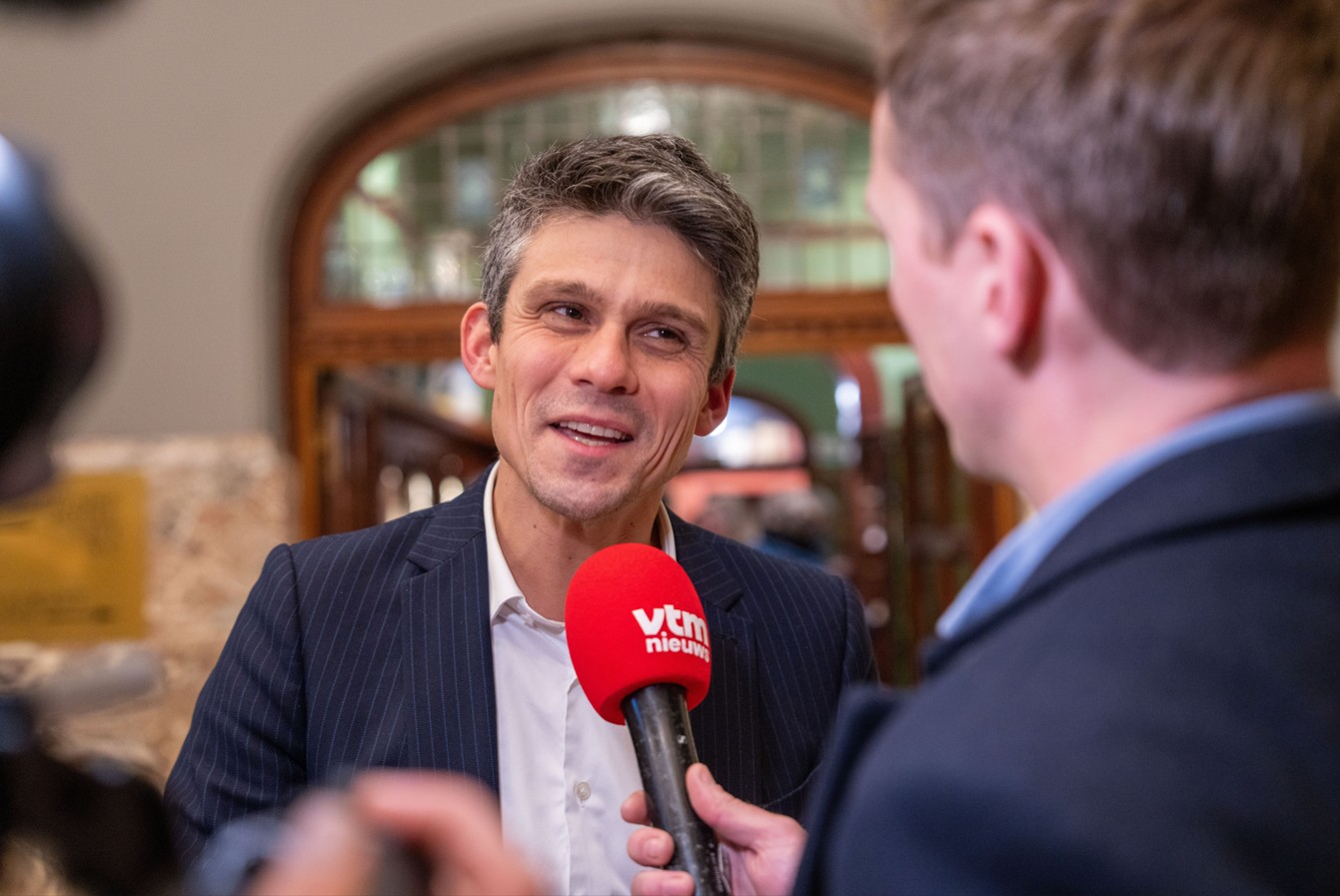
D&V Benjamin Dalle talks to the press after the negotiations regarding the formation of a Brussels government, Thursday 12 February 2026, in Brussels. Credit: Belga/Marius Burgelman
While the full coalition agreement has yet to be presented, the negotiators already announced several measures to the press when leaving the conclave.
In addition to achieving a balanced budget by 2029 (which amounts to savings of more than €1 billion by the end of the term of office), the future Brussels Government also wants to work on a "tax shift" and rework (and re-name) the controversial 'Good Move' mobility plan.
The party congresses of MR, Les Engagés and Anders already gave the green light for government participation late on Thursday evening. On Friday, PS, Vooruit and Groen are expected to do the same.
If everything goes according to plan, the new government's members will then take the oath in the Brussels Parliament on Saturday.
Related News
- 'Irresponsible': Lack of Brussels Government forces healthcare centre to shut
- PM dubious about the 'budgetary clean-up of Brussels'
- White smoke: Brussels finally has a new government
- 600 days with no Brussels Government: New hope on the horizon as citizens protest
- 'We cannot continue like this – Brussels' status as the European capital is under pressure'
