
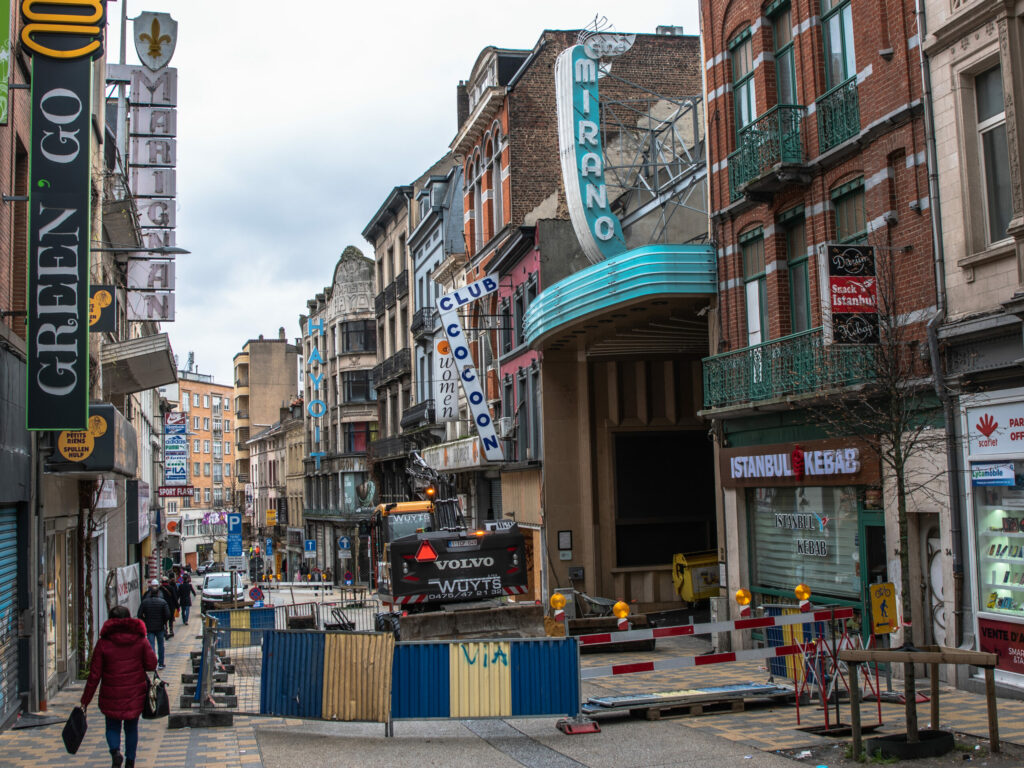
Brothels cafes and bars in the Northern Quarter of Brussels must close between 01:00 and 06:00 to combat insecurity and drug trafficking in the area.
The decision was announced on Monday by Schaerbeek Mayor Martin de Brabant in coordination with Saint-Josse Mayor Emir Kir.
It follows growing safety concerns in the Northern Quarter, which has been marked by drug trafficking and consumption, including crack cocaine and heroin. Some businesses are also reportedly being used to launder drug money.
This new measure was developed by the Local Task Force, which includes representatives from Schaerbeek, Saint-Josse, the Brussels public prosecutor’s office, safe.brussels, and the Brussels-North police zone. Designated a "regional hotspot" since April 2024, the Northern Quarter is now under a coordinated approach at both municipal and regional levels.
Additional measures include standardised opening and closing hours for establishments across Schaerbeek and Saint-Josse, extended bans on alcohol sales and consumption in public areas, increased police presence, and an expanded network of surveillance cameras.
Authorities will also impose a speed limit of 8 km/h on electric scooters within the district. Local prevention initiatives, including the creation of “safe places”, will be introduced alongside temporary location bans, enhanced outreach services for vulnerable groups, and targeted cleanliness campaigns.
In the medium term, integrity investigations will be launched to address money laundering activities in certain businesses. Plans to redesign public spaces, particularly Aerschot Street, are underway in collaboration with the regional “Stations Plan” and a €10 million investment earmarked for these improvements.
Backlash from sex workers' union
There was an immediate backlash against the plans from certain parts of the community. Sex workers on Aerschot Street risk losing a large part of their income due to the rules, the Belgian Union of Sex Workers Utsopi said on Monday.
"This plan has completely disregarded the reality of sex workers in Brussels," stated Daan Bauwens, advocacy officer for the Union. “We too emphasise that the security situation in the neighbourhood is dire, but we fail to see how this decision will improve safety, either for people on the street or for sex workers.”
According to Bauwens, the latter risk losing most of their income. He also believes the measure could encourage more illegal prostitution.
“Sex workers aren’t going to stop working during the establishments’ closing hours,” he added. “This increases the risk of violence and exploitation.”
Utsopi also expressed regret at not having been involved in the development of the security plan.
