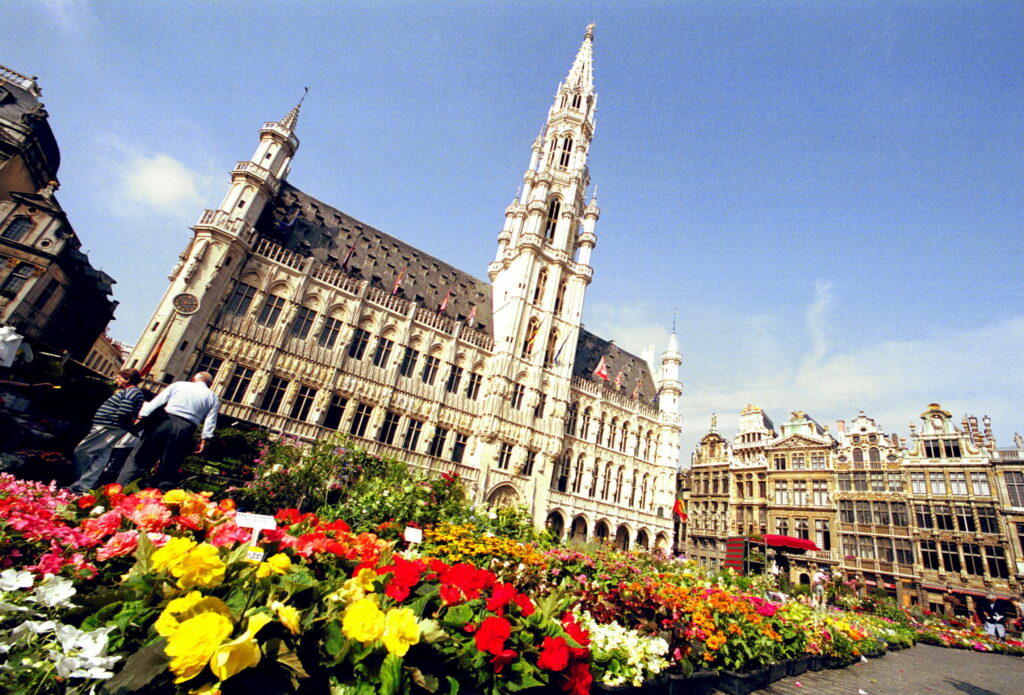
The City of Brussels has been officially named the European Capital of Democracy – a title it will hold for a year in 2027.
Brussels submitted its candidacy under the name "Brussels must be DemoCrazy", positioning itself against what it described as a global democratic backsliding in human rights and democracy.
"Democracy is not only shaped in parliaments or at the European level, but above all in neighbourhoods, public spaces, and city halls," said Brussels City Mayor Philippe Close (PS) and councillor for Citizen Participation Frederik Ceulemans (Anders) in a press release.
Despite being the largest municipality and historical centre of the Capital Region and hosting most principal EU institutions, the City of Brussels is just one of the 19 communes that make up the larger metropolitan area usually referred to as Brussels.
In addition to the central historic town located within the Pentagon/Vijfhoek, the City of Brussels also covers Haren, Laeken, and Neder-Over-Heembeek to the north, as well as the Avenue Louise and the Bois de la Cambre park to the south-east.
The official title went to the City of Brussels instead of the Brussels-Capital Region, as the latter is officially not considered a city. "But there will, of course, still be cooperation with regional government regarding the various projects," the office of Ceulemans confirmed to The Brussels Times.
'Capital of the free world'
At the end of January, City of Brussels mayor Philippe Close (PS) and councillor for citizen participation Frederik Ceulemans (Anders) welcomed an expert jury to the city.
The visit included a series of projects focused on local democracy and citizen participation. At the City Hall and across several neighbourhoods, local actors, residents and associations showcased their initiatives.
This local engagement helped Brussels secure a place on the shortlist and ultimately win over the European citizens' jury. As "the capital of the free world," the city wants to be a "frontrunner in innovative democracy."
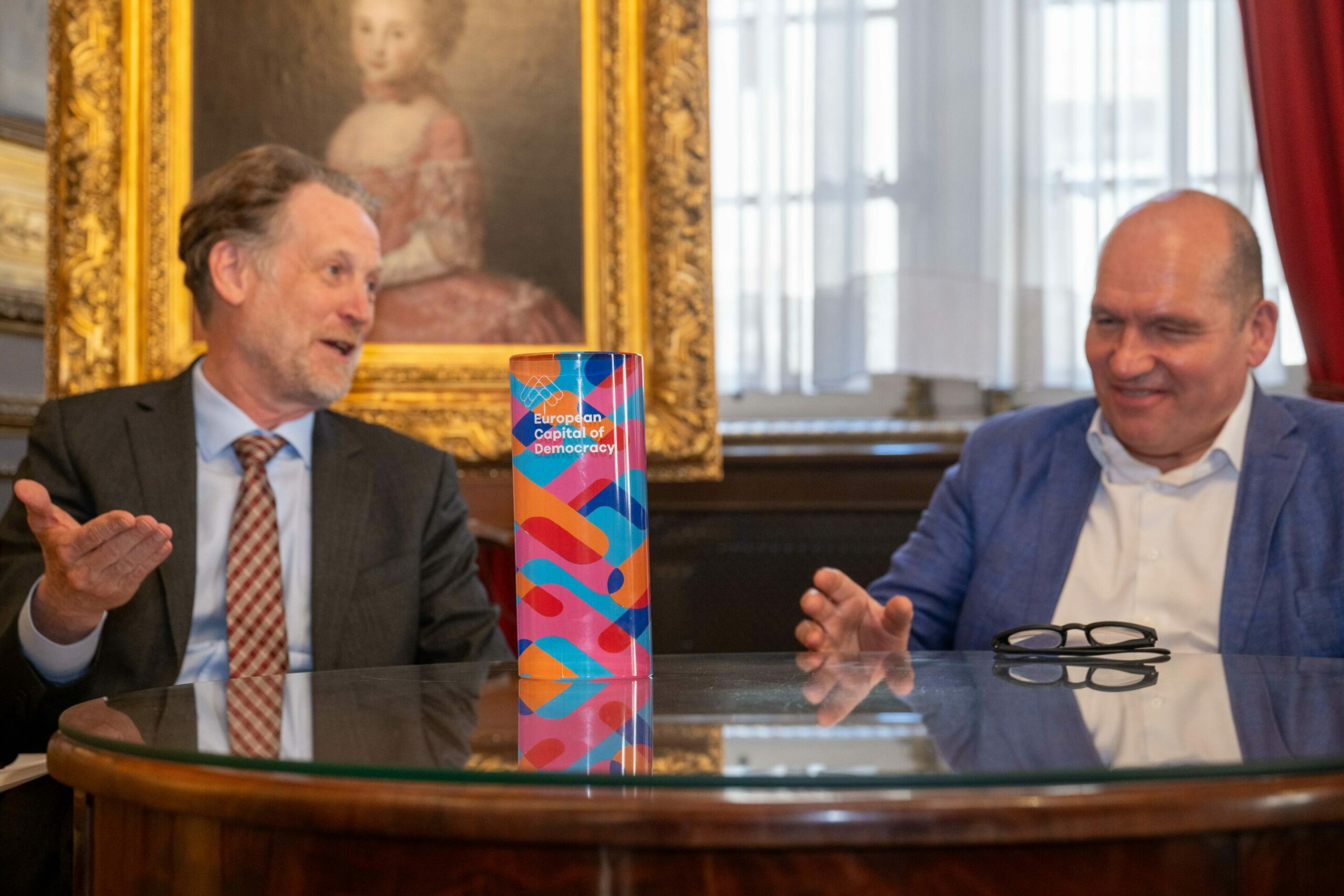
CEO European Capital of Democracy Carl Helfried (left) and Brussels City mayor Philippe Close at a press conference. Credit: Belga/Jonas Roosens
Following a multi-stage and independent selection process, the City of Brussels was ultimately selected by more than 5,500 citizens from 46 member states of the Council of Europe, as well as Kosovo.
"This title is a recognition of the commitment of thousands of Brussels residents. Our city proves every day that democracy lives and grows thanks to its inhabitants," said Close.
Ceulemans underlined that the City of Brussels is the most diverse one in Europe and stressed that precisely this diversity makes Brussels "an ideal laboratory" for participatory and democratic innovation.
As the European Capital, Brussels intends to present itself as a "democratic champion in a world that is becoming increasingly autocratic." Together with citizens, civil society and international partners, Brussels aims to strengthen its role as a capital of the democratic world.
'I do not have to be embarrassed'
Given the Brussels-Capital Region's well-documented difficulties in forming a government, some people might be surprised by the decision to honour one of its municipalities in this way.
Writing in The Brussels Times in February, Ceulemans admitted he "breathed a sigh of relief" when a new government was finally formed after 613 days of limbo, since it meant he did "not have to be embarrassed" about announcing the City of Brussels' candidacy as European capital of democracy in 2027.
In fact, Ceulemans argued that the Capital-Region's electoral travails were proof of its democratic resilience. "We have just proven that our democracy can withstand even extreme pressure," he wrote, adding that "there is no better time than now to proclaim our city the European Capital of Democracy".
Involving residents in public life
While holding the title in 2027, the city will host a range of projects, debates and events centred on participation, dialogue and democratic innovation.
According to Close and Ceulemans, cities act as "freedom fighters" for democratic values. "The European Capital of Democracy emphasises this local dimension by recognising cities that create meaningful opportunities for participation and democratic innovation."
Across Europe, cities are developing new ways to involve residents in public life: they create spaces for participation, test new democratic practices and build bridges between institutions and communities.
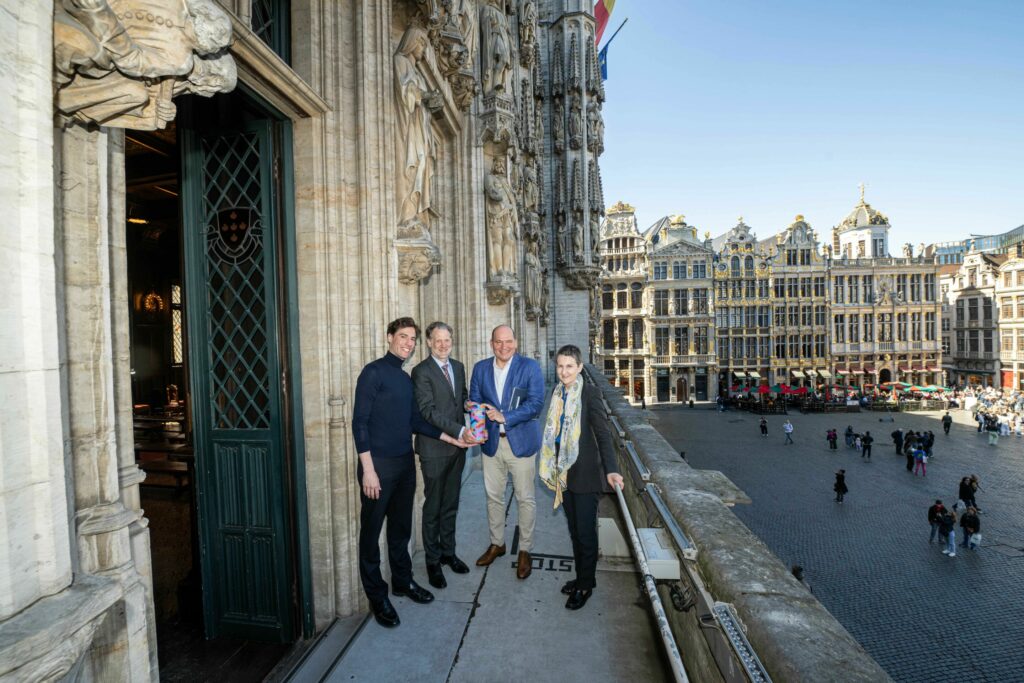
Brussels City councillor Frederik Ceulemans (left), CEO European Capital of Democracy Carl Helfried (second left), Brussels City mayor Philippe Close (second right) and Professor Sanja Bojanic pictured at a press conference. Credit: Belga/Jonas Roosens
"While autocratic tendencies are gaining strength at the national level in many countries, local democracy proves to be vibrant and less susceptible to populism," said Helfried Carl, Founder and CEO of the European Capital of Democracy NPO.
"Cities are powerful innovators in democratic practice," Carl said. "The City of Brussels convinced both experts and members of the citizens’ jury with its strong participatory orientation."
Previous title holders were Barcelona (2023/24) and Vienna (2024/25). The title is currently held by Cascais (2026).
A closer look at the City of Brussels' democracy projects and initiatives can be found here.
