Belgian health authorities are sharing advice to reduce the spread of microplastics as part of a campaign launched last week to protect public health and the environment.
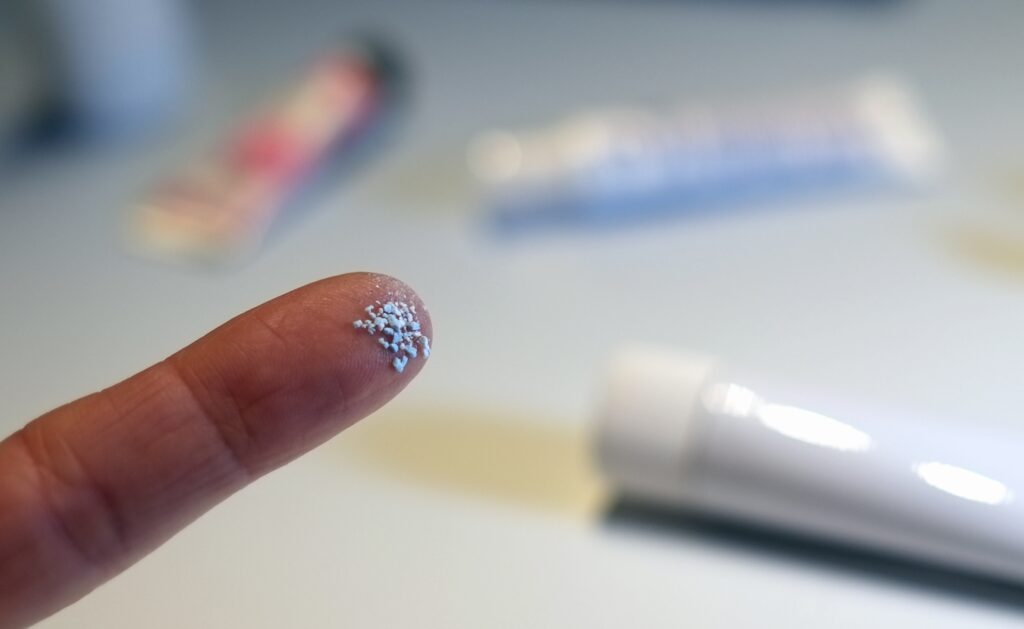
Microplastics are tiny plastic particles which are typically smaller than 5 millimetres long. While they are often invisible to the naked eye, microplastics can be found almost everywhere as they are difficult to break down and to remove from nature.
Although the impact of microplastics on human health is yet to be properly determined, the Belgian Ministry of Health warns that microplastics can include harmful types of chemicals, such as endocrine disruptors, which are known to contribute to health issues, including growth and fertility problems.
Additionally, microplastics are a threat to biodiversity as they can contaminate soil and water, disrupting plant growth and impacting the health of animals which can easily ingest these plastics.
While reducing plastic pollution is a long-term endeavour for Belgium and the rest of the EU, the Belgian Health Ministry is urging the general public to adopt several everyday habits to reduce the spread of microplastics.
Types of microplastics
There are two types of microplastics: primary and secondary microplastics.
Primary microplastics are plastics that are intentionally produced to be a "micro” product. These are used as a raw product by manufacturers of plastic products or as an ingredient in items like detergents, paints, glitter or exfoliating beads.
On the other hand, secondary microplastics are formed when larger plastic waste, such as water bottles or food packaging, is broken down.
In addition to plastic waste, microplastics also come from other everyday items, including synthetic clothing, tyres, containers and even cigarette filters.
Clothes and laundry
Among its list of guidelines and tips, the Belgian Health Ministry highlighted habits to consider when washing and purchasing clothes.
The microplastics in rivers and oceans can originate from clothes with plastic microfibres, which are carried with wastewater after being released due to the friction caused by washing clothes.
To tackle this source of microplastics, the Health Ministry asks the general public to only wash clothes when necessary, to wash clothes at a lower temperature (maximum 30°C) and with a low spin speed, and to avoid using a dryer.
Notably, simply wearing clothes with microplastic fibres can also cause the synthetic fibres to be released into the environment and spread through the air.
The Ministry of Health, therefore, advises consumers to opt for natural materials like (organic) wool, cotton or linen instead of synthetic ones.
Additionally, consumers are advised to avoid fast-fashion brands and to opt for second-hand clothing, as this can reduce the demand for new synthetic products and reduce microplastic emissions.
Tyres and driving styles
According to the Health Ministry, one of the main sources of microplastics in the environment is rubber tyres, which release microplastics over time due to the friction caused by driving a vehicle.
One way to tackle this source of plastic pollution is to use public transport, cycle or walk instead of driving a car when possible.
To further slow down the wear of car tyres, the Health Ministry recommends opting for a "smooth driving” style, whereby drivers avoid rapid acceleration and sudden braking.
Moreover, the health authorities remind drivers to check their tyre pressure regularly and to change the types of tyres according to the season, as winter tyres, for example, can be worn out more easily when they are used in the summer.
Plastic waste, containers and toys
In addition to choosing products with little to no plastic packaging, health authorities further recommended investing in reusable items to reduce the amount of plastic waste in the country. This includes using reusable water bottles, coffee cups, lunchboxes and shopping bags.
Moreover, when reheating food, it is best to avoid plastic containers and instead use containers made of stainless steel, unpainted porcelain or glass. For similar reasons, the Health Ministry advises against leaving plastic water bottles inside a vehicle on hot days.
Additionally, parents are asked to opt to purchase toys made of natural materials, such as wood, for their children.
The Health Ministry further highlighted the importance of disposing of all rubbish correctly, including small items like cigarettes and chewing gum, and ensuring plastic waste is recycled whenever possible.
Cleaning and cosmetic products
Cleaning products can also be a source of unnecessary plastic. Whenever possible, the Health Ministry advised using items with less or no plastic to clean, this includes solid soap bars, bicarbonate of soda or washing powder bought in bulk.
Additionally, the health authorities further recommend that consumers use products with the European Ecolabel, which indicates that the product in question meets certain EU criteria that take into account the use of harmful ingredients.
The same advice applies to cosmetics and personal hygiene products, which are another possible source of microplastics.
