
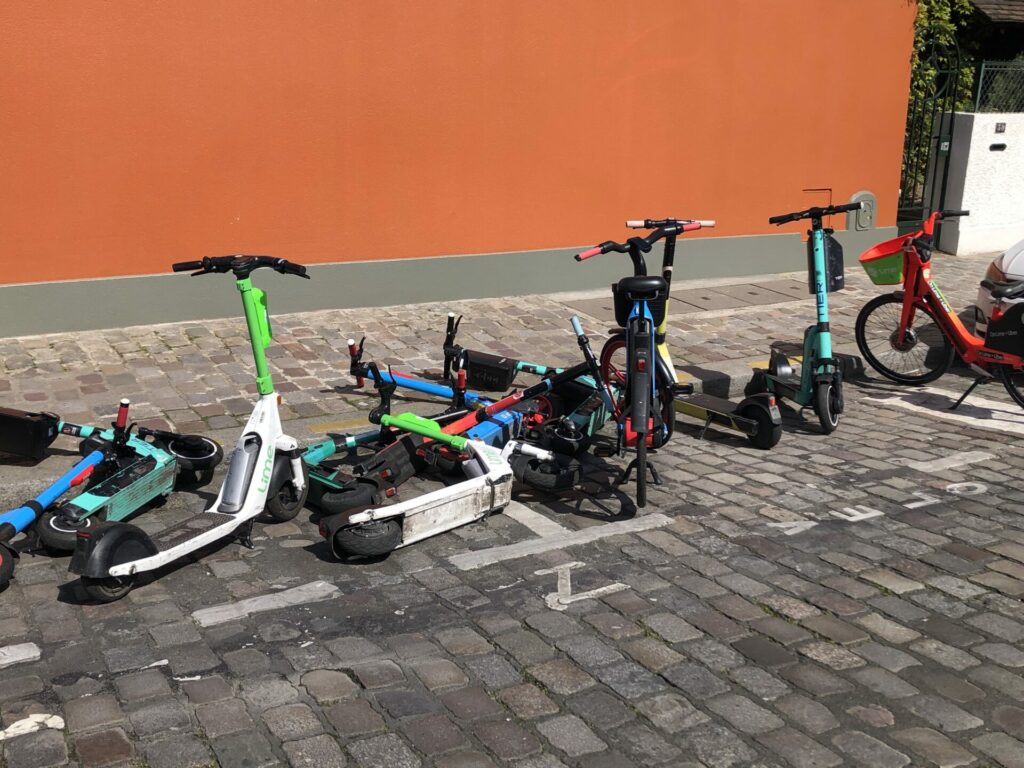
Less than a week after Brussels decided to ban shared e-scooters from its streets, the Benelux Union is urging the European Commission to establish a harmonised EU-wide framework for the vehicles.
Belgium, the Netherlands and Luxembourg point to growing differences between national regulations on e-scooters and other so-called Personal Mobility Devices (PMDs) – leading to safety risks, legal uncertainty for market players and obstacles to innovation.
"The current fragmentation of national rules hampers both road safety and innovation. A single European framework would allow us to better protect users and provide greater legal certainty for businesses," said Liesje Schreinemacher, Deputy Secretary-General of the Benelux.
The call comes at a time when the use of e-scooters and other light electric vehicles continues to grow rapidly in European cities, while many EU Member States are simultaneously revising their national regulations.
Brussels' e-scooter ban
Last Thursday, the Brussels-Capital Region announced that it would not renew the permits of the two remaining operators in the city, Bolt and Dott, once they expire at the end of 2026. As a result, shared e-scooters will disappear from the Belgian capital's streets from January 2027.
While the regional authorities cited safety concerns and growing nuisance for the decision, the operators have pointed out that the lack of shared (and therefore, regulated) e-scooters in the streets will likely push users towards private scooters, which they called "unregulated, untraceable, and genuinely dangerous".
However, Brussels is not the first European city to take such a step. Shared e-scooters have already been removed from the streets of Paris, Madrid and Prague.
According to the Benelux Union, e-scooters (and other PMDs) represent an "accessible and sustainable complement to existing transport systems," particularly for first- and last-mile travel. At the same time, the rapid rise of these vehicles has exposed structural gaps in the current regulatory framework.
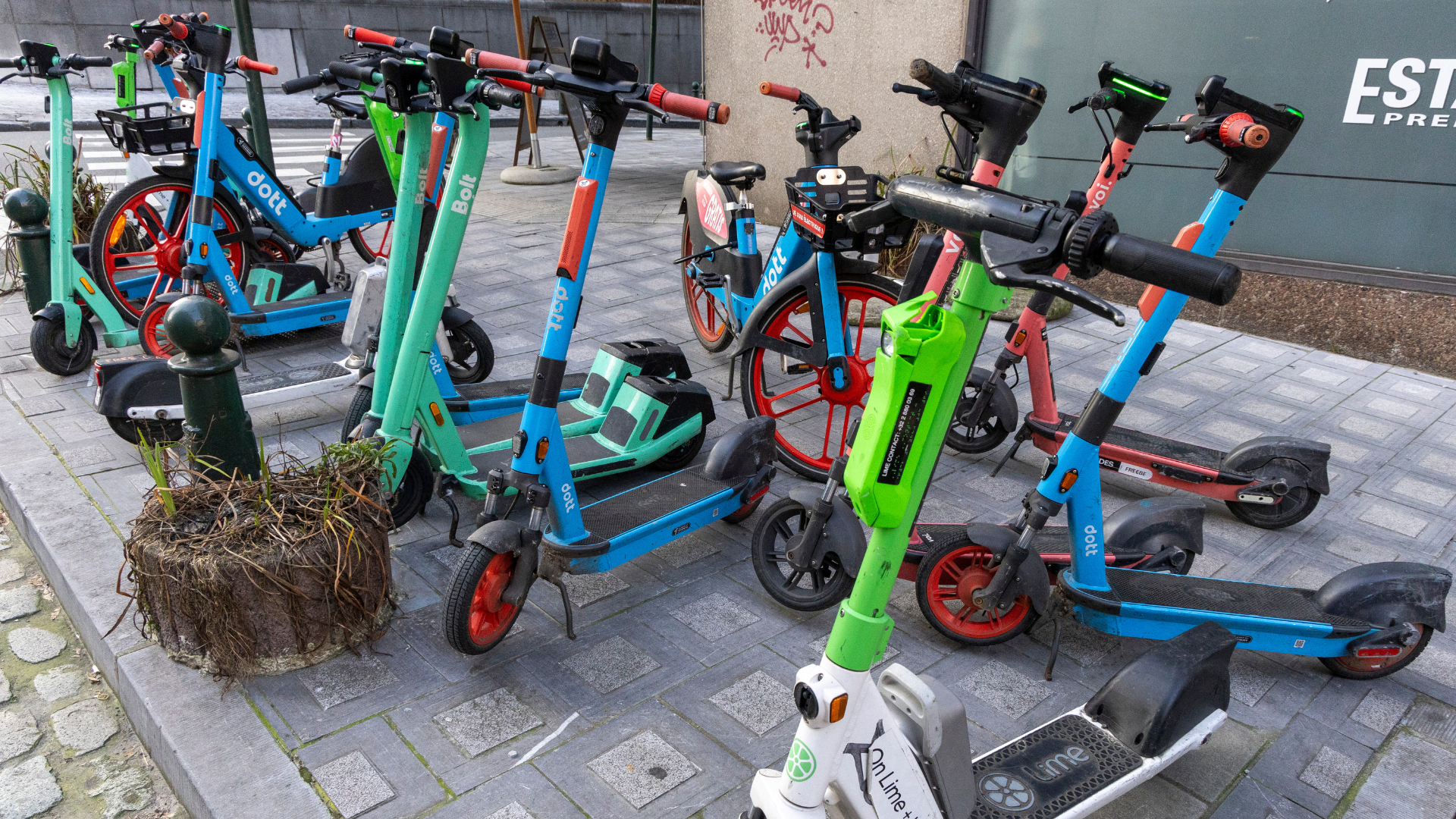
E-scooters. Credit: Belga
Across the EU, national rules currently vary widely. Some Member States have a specific legal framework in place, while others lack dedicated regulations.
"This fragmentation complicates enforcement, creates legal uncertainty for manufacturers, and hampers the development of a properly functioning internal market," they said.
Additionally, the Benelux highlights ongoing concerns regarding road safety: in several countries, the number of accidents involving e-scooters has increased in recent years. Meanwhile, the absence of harmonised technical requirements means that not all vehicles placed on the market provide sufficient safety guarantees for use on public roads.
The lack of uniform European product standards also makes it difficult to effectively prevent unsafe or non-compliant vehicles from entering the market, reinforcing the need for a common framework.
Balancing safety and innovation
Therefore, the Benelux is now calling on the European Commission to develop a legislative proposal that includes harmonised technical requirements for Personal Mobility Devices, and a proportionate system of type approval or an equivalent conformity assessment system.
Additionally, they want clear procedures for market surveillance and enforcement and consistency with existing EU legislation on vehicle safety and market surveillance.
A common European approach would contribute to safer and more uniform vehicles across the EU, they stressed. "This would not only enhance road safety but also facilitate market access and create better conditions for innovation and investment."
At the same time, Belgium, the Netherlands and Luxembourg stress that the future framework must remain proportionate, by ensuring a balance between necessary safety and control requirements on the one hand, and administrative burdens for producers on the other.
