
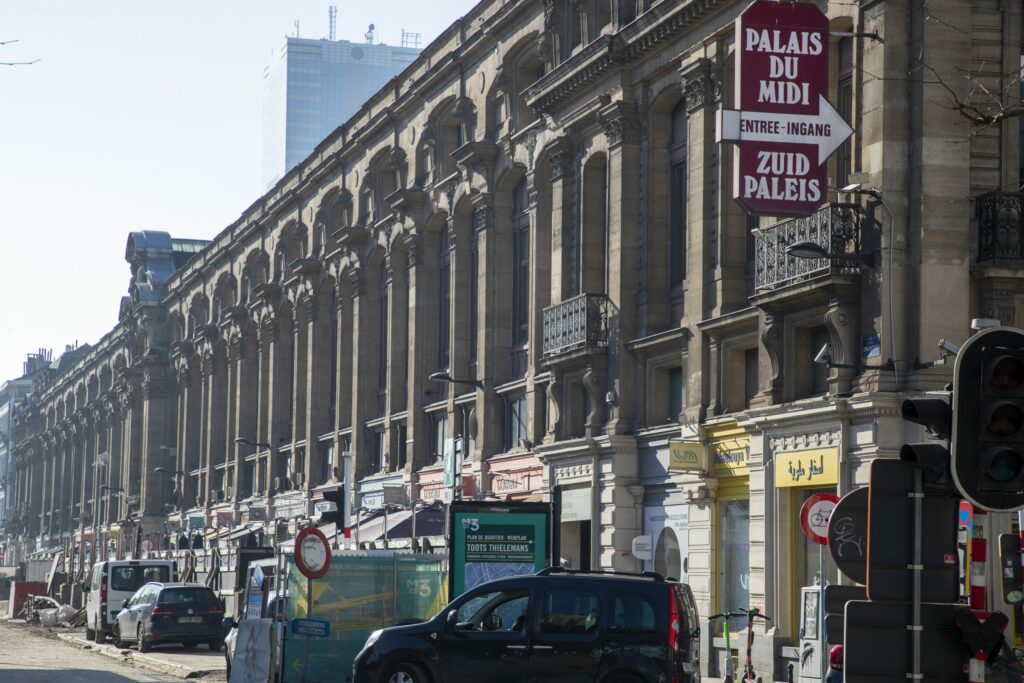
The Brussels-Capital Region plans to go ahead with the controversial partial dismantling of the Palais du Midi, after it announced the approval of the planning permit on Wednesday.
The Brussels Government has authorised the partial dismantling of the Palais du Midi, with a view to continuing the work on the stalled Metro 3 development, whose launch is delayed by at least 10 years.
The embattled metro project was initially scheduled to be carried out without dismantling the building. However, construction of the tunnel under the Palais du Midi has been at a standstill since 2022, after the discovery of stability problems during construction.
Last month, the Brussels Region also decided not to fully classify the building from 1880 as protected heritage, a decision deemed "catastrophic" by local urban activists ARAU.
Palais du Midi was once named as one of the "most endangered heritage buildings in Europe", with the lives of locals hugely impacted by the works for Metro 3, which have turned the Midi neighbourhood into an open air building site.
Heritage protections
The Brussels Secretary of State for Urban Planning, Audrey Henry (MR) announced on Wednesday that the dismantling would still go ahead, but stressed that the building has also received additional heritage protection guarantees.
According to Henry, the permit imposes several strict conditions for conservation and enhancement of heritage in order to preserve the architectural characteristics which make up the identity of the Palais du Midi.
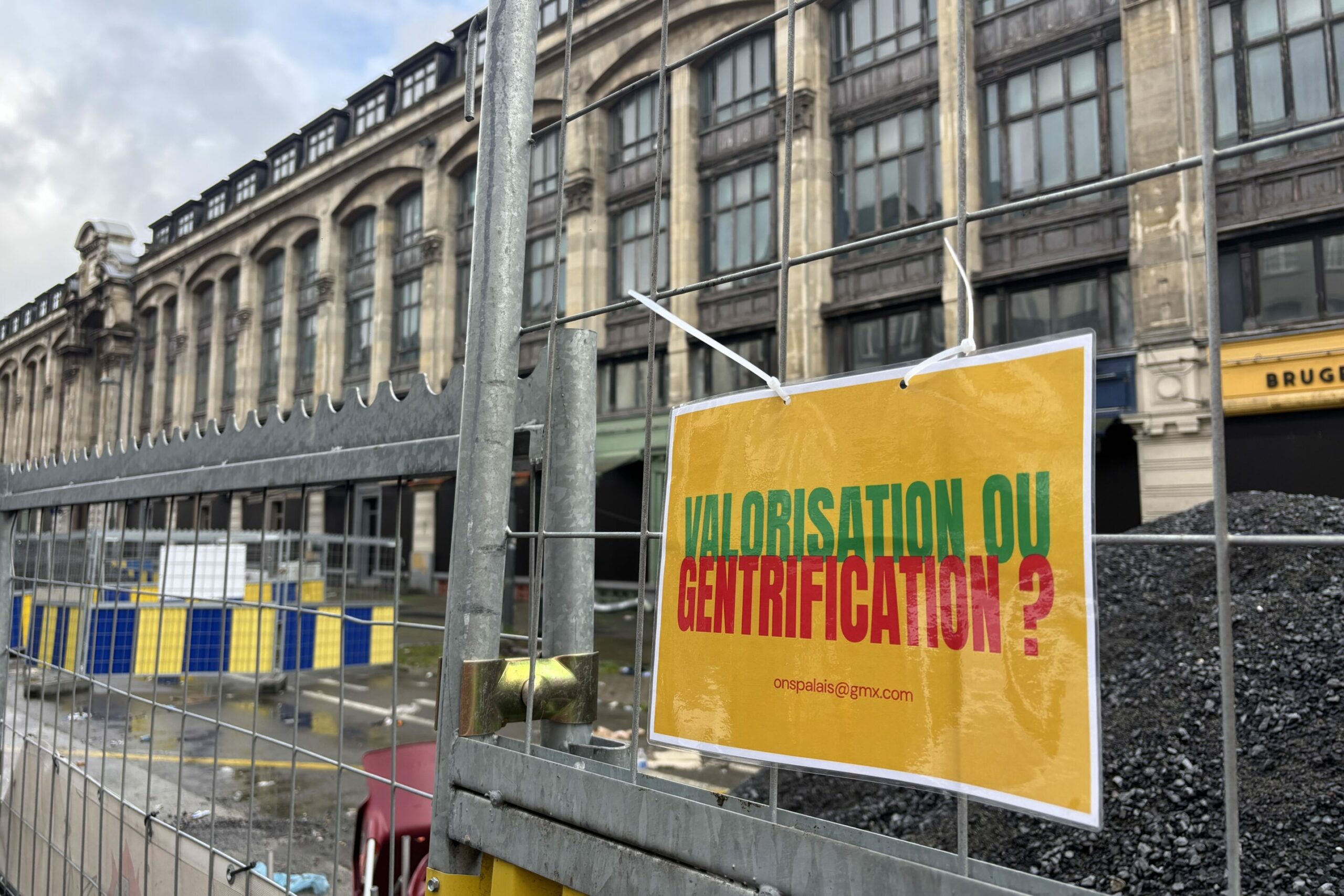
The Palais du Midi pictured during a rally organised by the StopMetro3 collective, to protest against the Metro line 3 project and its impact on the Palais du Midi and surrounding businesses, Friday 13 February 2026 in Brussels. Credit: Belga / Max Lohest
Among the protections are the conservation and restoration of the historic façades, the original joinery, the ironwork, the roofs of the building’s north wing, as well as the maintenance and enhancement of the site’s architectural layout, in particular the covered passage known as the Passage du Travail.
These are the result of an analysis carried out to assess the building’s heritage value and to inform the Brussels Government’s decision on whether it should be listed. The Brussels Government chose not to follow the advice of the Royal Commission on Monuments and Sites (CRMS) in its decision not to classify it.
Urban activists have criticised the government for wanting to continue the project for another ten years, particularly as the envisaged pre-metro line is not deemed to be useful to the neighbourhood, given the other nearby transport links.
Moreover, the reconstruction of the Palais after its partial dismantling would not occur until 2036, experts fear.

Brussels State Secretary Audrey Henry poses for the photographer during a visit to Brussels-Midi railway station, in Brussels, on Monday, 16 February 2026. Credit: Belga
In a statement, Secretary of State Henry stated that the permit approval will give clarity to the residents whose lives have been blighted by the construction of Metro 3 and the never-ending saga.
"I want a Brussels that protects its history without turning its back on its future," Henry said.
"The planning permission granted today enables us to preserve the heritage features that make the Palais du Midi a testament to the city’s history, whilst allowing us to move forward with a project that has been eagerly awaited for many years. A dynamic capital must be able to reconcile memory, ambition and transformation."
However, urban activists ARAU responded later on Wednesday, saying that the Brussels Government will have to bear the "blame for the economic and urban planning devastation" should the demolition of the Palais du Midi go ahead.
"To borrow the language of the Secretary of State’s press release, a ‘dynamic capital’ must be capable of taking citizens’ views into account and abandoning urban-destructive projects that cripple the life of an entire neighbourhood and the economy of an entire region," ARAU said.
The organisation said that it will, in consultation with local residents and other organisations committed to preserving the Palais du Midi, explore "every possible avenue" to prevent the decision from being implemented.
