Some areas in Brussels that currently receive two white-bag collections a week will "certainly" lose one. The Region is eyeing a revamp of its municipal rubbish collection schedules, based on population density and housing type.
A new reform on the table for Brussels, pushed by Secretary of State for Cleanliness Audrey Henry (MR), is eyeing the capital's household rubbish collection map neighbourhood by neighbourhood. Based on that, some areas might lose their second weekly white-bag collection by the end of 2027.
The current system, in which municipal boundaries determine collection frequency, will end. White bags are collected twice a week in nine denser municipalities: Anderlecht, Etterbeek, Forest, Ixelles, Molenbeek-Saint-Jean, Saint-Gilles, Saint-Josse-ten-Noode and Schaerbeek, and once a week in the other ten.
The Capital Region will be "divided into zones based on population density, housing type, and the amount of rubbish currently collected," explained Bruxelles-Propreté's Adel Lassouli to The Brussels Times.
No final map has been drawn yet. The agency is holding separate meetings with mayors, cleanliness councillors and municipal technical departments before determining which areas will retain two collections.
Thresholds of 10,000, 20,000 or 30,000 residents per square kilometre are among the criteria being considered, Lassouli said. The discussions will determine the density above which two weekly collections remain necessary.
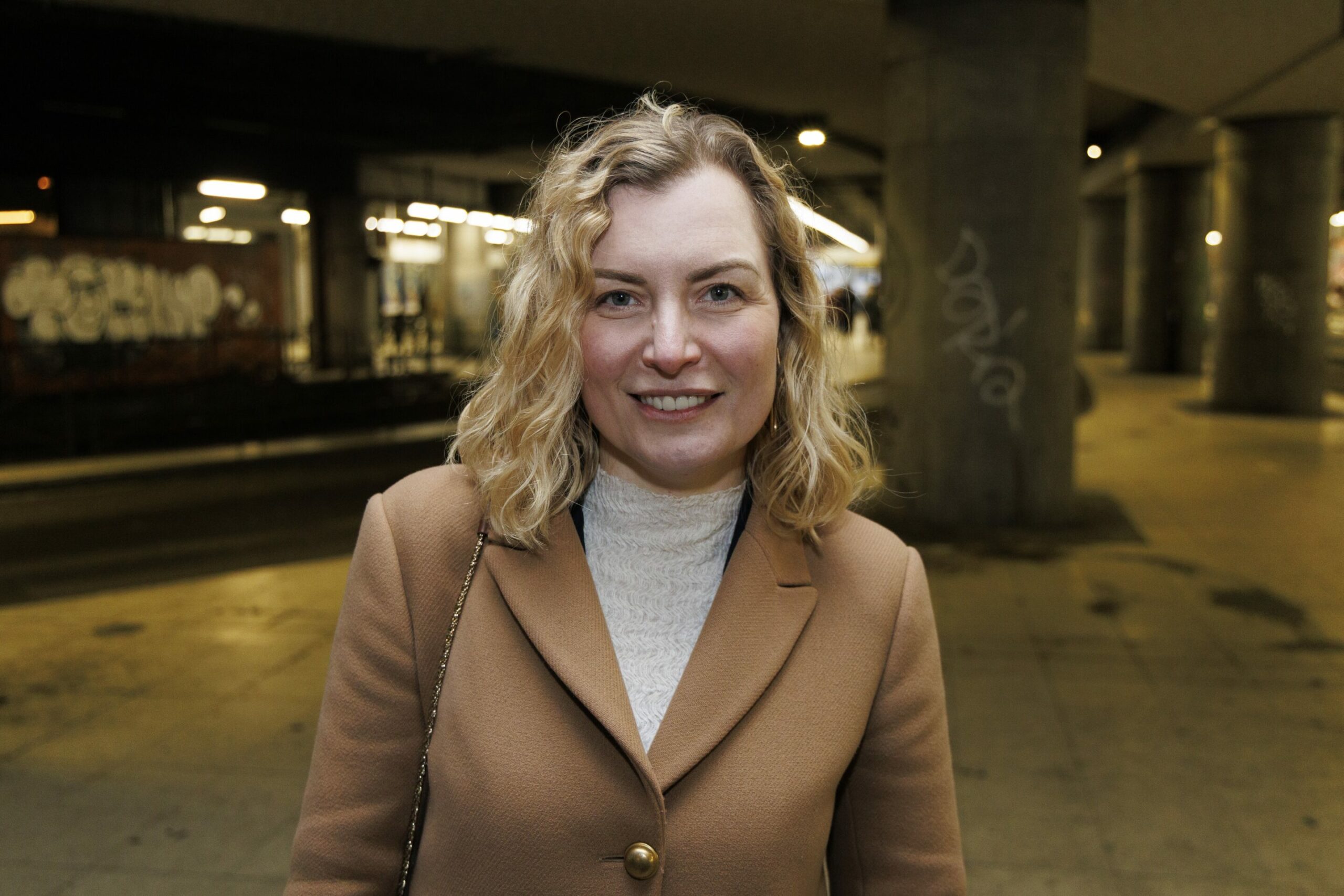
Brussels region State Secretary Audrey Henry poses for the photographer during a visit to Brussels-Midi railway station, in Brussels, on Monday 16 February 2026. Credit: Belga
Henry is considering examining the type of housing and the volume of rubbish collected during existing rounds, according to her spokesperson Robin Cuvillier.
"If, over a certain period, we see that considerably fewer bags are being collected in a neighbourhood or a particular street, we can legitimately ask whether two white-bag collections a week are still necessary," he said.
The boundaries will not simply follow exact population figures street by street. The reform intends to create coherent zones using railway lines, bridges, major roads and other visible or natural dividing points.
"You cannot choose two parts of the same neighbourhood facing each other and give them different collection days," Lassouli argued. "People would put their bags out with those living opposite."
Another thing on the table is that individual streets could ultimately be added to or removed from a zone following discussions with municipalities.
The reform could particularly affect less densely populated sections of municipalities such as Ixelles, Etterbeek and Schaerbeek, which currently receive two white-bag collections throughout their territory.
Related News
- Rats are thriving in Brussels. Can the city stop feeding them?
- City of Brussels doubles fines in crackdown on illegal dumping and public urination
‘Not a cost-cutting measure’
Because the current frequency is deemed higher than necessary, it was time to rethink the residual household rubbish collection in the capital. Most Belgian cities currently collect rubbish once a week, and in some cases, such as Nivelles, once every two weeks.
"Telling people that their white bag will only be collected once indirectly encourages them to sort better," Lassouli said. Rubbish that might previously have gone into white bags should instead go into blue bags or paper and cardboard collections (yellow bags).
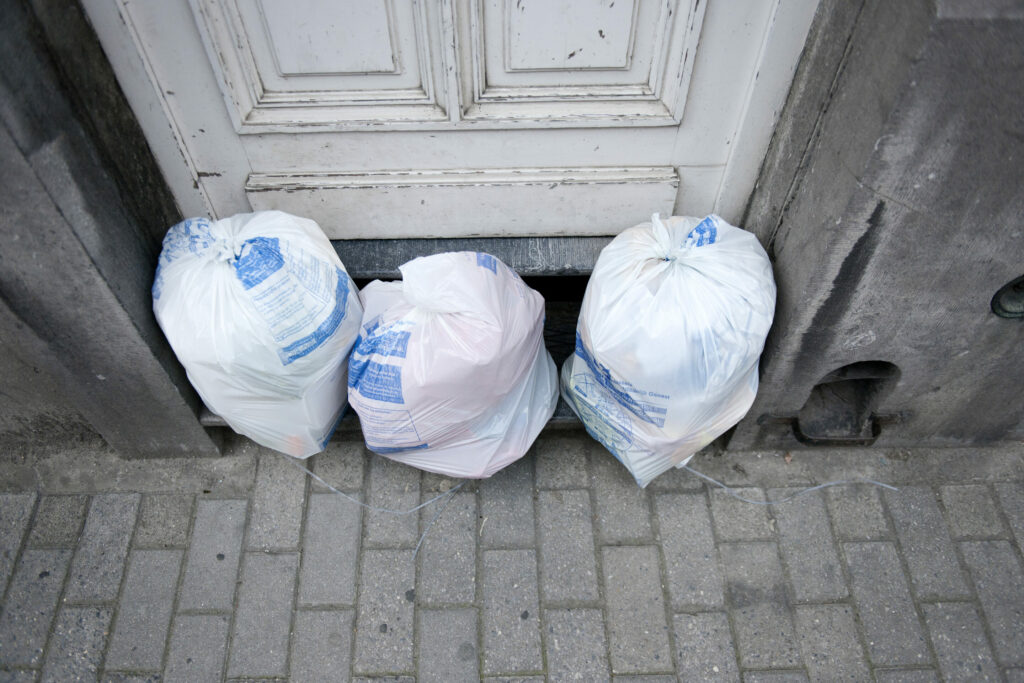
Fewer rounds should also reduce how long rubbish bags remain visible on pavements. With two weekly collections, bags are presented every few days; some people who disregard the timetable or put the white bags out by mistake on the wrong day leave them there until the next round.
Brussels’ bag-based system "works well when residents and collection workers follow the rules", Lassouli said.
However, badly closed, excessively heavy or incorrectly presented bags can tear and spread rubbish across the pavement. "Having residents dirty the street so that Brussels-Propreté workers can clean it immediately afterwards is a little strange when you think about it," Cuvillier said.
Two neighbourhoods to test collective bins
For internationals arriving from countries such as Germany, Spain or France, Brussels' rubbish system might seem unusual. In Paris, for instance, people take their rubbish to bins rather than leaving it lying in the streets.
However, the region cannot yet say whether collective containers could eventually replace doorstep collection across Brussels.
Alongside the collection-calendar reform, Brussels will select two neighbourhoods of roughly 2,000 homes each to test whether collective rubbish points can replace some doorstep collections.
Brussels expects to open an application call for municipalities by the end of September. Some have informally expressed interest, but none has been selected, and no starting date has been set. Participation will be voluntary.
Brussels-Propreté will assess the applications, with housing density expected to play a significant role.
"A very residential neighbourhood in Uccle may be less suitable because the distance between houses is much greater," Cuvillier said. "In a dense neighbourhood with large tower blocks, 30 collection points could be placed across two streets rather than 15."
Each pilot neighbourhood will receive 30 sorting points, with each point containing several containers. These will initially be installed above ground so that they can be moved or adjusted during the trial.
"We might realise that placing a container two metres further away, or turning it in another direction, considerably improves cleanliness in the street," he said.
The containers would normally be no more than 150 metres from homes, according to Henry's office. Lassouli placed the maximum distance at 100 metres, indicating that the precise operational standard remains to be clarified. Current Brussels-Propreté criteria generally require around 150 homes before a collective sorting point can be installed.
The pilot will be the first Brussels trial in which residents across entire neighbourhoods will be expected to carry their rubbish to a collection point instead of leaving it outside their homes. "We do not yet know whether it will work well, whether it will not work well, or what improvements will have to be made," Henry's cabinet said. "That is precisely why it is a test."
Residents in the pilot areas would use collective containers for residual and food waste. Doorstep collections would continue for blue PMC/PMD bags and yellow paper and cardboard bags.
