
Over 160 nursery and primary schools in the Brussels-Capital Region are exposed to nitrogen dioxide (NO₂) concentrations 50% higher than the WHO recommendation, according to data from UCLouvain’s analysed by the Les chercheurs d’air non-profit organisation.
Of all the 618 nursery and primary schools analysed, 167 (27.1%) have concentrations exceeding 15 µg/m³ – surpassing the WHO’s threshold of 10 µg/m³, which is associated with “significant risks to public health.”
Young children are particularly vulnerable to air pollution. Because their metabolism is still developing, young children breathe more rapidly and, due to their small stature, they inhale more pollution emitted by vehicle exhaust.
“It is unacceptable that, in Brussels, going to school still means being exposed to toxic fumes,” said Renaud Leemans, Campaign Coordinator at Les chercheurs d’air.
“We do not accept asbestos in classrooms. We do not accept damp in classrooms. So why should we accept air pollution that contributes to asthma, strokes and certain cancers?” Leemans said.
Double injustice
The analysis also shows that some Brussels municipalities are more affected than others.
In Saint-Josse-ten-Noode, for example, all schools are exposed to NO₂ concentrations at least 50% higher than the WHO threshold. The figure drops to seven in ten schools in Schaerbeek, and one in two schools in Ixelles and the City of Brussels.
On average, schools in Brussels' northern and central municipalities are more heavily exposed to nitrogen dioxide than those in its more affluent southern or eastern municipalities.
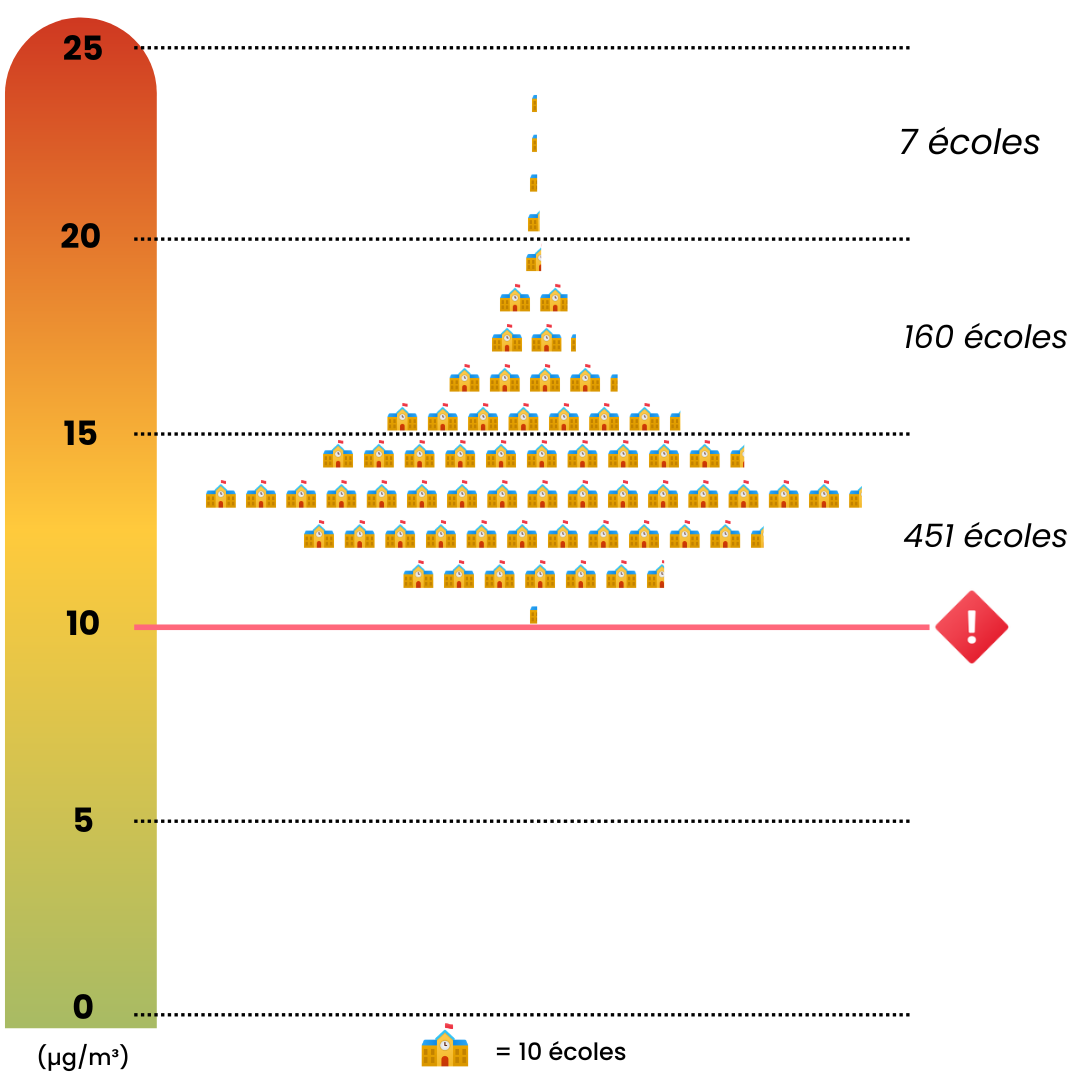
Credit: Les Chercheurs d'Air
Indeed, five of the six municipalities where primary schools are most polluted (Saint-Josse, Schaerbeek, the City of Brussels, Saint-Gilles and Molenbeek) are also among the municipalities with the highest risk of poverty in Belgium.
“As people living in precarious circumstances are more vulnerable to air pollution, this situation therefore represents a double injustice,” said Les chercheurs d’air.
The seven schools that are the most affected by this pollution are all located in the City of Brussels, Saint-Josse, Ixelles or Molenbeek, with values exceeding 20 μg/m³, or double the WHO recommendation.
Swift and sustainable action
Analyses show that nearly half of NO₂ emissions in Brussels are caused by road traffic. To lower this pollution, the Brussels government introduced its Low Emission Zone (LEZ) covering the entire Capital Region in January 2018, with requirements gradually getting stricter.
The situation improved between 2022 and 2024, with fewer schools exposed to the highest levels of pollution, partly as a result of measures such as the LEZ. Nevertheless, the non-profit stressed that the situation “remains a cause for concern.”
As of July, Euro 5 diesel and Euro 2 petrol vehicles are no longer allowed to enter Brussels, as they are now considered too polluting. However, discussions are currently underway to create a “LEZ pass” which would significantly weaken Brussels’ LEZ.
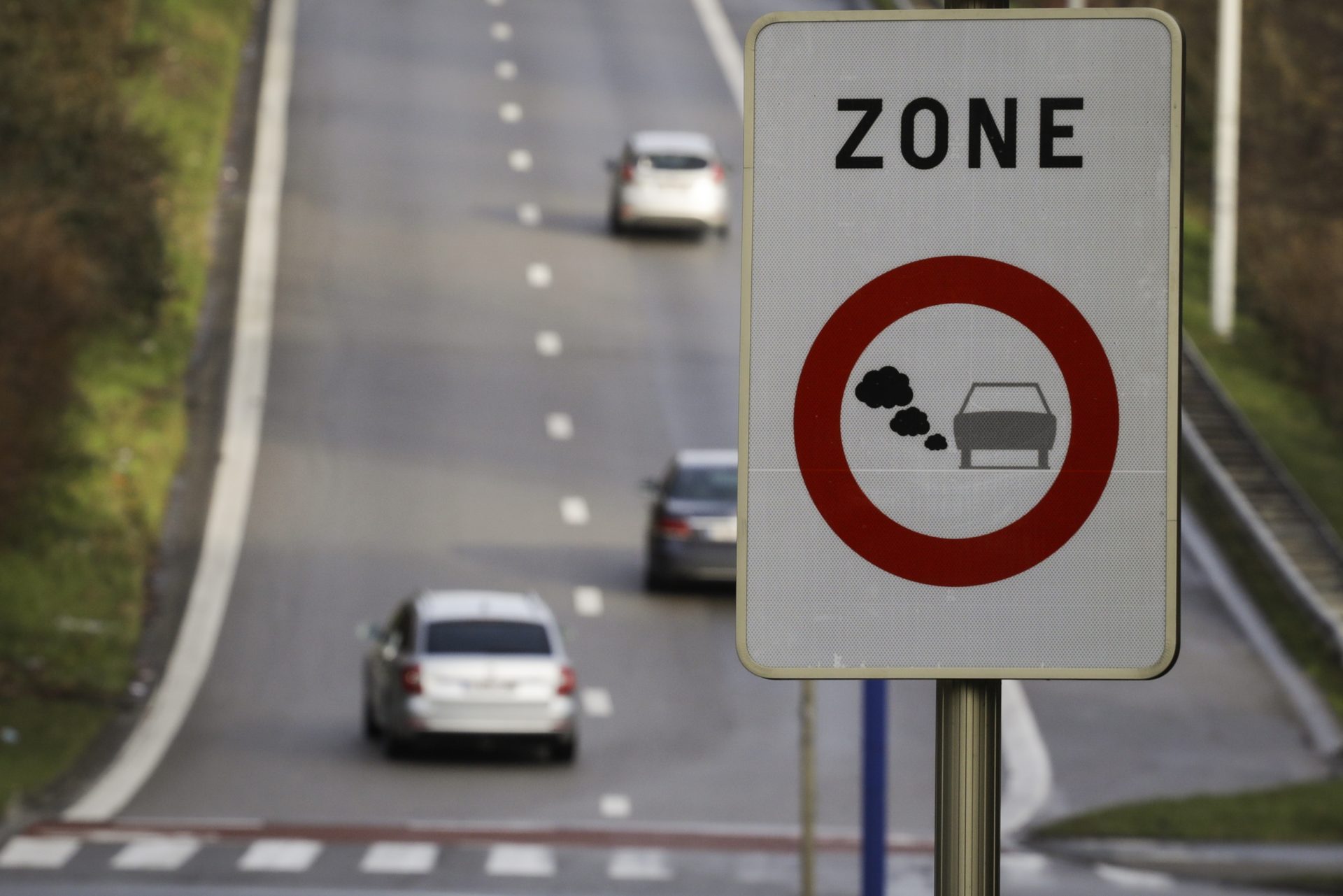
The Brussels Low Emission Zone (LEZ). Credit: Thierry Roge/Belga
This pass would, among other things, allow certain diesel vehicles to continue driving in the Capital Region until 2034, whereas the current timetable stipulates their removal from the LEZ by 2030.
According to the Council of State, however, this would result in a “likely significant decline” in the level of health protection for the people of Brussels.
Sticking to the LEZ timetable, however, would “enable swift and sustainable action to better protect children’s health,” said Leemans.
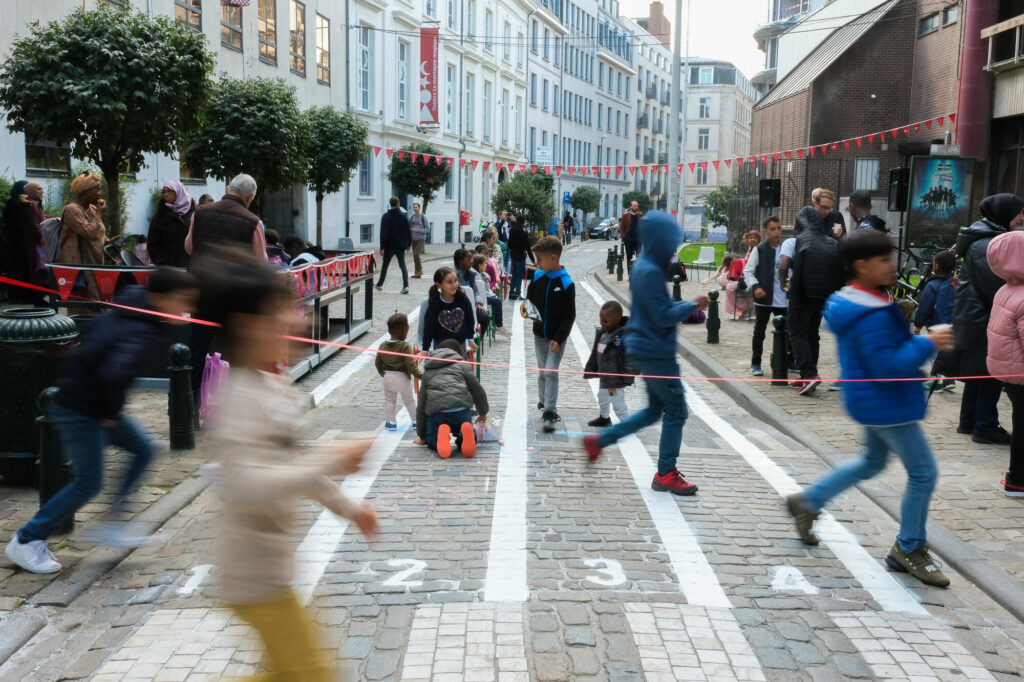
Another part of the solution to tackling air pollution around schools is the creation of school streets. Studies from London and Paris show that they can reduce NO₂ concentrations by between 23% and 30%.
Currently, in the Brussels-Capital Region, only 11% of nursery and primary schools have a school street, despite the fact that for about 70% of them, they could easily be created.
