The Brussels-Capital Region’s relations with the European Union should be strengthened, according to Brussels Minister-President Boris Dilliès (MR).
Dilliès, who as Minister-President is responsible for the Belgian capital’s international relations, chaired the first political summit of this legislative term between the Brussels government and the EU institutions this week.
“The presence of the European institutions is an opportunity for Brussels: for our economy, our culture and the influence we seek. But it is also a responsibility,” said Dilliès. “The people who work and live here must be able to feel at home in our city.”
That, he said, was exactly the aim of this week’s summit. “To improve their experiences and living environment, from the neighbourhoods around Brussels’ railway stations to the public spaces surrounding the institutions.”
Intruding in the city
This annual closed-door meeting brings together representatives of the Brussels government and senior officials from the European institutions, including European Commissioner for Budget and Administration Piotr Serafin, and Vice-President of the European Parliament Sophie Wilmès.
For the first time, two ministers from the federal government also took part: Interior Minister Bernard Quintin (MR) and Minister of Public Action and Modernisation Vanessa Matz (Les Engagés), accompanied by diplomats.
This participation reflects the shared ambition to strengthen coordination between the various levels of government and to streamline contacts between the European institutions and the Belgian authorities.
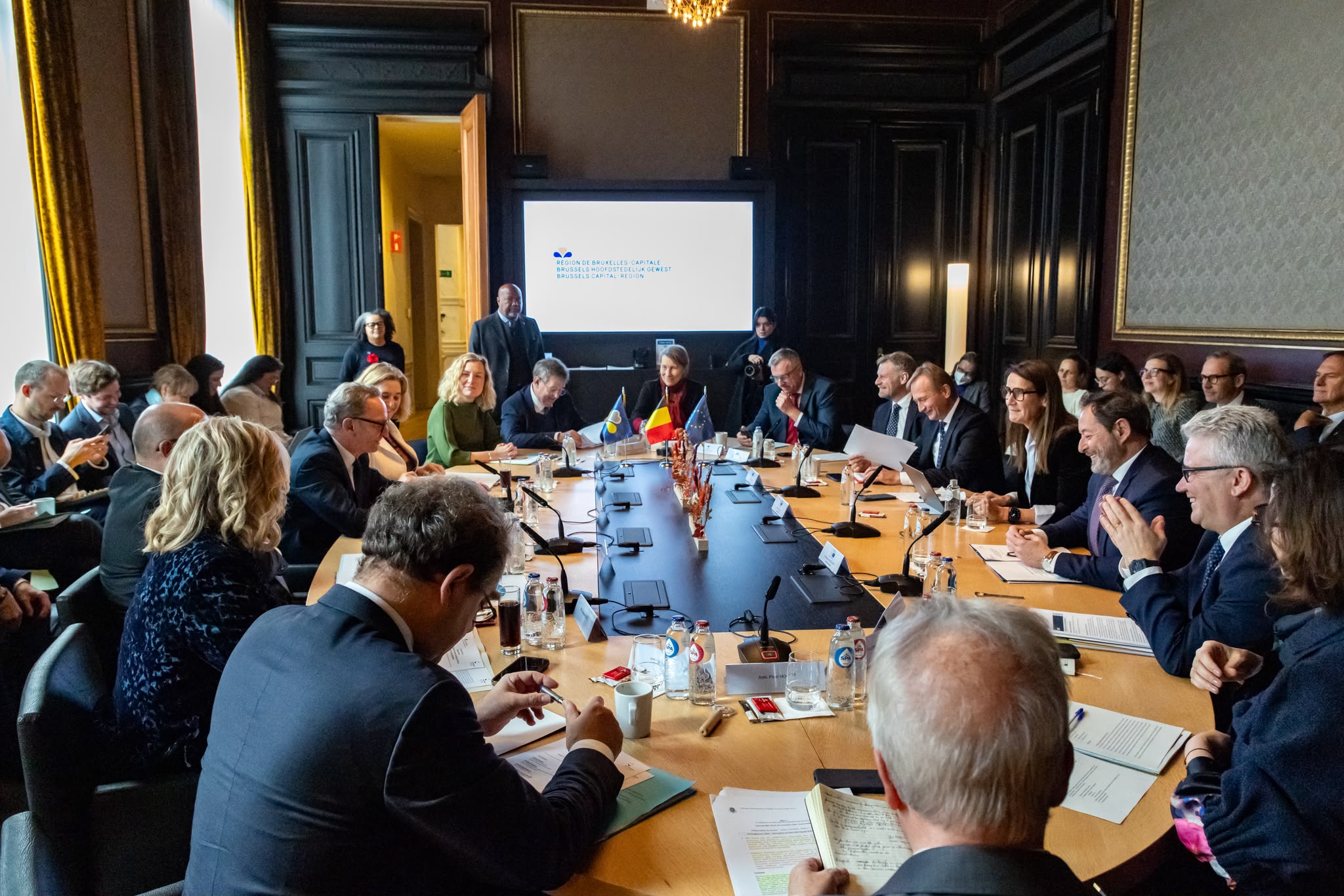
Credit: Office of Brussels Minister-President Boris Dilliès (MR)
In an interview with The Brussels Times in April last year, two months after he had taken office, Dilliès already spoke about the European institutions' place in Brussels and the "wall" between the so-called expat community and locals.
At the time, he felt that Brussels was not capitalising enough on its status as the unofficial capital of Europe, and that Belgians view the international sphere and the European institutions as "something separate” from the city – something "intruding" even.
He stressed the importance of working together, and argued that the European institutions were "just as keen as him” to forge closer ties.
Now, the aim of this week’s summit between the Brussels government and the EU institutions was to address practical issues relating to the presence of the European institutions and their staff.
Topics on the agenda include security and cleanliness around the Brussels-Midi and Brussels-North stations – both key access points to the city for European staff and visitors.
Gateways to the city
Dilliès's first public appearance as minister-president was at the Brussels-Midi railway station to announce the government’s “station plan,” for which it is allocating €28 million this legislature. With the Eurostar and several other international trains arriving there, the station is a gateway to the city.
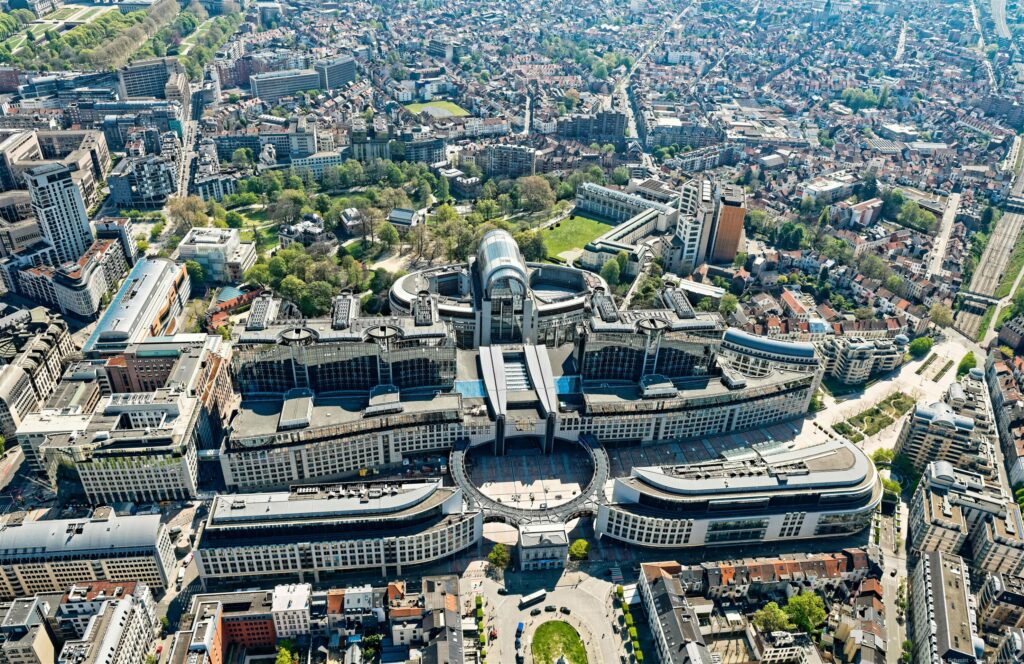
Also on the agenda was the management and quality of public spaces around the European institutions, with particular attention to improving the layout of the Schuman roundabout after the end of the works – a much-discussed topic by those working in the European quarter.
Dilliès’s European activities will continue next week, as he will represent Belgium at the Council of Ministers of the European Union on cohesion policy on Monday 23 November. There, he will advocate the Belgian position on facilitating access to EU funding for the regions.
