
Kristina Chetcuti, a registered health coach (UKIHCA) specialising in behaviour change and lifestyle medicine (ELMO), answers your lifestyle dilemmas.
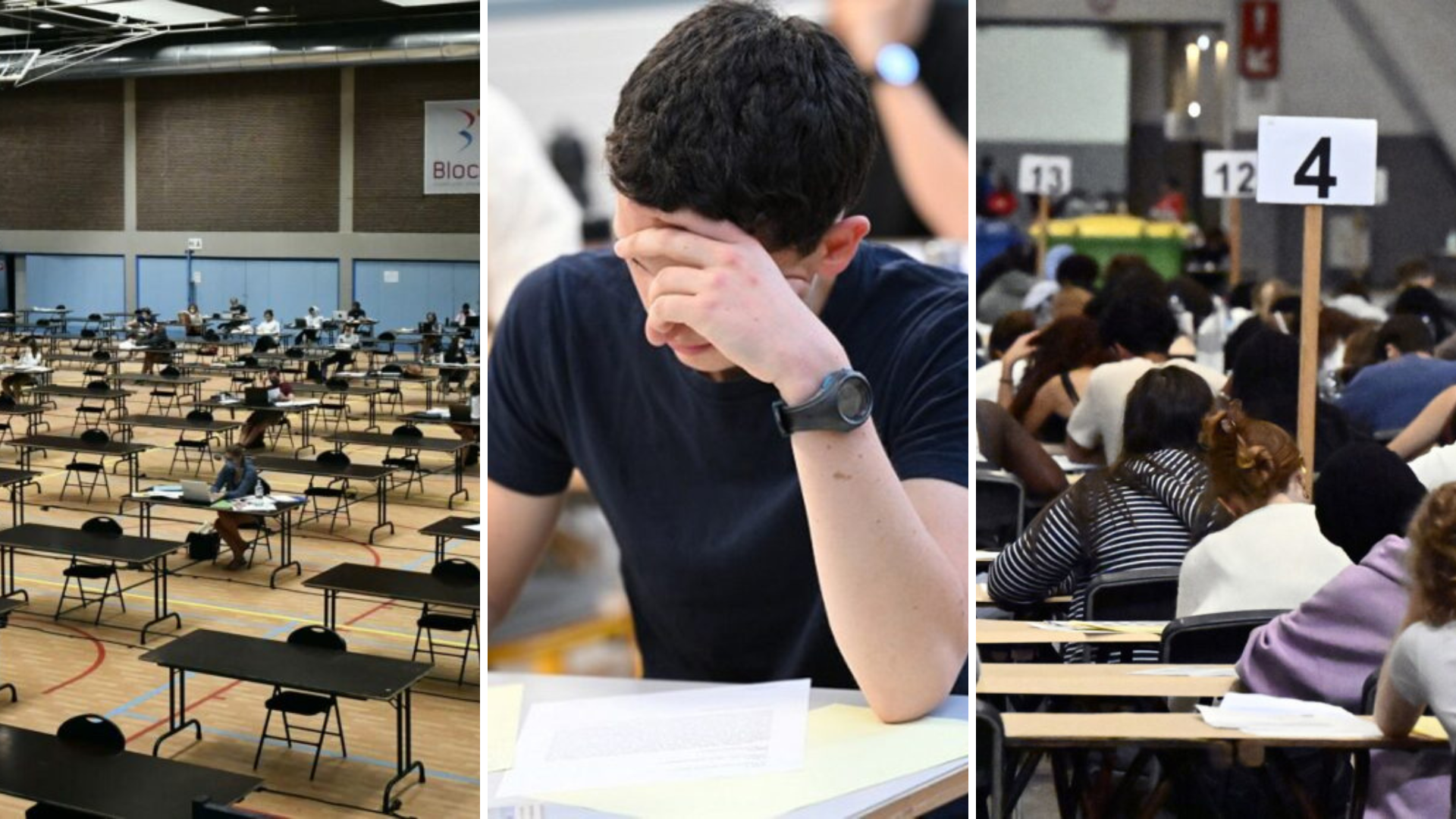
Q. It’s exam season, and I’m really worried about my teenage daughter. Each year, her way of coping with stress seems to get worse. She is constantly tense and exhausted, with dark circles under her eyes. She studies late into the night and becomes irritable when I try to talk to her about taking breaks. I feel helpless watching her like this. I don’t know whether there is anything I can do as a parent to help her cope?
A. There are broadly two types of students: those who do not study – and worry us because of that – and those who completely fixate on their studies and worry us because of how stressed they become. Clearly, your daughter falls in the second group. And I feel for you. As a parent, I know only too well what it is like to see your teenage children hunched over their desk, looking like a haunted version of themselves.
I too used to feel helpless, and my attempts to reduce stress often achieved the opposite, leading to arguments rather than reassurance. It was only later, while studying positive health coaching, that I began to understand that in my well-meaning efforts, I was not only adding to the pressure but I was also standing in the way of my daughter’s resilience-building.
The last thing we want is to become over-involved, "snowplow parents". Our main role at this point in our teen’s life is to be steady presence to lean on, and as I came to realise, often, that simply meant saying less, fixing nothing, and taking off the "rescuer parent" hat.
First things first: exam season is a season. Journalist Hal Borland of The New York Times once wrote: “No winter lasts forever; no spring skips its turn”. Luckily for all of us, the exam period has an end. That is why treating exam stress as something to eliminate or to "manage better" is a little too simplistic (I’m raising an eyebrow at myself here).
Teenagers during exam season
What is happening in households across Belgium in June, particularly among 17–18-year-olds, is more complicated. Their bodies are doing exactly what they are designed to do: respond to pressure with heightened alertness, sharper focus, and a sense that the stakes are high. It is a bit like spotting a lion while out on a coming-of-age bush walk: we are primed to survive. And in short bursts, that response can be useful. It sharpens attention and keeps motivation from slipping.
The problem is that I know of no lion that will stare at you threateningly for a whole month. That sort of primal threat used to be over quickly. So, the issue with modern day exams is not stress itself, but its duration. It does not resolve in a sweaty fleeing sprint but lingers, stretching across interminable weeks.
As parents, therefore, we have to help build resilience over that stretch of time and we can do this by: a) accepting that exam stress is part of the season and prepare our children to plan for that in advance, b) helping to make the exam period itself less physically exhausting, and c) helping them switch the stress response off afterwards, so it does not become something chronic.
The first and the last of these are best tackled through open conversations as the sun rises on the exam season. Science-backed evidence suggests that this chat needs to touch upon their phone use – often a major studying disruptor. Do not set the rules yourself; rather, give your daughter agency over how she wants to plan her phone use, and there is a greater likelihood that she’ll stick to the plan. What you can do, however, is provide a phone lockbox and leave it up to her to use if she wants to. You can also role model its use: as adults, our phone use is shockingly high.
Beyond this, how do we, in practice, make this time less draining for them? By stabilising their basic needs. A stressed brain consumes more fuel, more quickly. When that fuel is irregular or of poor quality, it becomes less efficient: concentration becomes harder to sustain, memory less reliable, and small setbacks feel disproportionately large.
Be a Parisian waiter
For this reason, come exam season, we might think of ourselves as old-school Parisian waiters – the kind who know what our clients need before they do. And what a studying student at home needs is food that keeps blood sugar steady. No superfoods, no supplements, no miracle smoothies. Just whole foods which keep their blood sugar steady. When blood sugar rises sharply and then drops, concentration declines, and is quickly followed by irritation and fatigue.
What we need to ensure is that our teenagers are still managing two to three proper meals a day, in the form of balanced plates. A glass of orange juice for breakfast, even freshly squeezed, is not at all helpful here. Ditto breakfast cereals, which tend to cause quick spikes in energy followed by crashes.
For more stable performance, it helps to start the day with a generous plate of whole food protein and full fat sources such as yoghurt or kefir, alongside berries and nuts or eggs and avocado. A breakfast like this tends to curb hunger pangs too. The brain is not constantly distracted by hunger signals, and there is less of that familiar wandering back and forth to the kitchen, opening and closing the fridge looking for something to nibble.
I want to pause here and qualify what I mean by ‘starting the day’. Not all teenagers wake up ready to eat. That is normal. Many have been up late studying, and their appetite simply takes time to catch up in the morning. Force feeding at 7am is the worst thing you can do. Let them break the fast when their body is ready.
Be the mini-bar manager
Next up, you are effectively managing the house ‘mini-bar’. Stock the fridge with things like hummus dips, carrot and celery crudités, olives, and roasted chickpeas. Add crunchy apples or slices of watermelon for refreshment, and jugs of water or tea-bags of rosemary tea at hand (rosemary is traditionally associated with memory and focus).
It does not take much time to prepare, and if you don’t have time, shop-bought versions are perfectly fine. The aim is simply to reduce the likelihood of them reaching for Oreos, the Nutella jar, protein bars, and anything wrapped in shiny packaging. These tend to be high in sugar and additives, which do not particularly help focus or mood.
Another thing you can do discreetly: streamline the treat cupboard: keep a few favourites (for when the stress gets unbearable), but replace much of the ultra-processed food with prunes, nuts, dark chocolate and nut butters.
For main meals, whenever they feel hungry again, think in terms of tapas: a balanced plate of vegetables and protein alongside slow-releasing carbohydrates like quinoa, lentils or chickpeas.
Be an undercover personal trainer
With the food sorted, we turn to our next role in times of exam stress: that of undercover personal trainer. If they are into sport, that part is simple: let them schedule it and encourage them to keep going. If not, we need to find ways to get them moving.
Saying, “this is ridiculous, you’ve been inside for three days!” simply won't cut it. Instead, think logistics: an errand that needs doing, ideally one that involves a 20-minute walk around the neighbourhood. Let them know in advance and let them find a moment in their day for it.
This is not simply about taking a break from studying, but a tool that makes studying more effective. Light movement helps reset attention, lowers physiological tension, and supports the regulation of stress hormones, cortisol and adrenaline. It also improves blood flow to the brain, which can help cognitive flexibility. If you have pets, even better. They are often the most effective excuse for movement and a natural interruption to static stress.
As parents, we cannot sit exams for our children. But we can help ensure that, over these weeks, their system is not running on empty so their bodies are working in the best possible conditions for their brains to function at their best. I know these weeks can feel long from both sides of the desk. But they do pass. I wish you and your daughter strength for the weeks ahead.
