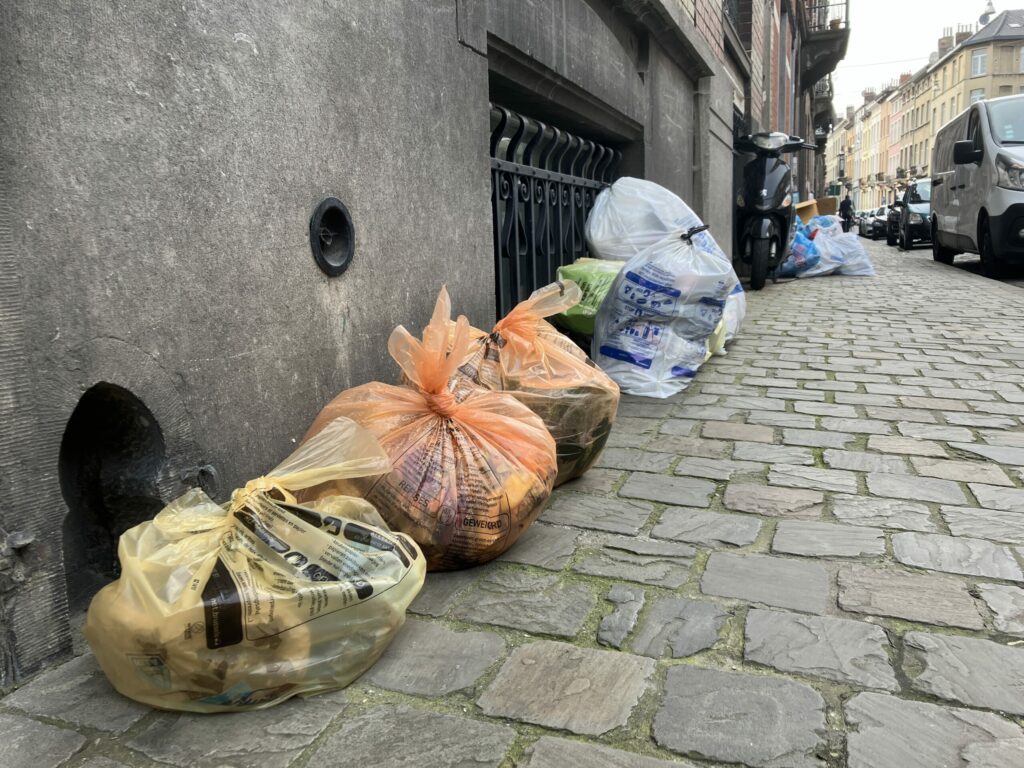
When walking through the streets of Brussels, it’s impossible not to notice the neat rows of garbage bags lining the pavements - white, blue, yellow, or orange, depending on the day and the neighbourhood.
Each colour has its purpose, and, true to Belgian form, the rules differ whether you live in Brussels, Wallonia, or Flanders. Sorting trash here is almost an art form - but how well is the country actually doing compared to its European neighbours? And how much are we still throwing away?
The latest Eurostat figures for 2023, released just this month, shed some light on the matter - and it’s a mixed picture. Across the European Union, a staggering 79.7 million tonnes of packaging waste were generated last year - that’s about 177.8 kilograms per person. While this represents a slight improvement from 2022 (8.7 kg less per person), it’s still 21 kilograms more than a decade ago. In other words, despite better sorting, Europe’s mountain of waste keeps growing.
What’s in Europe’s trash?
Paper and cardboard remain the biggest culprits, making up 40.4% of all packaging waste, followed by plastic (19.8%), glass (18.8%), wood (15.8%), metal (4.9%) and other materials.
When it comes to plastic packaging alone, every EU citizen produced an average of 35.3 kilograms of waste in 2023. Of that, 14.8 kilograms were recycled. It’s a small step forward - 0.1 kg more than the year before - but progress remains slow. Over the past decade, plastic waste per person has risen by 6.4 kilograms, while recycling only caught up by 3.8 kilograms.
Belgium, the overachiever
Amid these sobering numbers, Belgium stands out as one of the EU’s recycling champions. The country recycled 59.5% of all plastic packaging waste, comfortably ahead of the EU average of 42.1% and far surpassing its 2013 level of 38.2%.
Latvia (59.2%) and Slovakia (54.1%) also performed well, while Austria (26.9%), France (25.7%) and Hungary (23.0%) lagged behind.
Belgium’s success is partly due to a long-established sorting culture, strong regional recycling policies, and the near-military efficiency of systems like Fost Plus, which manages household packaging waste collection nationwide.
A system that works - but still produces too much
Yet environmental experts warn against complacency: recycling is not the same as reducing.
Despite the progress, Belgians still believe that there is too much disposable packaging being used. The colourful bags lining Brussels’ sidewalks tell a story of both environmental progress and excess: a country that sorts well, but consumes even better.
If the EU’s goal is to move from recycling to real reduction, the next step will not just be about what goes into the blue bag - but about what never ends up there in the first place.
