
Recent failures to coordinate a strong and unified foreign policy position have increased pressure on the European Union’s External Action Service (EEAS). But what is the EU’s diplomatic wing and how does it function?
The main reason the EEAS was established by 2009’s Lisbon Treaty was to inject coherence into the EU’s foreign policymaking, which up until then was fragmented.
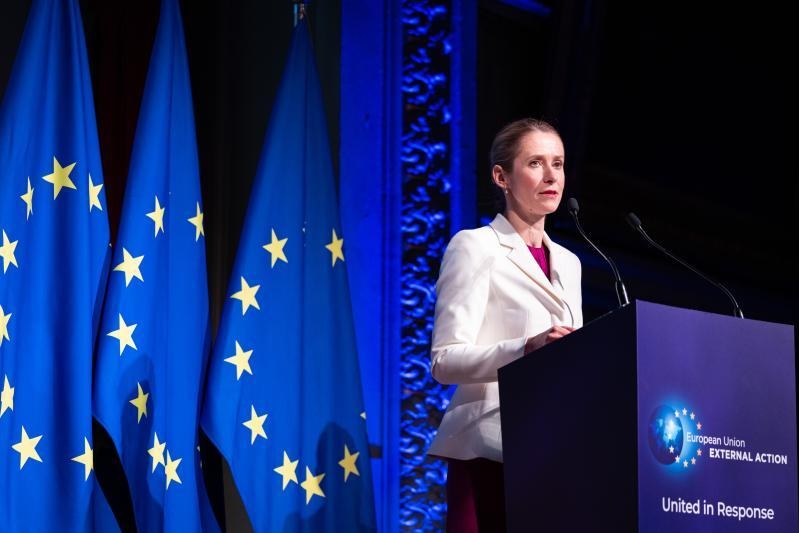
When the EEAS began operations in 2011, one of its main tasks was to assist the EU’s high representative in their mission as the bloc’s chief diplomat. The high-rep position itself has existed since 1997 and the current holder is former Estonian leader Kaja Kallas.
By drawing on expert officials from the European Commission and European Council, as well as a corps of national representatives, the EEAS is supposed to formulate a common throughline of foreign policy decisions and positions.
No decisions are actually made by the EEAS, it is more a support structure, designed to do the hard work in the background so that the high-rep can take an oven-ready agreement to foreign policy council meetings or even higher-level summits of government leaders.
Recently, the EEAS has come under additional scrutiny after some notable failures, including Hungary’s continued vetoing of a €90 billion loan for Ukraine and the slow response to the crisis in Iran.
Some countries are pushing for the foreign policy veto currently enjoyed by national governments to be scrapped, although the lack of unanimity on that issue will ironically prevent the voting rules from being changed.
Others have called for the EEAS to be folded back into the structure of the Commission or, less drastically, for the institution to be reformed to make decisionmaking more effective, although how that would precisely happen is still unclear.
Away from the high-level issues, the EEAS also runs more than a hundred delegations in countries around the world and represents the EU in areas where national embassies may not have a presence.
Ultimately, the EEAS is an improvement on the rudderless foreign policy situation that existed before it was formed, but its structural shortcomings mean that for the time being it will not be able to serve as a true foreign office of the EU.
