Everyday human habits will have to change and be more flexible as we move more quickly through the energy transition. Mobility is one sector in which we will have to amend our behaviour. But that’s a good thing not a bad thing.
Many years ago, at the side of the motorway between Ankara and Istanbul, I ate the best mixed grill I have ever tasted. The flavours stick with me even now, nearly two decades on.
Somewhere in the middle of the Armenian countryside, I had a conversation with a cafe owner that helped me understand better the long conflict that was then still ongoing with Azerbaijan. The cognac was also superb.
Not that long ago, a couple of miles from where I grew up in Wales, I saw a female fox guide two young cubs safely across the narrow lane as I was eating an apple next to my parked motorbike. It was a really special moment.
My point is that great things can happen on the side of the road when you take your foot off the accelerator and reengage with the world around you, instead of just hurtling through it.
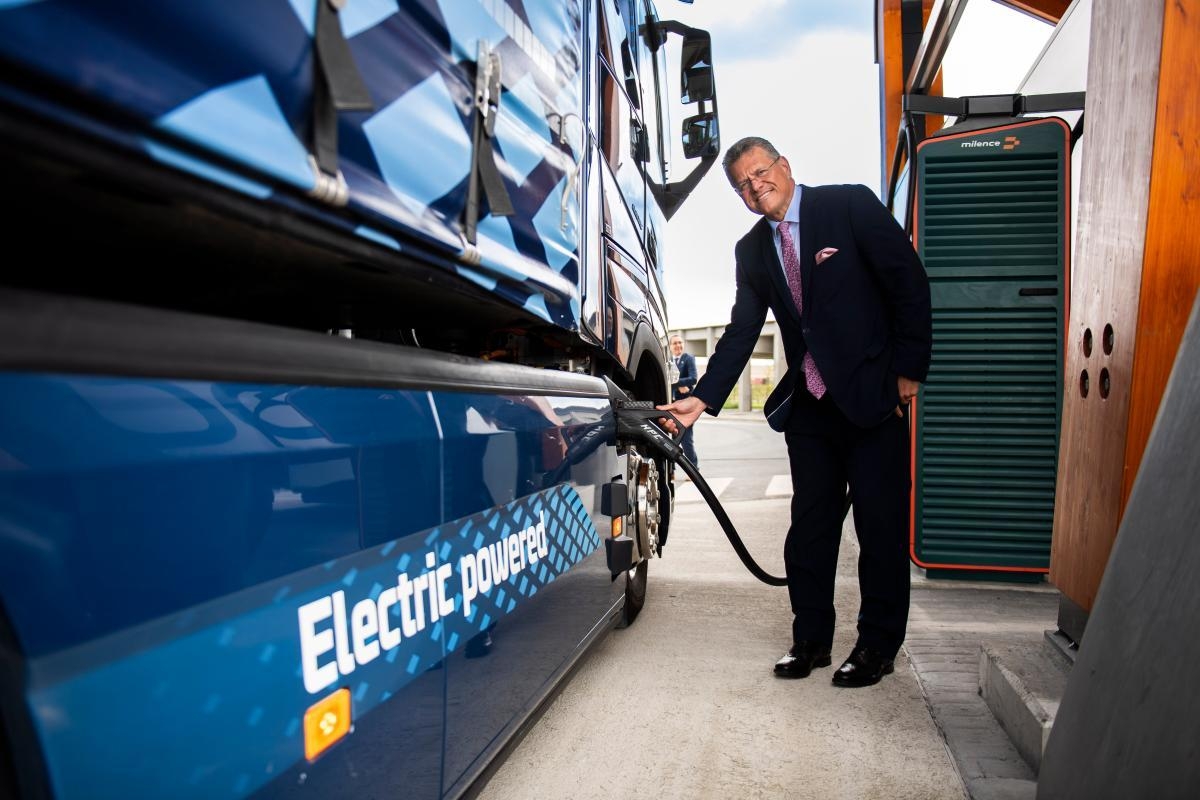
Earlier this week, Politico reported that European Commissioners are getting fed up with the monthly journey from Brussels to Strasbourg, as they are now encouraged to use electric vehicles to get there.
Apparently the trains that shuttle everyone else to the French city for the European Parliament plenary sessions aren’t viable because the Commissioners need to make sensitive phone calls that they cannot risk having in a semi-public place.
Excuse me while I pull a ligament rolling my eyes excessively. However, if we do accept that as a legitimate excuse to take a car instead of public transport, the gripe with e-mobility still isn’t a serious one. Here is why.
The article cited Brussels bigwigs who claim Ursula von der Leyen’s team are unhappy that the trip now needs to be split up in order to recharge the cars halfway, at deserted Luxembourg petrol stations and the like, and that the extra 20 or so minutes are torture.
Von der Leyen herself is exempt from the e-car edict as her extra security needs mean that she still needs to be ferried around by armoured limo and no battery-powered versions of those are yet available.
On a side note, someone should ask the Pope what he thinks of that, seeing as he was pictured this week sat at the wheel of Ferrari’s first-ever electric car.
The article is indicative of the weird and often outdated attitudes that people still have about electric cars. Many of the most popular gripes were admittedly an issue a couple of years ago but technology has evolved and made them redundant.
Take the range issue that is at the heart of this story. It’s 450ish kilometres between Brussels and Strasbourg. Depending on the kind of EV you buy, you might have to stop to recharge but many models would make it with juice to spare and then some.
It must be said that this issue is not technology-specific either. If you buy a small city car with a small petrol tank then you would also have to pull over to refuel, so it really is horses for courses.
If the Commission is operating older electric vehicles with shorter ranges then here’s a fix for you: replace them with newer vehicles and put the current ones on the secondhand market, thereby helping the wider driving public get access to the next generation of motoring.
Corporate fleet renewal could be one of the main catalysts of even faster and more widespread EV adoption. Maybe the Commission should be the poster child for it.
The second issue that is at the heart of the story is the time taken to recharge. Juicing a battery takes longer than pouring fossil fuel into your car, but again technology has evolved quickly.
Fast chargers and advanced batteries are now more ubiquitous, plus an electric vehicle – just like an internal combustion engine car – does not have to be recharged fully in order to work. Sometimes, a quick boost to get you where you’re going is all that is needed.
The full charge can wait until the overnight stay or when the car isn’t needed for a couple of hours during the Commissioner’s many many important meetings. Flexibility is both a resource-commodity and a skill.
And so what if it takes a bit longer to charge? Why are we so intent on building and living in a world that is propped up by convenience and haste? There’s a piece of wise graffiti opposite my apartment that says ‘Stress kills’ and I heed its message every day.
Have a coffee with your driver. Eat a rubbish service station croissant and talk to a ‘normal person’. See a bit of the Europe you’re supposed to be representing that you wouldn’t have seen otherwise.
Plug in and chill out.
Want more updates and analysis of what is happening in the world of energy and climate? Interested in finding out more information about public tenders and consultations? Sign up to our Energy Rundown newsletter here!
