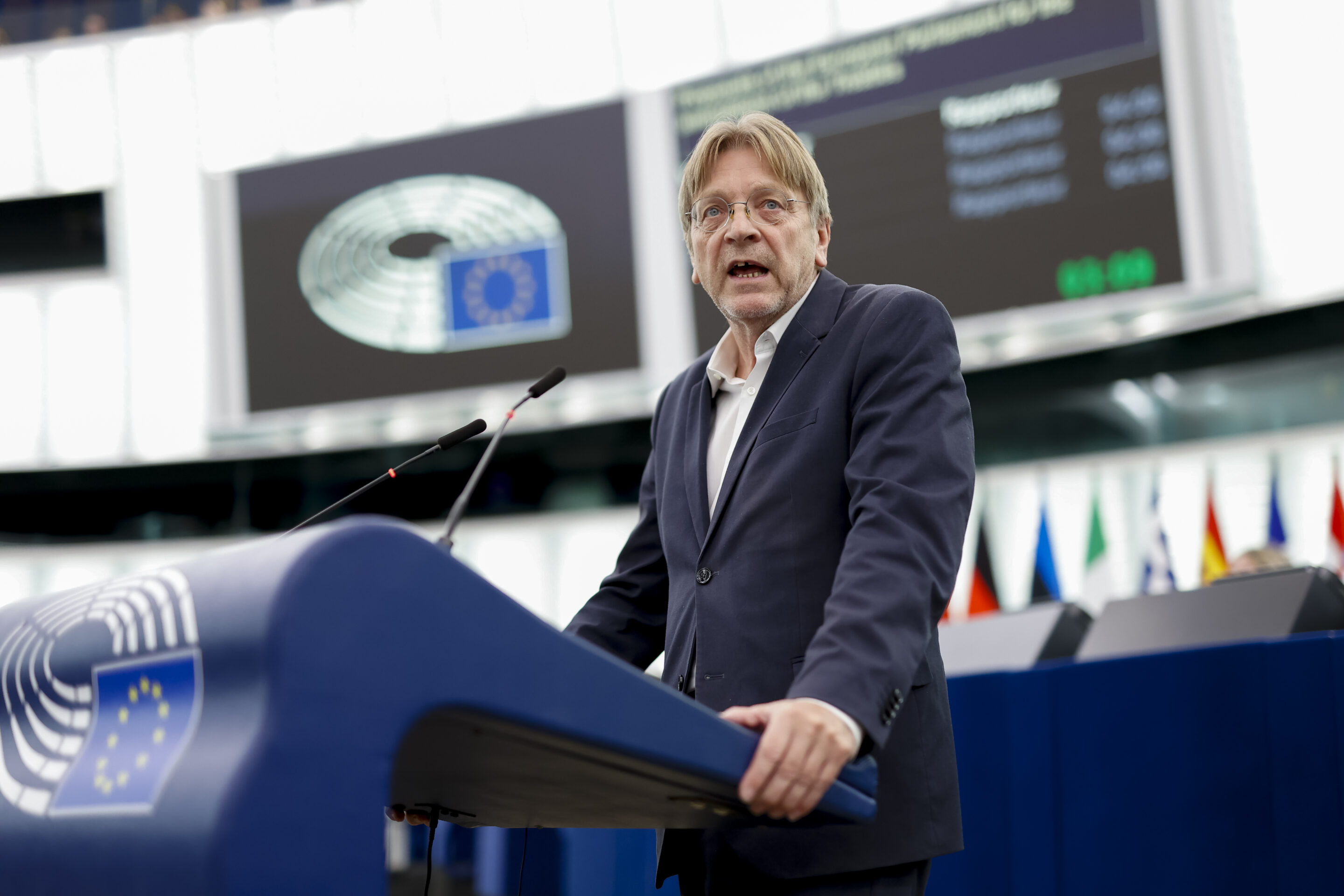
After a string of electoral setbacks for populists, liberals have reason to celebrate. But former Belgian prime minister Guy Verhofstadt warns that the battle against Trumpism is far from won. In his new book, he acknowledges the failures of the political order he spent decades defending – and calls for its radical reinvention. He tells Leo Cendrowicz why democracy needs more than electoral victories.
For liberals who have spent years watching populists and would-be authoritarians sweep aside political conventions, undermine democratic institutions and redraw the electoral map, this autumn offered something almost intoxicating: a fightback.
The US midterm elections delivered an emphatic rebuke to Donald Trump, while electoral setbacks for authoritarian-minded politicians in Serbia and Brazil added to the sense that the populist tide may finally be turning. After years on the defensive, defenders of liberal democracy have reason to believe they can fight back – and win.
But Guy Verhofstadt is not ready to declare victory.
The former Belgian Prime Minister, one of Europe's most outspoken liberals and an irrepressible champion of European federalism, welcomes the setbacks for populists. Yet he sees little evidence that the deeper political forces driving their success have been reversed.
In France, Marine Le Pen's movement remains a formidable contender for the presidency, while Germany's far-right Alternative for Germany (AfD) has been leading national opinion polls. Across Europe, populist parties remain firmly entrenched.
“This doesn’t change the trend,” he says. “In two years, it can be again a Trumpian Republican candidate who becomes president. What is needed to beat populism is a coherent new vision on the future of our society, a vision that can restore hope and the so-called American Dream. A vision that is appealing to the Gen Z generation that is protesting in the streets in Europe. And honestly even after these midterms the Democratic Party is lacking such an appealing vision.”
It is a characteristically combative response from a politician who has spent much of his career arguing against the prevailing political winds. Cheerful, charming and irrepressibly argumentative, Verhofstadt is the antithesis of the populist wave: an unapologetic liberal, an ardent European federalist and a politician from a small country who believes the answer to nationalism is not less Europe but considerably more of it.
At 73, he has lost none of his appetite for a political argument. Speaking in his distinctive Flemish-accented English, he is passionate, articulate and occasionally provocative, moving effortlessly from American constitutional law to European defence, from the failures of capitalism to the shortcomings of Brussels. He is not a man who struggles to find an opinion, or the words to express it.
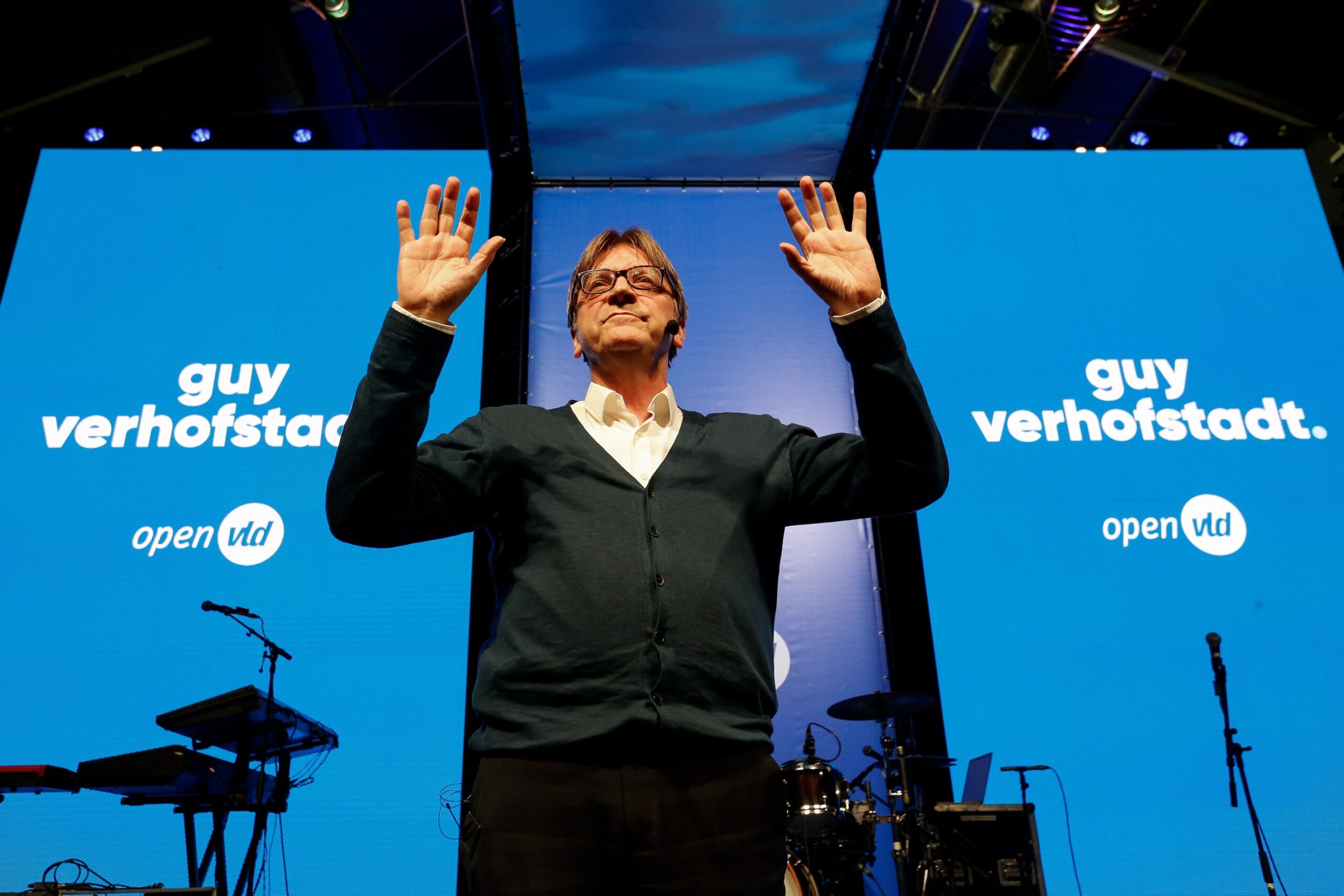
In May 2019 in Ghent, then-MEP Guy Verhofstadt delivers a speech at the last campaign congress of Flemish liberals Open Vld, before the upcoming elections. Credit: Belga/Nicolas Maeterlinck
But does he have the answers? After four decades at the heart of European politics, Verhofstadt is confronting an uncomfortable possibility: that the liberal democratic system he spent his career defending has helped create the conditions for its own undoing.
His new book, Defeating Trumpism: Make Democracy Great Again, is both a manifesto and an admission of failure. He argues that liberal democracy has lost its ideological purpose, capitalism has stopped delivering opportunity and politicians have forgotten how to inspire. His prescription is not a cautious retreat to the centre but a more radical, unapologetic defence of liberal values.
“Populism is mainstream everywhere in the world,” he says. “Even when populists are defeated from time to time, the trend is still very much in their favour.”
He argues that electoral defeats for populists often reflect voters' disillusionment with their record in office rather than enthusiasm for a compelling democratic alternative. Removing an unpopular leader is one thing; persuading voters that liberal democracy can deliver a better future is quite another.
“We need to put forward a vision to beat populism, rather than simply saying, ‘They are bad.’ Everybody can say that, and they have demonstrated it over recent years. But more than that will be needed to defeat populism in the long run.”
Baby Thatcher to European firebrand
Verhofstadt has been making political arguments for most of his adult life. Born in Dendermonde in 1953 and raised in Ghent, he studied law before entering Flemish liberal politics, becoming chairman of the PVV at just 29.
As a young budget minister in the 1980s, his enthusiasm for tax cuts, deregulation and smaller government earned him the nickname "baby Thatcher". He was an impatient economic liberal, determined to shake up Belgium's cumbersome political and economic structures.
In the early 1990s, his Citizens' Manifestos called for a fundamental overhaul of Belgian politics. He helped transform the Flemish liberals into a broader political force, eventually becoming prime minister in 1999.
He led three successive governments until 2008, initially heading the so-called purple coalition of liberals and socialists that ended decades of Christian Democratic dominance. His governments introduced socially liberal reforms, including same-sex marriage and euthanasia legislation, while his opposition to the American-led invasion of Iraq in 2003 demonstrated an increasingly independent European outlook.
His premiership was hardly an uninterrupted triumph. Belgium's intricate coalition politics frustrated his reforming instincts, and his final years were overshadowed by a political crisis over the country's linguistic and constitutional divisions.
After leaving Belgian politics, he reinvented himself in the European Parliament, leading the liberal ALDE group from 2009 to 2019. His combative speeches, particularly his exchanges with Nigel Farage, made him one of Brussels' most recognisable politicians.
During Brexit, as the Parliament's coordinator, he became a particular target of British Eurosceptics. Yet the passionate anglophile, who enjoys racing vintage British sports cars, always insisted that his quarrel was with Brexit, not Britain.
Through it all, his central conviction remained remarkably consistent: Europe's nation states, acting separately, are too small to defend their interests in an increasingly unforgiving world.
The great liberal mistake
What has changed is his diagnosis of liberal democracy itself.
His new book opens with a deliberately provocative proposition: liberal democracy has been a failed experiment. Coming from someone who has devoted his life to defending it, this sounds almost like an ideological surrender.
Verhofstadt disagrees. What failed, he explains, was the assumption that liberal democracy would triumph automatically after the collapse of communism in 1989.
"Liberal democrats thought there was no longer any need to fight,” he says. “It would be a self-fulfilling prophecy: liberal democracy would convince people and establish itself in every corner of the world. They became complacent and stopped fighting for their principles and ideas."
The post-Cold War triumphalism associated with Francis Fukuyama's The End of History encouraged mainstream politicians to believe that ideological competition was effectively over.
"What failed is that we killed ideology in 1989," he says. "Afterwards, we no longer thought it necessary to tell a big story, offer a vision or give people a direction."
Politics became an exercise in management, compromise and crisis resolution, rather than a contest over the future of society. Into the resulting vacuum poured fear, anger and resentment.
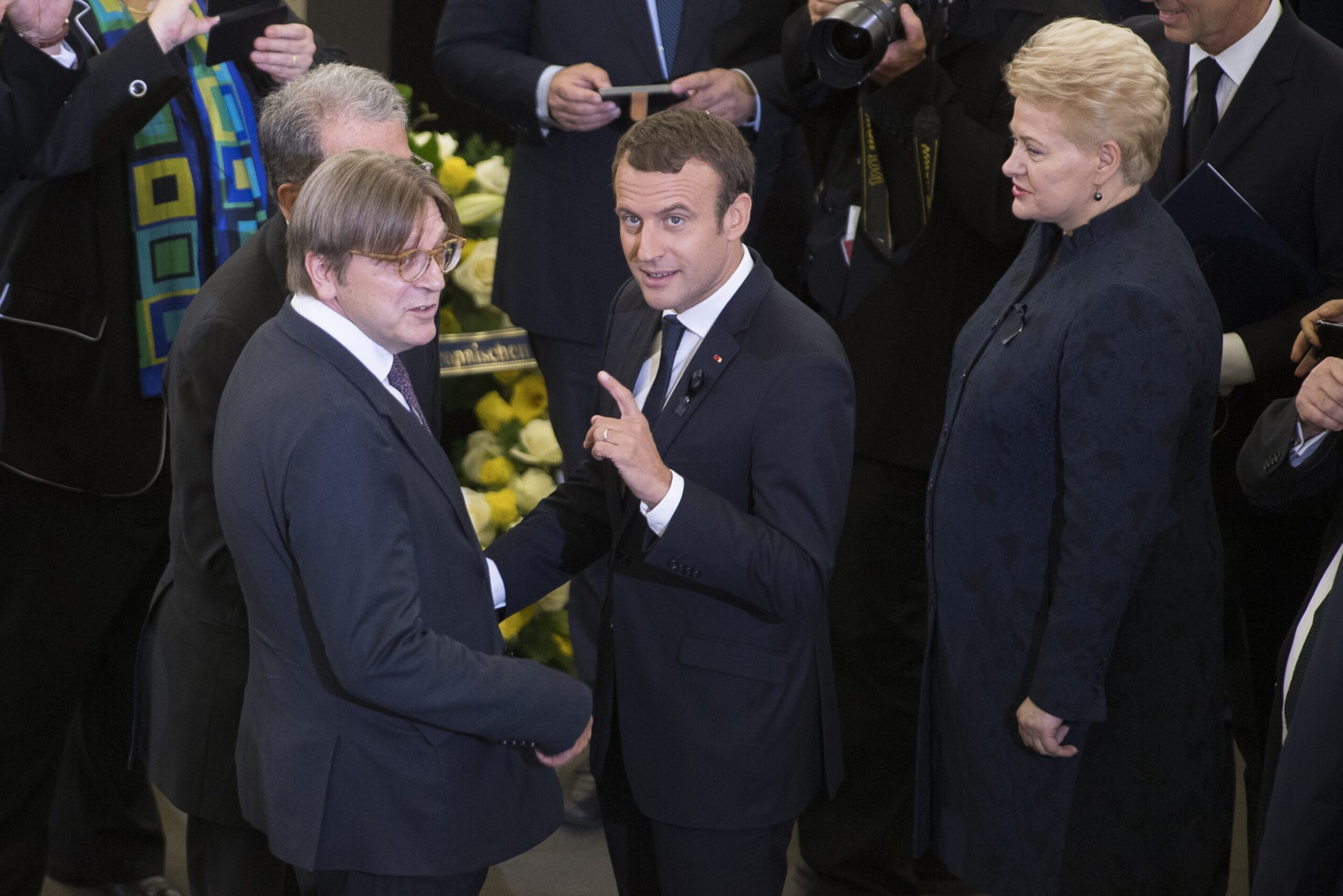
European parliament member Guy Verhofstadt and President of France Emmanuel Macron pictured during a ceremony in tribute to former German chancellor Helmut Kohl, Saturday 01 Jule 2017. Credit: Belga/Laurie Dieffembacq
It is a striking critique from a politician who spent much of that period in government or at the centre of European decision-making. Verhofstadt is candid about the collective complacency of liberal democrats, even if he stops short of offering a detailed reckoning with his own record.
His proposed alternative is something he calls "citizenism," an ideology built around restoring individual opportunity, economic ownership and democratic participation.
At its heart is a simple proposition: people have stopped believing that their children will enjoy better lives than their own.
"The central failure of liberal democracy today is that it no longer creates hope," he says. "There is no longer enough social mobility for someone who is poor to enter the middle class, or for someone in the middle class to become wealthy."
This, he believes, explains populism more convincingly than immigration or cultural resentment alone. People who work hard but cannot afford a home, accumulate wealth or improve their circumstances have little reason to trust the political establishment.
"I cannot blame people for turning to populism, which offers not so much a vision as a promise of revenge."
Capitalism for the people
The prescription represents a significant personal evolution. Verhofstadt does not advocate abandoning capitalism. Instead, he wants to democratise it, spreading ownership and the benefits of technological progress far more widely.
Traditional redistribution, he argues, has proved insufficient. European welfare states may alleviate poverty, but they have not restored the social mobility that allows people to climb the economic ladder.
His solution includes giving citizens a financial return on the personal data they generate, rather than allowing technology giants to capture its value almost exclusively.
"We need to democratise capital itself, because tomorrow everything will be capital," he says. "Even labour will become capital through automation and robotisation."
The proposals are radical, although the practical mechanisms remain less developed than the diagnosis. How would individuals be paid for their data? Who would determine its value? And could such a system meaningfully compensate for the displacement of labour by artificial intelligence?
Verhofstadt nevertheless insists that tinkering with the existing system will not suffice.
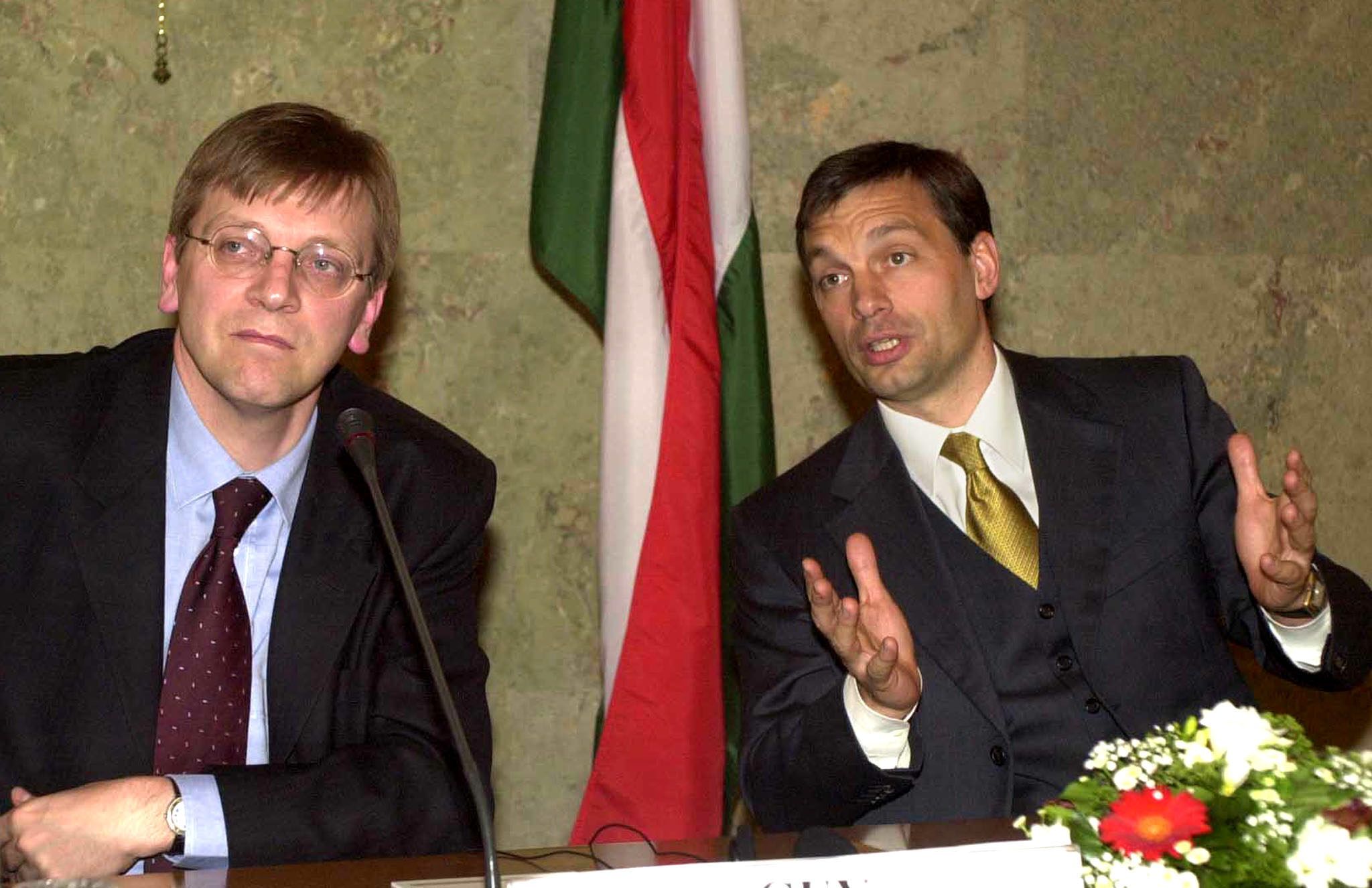
In March 2001, at the time Belgian Prime Minister Guy Verhofstadt (L) and his Hungarian counterpart Viktor Orban (R) answer journalist's questions. Credit: Belga/Herwig Vergult
He is particularly scathing about the dominance of American technology companies, arguing that their control over information has become a threat to both economic competition and democracy.
Social media platforms, he says, encourage people to consume information that confirms their prejudices rather than confront opposing arguments.
His answer is to break up the digital monopolies, much as American governments once dismantled dominant industrial and telecommunications companies.
He reserves particular criticism for the European Commission, which approved Meta's acquisitions of Instagram and WhatsApp.
"When two small companies somewhere in northern Finland want to merge, there is a problem. But when Zuckerberg takes over Instagram and WhatsApp, creating a real monopoly over data sent daily across the Atlantic, there is no problem."
Nor does he believe Brussels can regulate its way out of the problem. Large companies can absorb the compliance costs, he argues, while smaller competitors struggle. European regulation may inadvertently reinforce the very concentration of power it is intended to restrain.
Democracy beyond the ballot box
His critique extends beyond economics to the political system itself.
Why, he asks, are citizens so dissatisfied with representative democracy when they can vote governments out every few years?
His answer is that elections alone no longer provide a sufficient sense of control. He points to Switzerland, where referendums and direct participation give citizens a more immediate role in shaping policy.
"Representative democracy, or indirect democracy, has reached its limits," he says.
He wants citizens to have more opportunities to participate directly in political decisions, rather than simply delegate authority to politicians every four or five years.
There is an obvious tension here. Referendums have also delivered some of the populist victories he deplores, most notably Brexit. And direct democracy can be just as vulnerable to misinformation and emotional mobilisation as parliamentary elections.
Yet Verhofstadt sees the greater danger in allowing people to believe that politics is something done to them, rather than something they can shape.
The Brexit paradox
Brexit remains perhaps the most personal illustration of his political struggle.
For years, Verhofstadt was cast by British tabloids as an uncompromising Brussels federalist determined to punish Britain for leaving. His exchanges with Farage became parliamentary theatre, and his appointment as the European Parliament's Brexit coordinator infuriated Eurosceptics.
Yet he rejects the suggestion that Brussels made serious mistakes in the negotiations.
"We proposed an association agreement, or at least a customs union or Norway-style single-market membership. All these options were on the table."
The problem, he argues, was Britain's political system, which rewarded polarisation and made compromise between moderate Conservatives and Labour politicians almost impossible.
"Perhaps we did not push hard enough, but we were outsiders," he concedes.
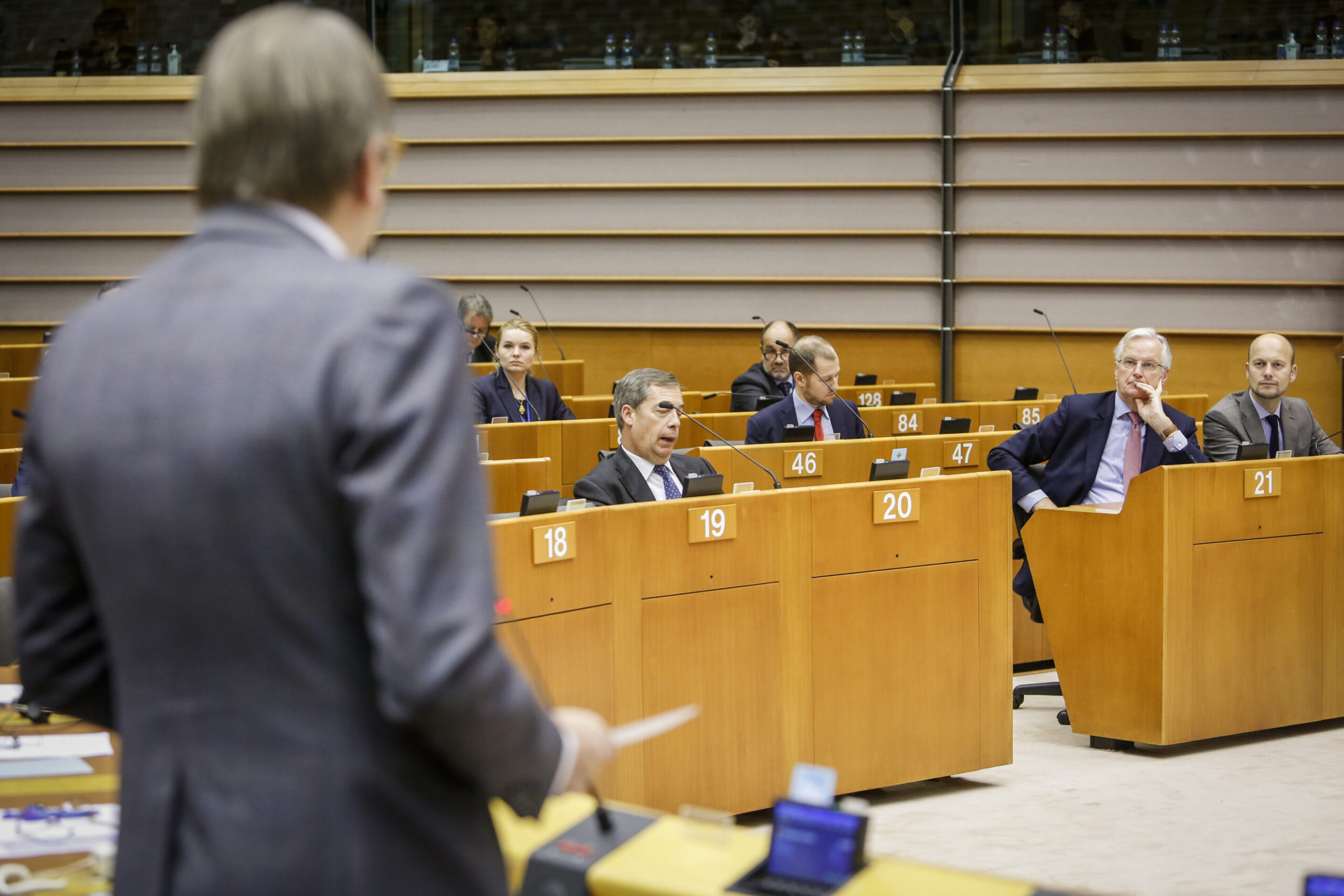
EP plenary session - Brexit. Credit: EP
He blames both hardline Brexiters and Remainers who believed the referendum result could simply be reversed.
Now, with Britain reconsidering its relationship with Europe and Prime Minister Andy Burnham advocating a more ambitious rapprochement, Verhofstadt sounds almost relieved.
"Finally!" he exclaims.
He believes Britain will eventually return to the European Union, although he acknowledges that the organisation it rejoins may look very different.
"I think the day will come when the UK returns to the Union. I do not know what kind of Union it will be."
That uncertainty is important. For all his criticism of Britain's political dysfunction, he recognises that the EU itself has failed to adapt to the emerging geopolitical order.
Europe's unfinished revolution
European federalism has been Verhofstadt's defining cause for decades. In Europe's Last Chance, published in 2017, he argued that the EU's cumbersome decision-making structures made it incapable of responding effectively to crises.
Almost a decade later, his frustration has scarcely diminished.
The war in Ukraine, the return of great-power politics and Europe's dependence on American security guarantees have reinforced his conviction that national sovereignty can increasingly be exercised only collectively.
"France cannot regain sovereignty alone, nor can Germany, and certainly not the smaller countries," he says. "We can regain sovereignty and better defend Europeans' interests only by acting together."
He is particularly disappointed by the limited progress towards common European defence since Russia's full-scale invasion of Ukraine.
His assessment of the US under Trump is equally unsparing. Asked whether Washington remains Europe's friend and ally, he replies: "I do not think so."
He argues that the Trump administration's support for nationalist movements hostile to European integration fundamentally undermines the traditional transatlantic relationship.
Yet he does not advocate replacing America with China as Europe's strategic partner. Instead, he envisages a broader alliance of democracies, with fewer barriers between them and a shared determination to resist authoritarianism.
The US, he insists, should ultimately belong to that alliance, although this would require profound changes in American politics.
The optimist's dilemma
There is something paradoxical about Verhofstadt's latest political intervention. He is calling for a revolution in liberal thinking, yet he remains one of the most familiar representatives of the liberal European establishment.
He has spent decades arguing that Europe needs stronger institutions, greater integration and more ambitious leadership. Many of his warnings about geopolitical vulnerability have proved prescient. But the federal Europe he advocates remains elusive, while nationalist parties have become increasingly influential.
His new manifesto is an attempt to escape that impasse by addressing the economic grievances and democratic frustrations that have fuelled the populist revolt.
He is not claiming that liberalism's old answers are sufficient. Indeed, his willingness to acknowledge their failures gives the argument some force. What he is demanding is a more robust, unapologetic liberalism, one prepared to confront concentrated wealth, challenge corporate power and offer voters something more inspiring than the promise of competent administration.
But who can deliver it? Asked to identify a contemporary politician capable of defeating populism through a compelling alternative vision, he struggles to name one.
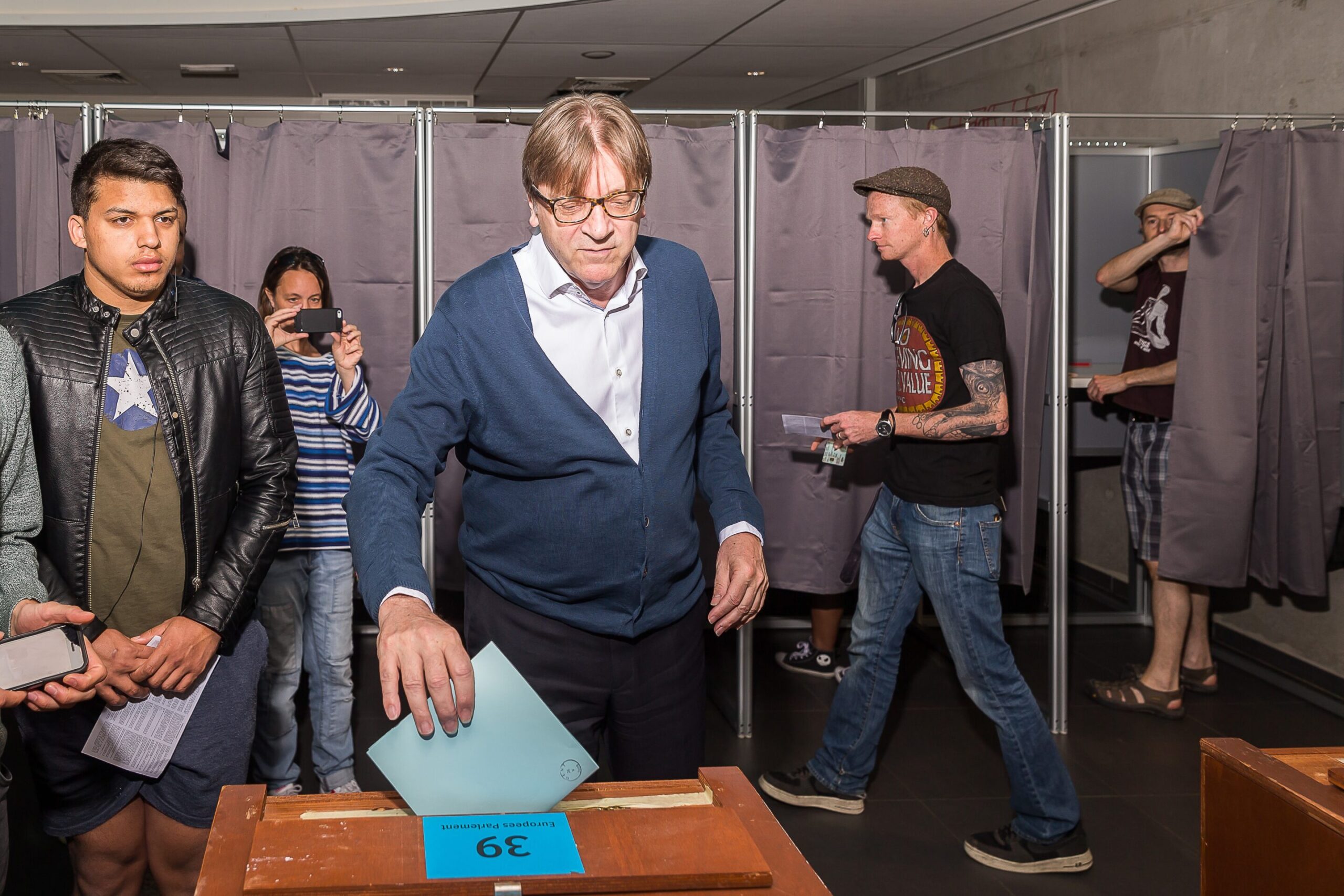
In 2019, then-MEP Guy Verhofstadt casts a vote at a polling station in Mariakerke, Gent, in Belgium's regional, federal and European elections. Credit: Belga/James Arthur Gekiere
Yet Verhofstadt remains upbeat, although his optimism is increasingly accompanied by impatience.
"You have to be optimistic in politics," he says. "But the reality is that we still do not have a generation of young politicians leading our countries and saying that we have to move in this direction."
He believes European citizens understand the need for greater integration better than their leaders do. The challenge is no longer simply to persuade voters, but to find politicians prepared to make the argument.
For a man who has spent a lifetime championing Europe, the greatest frustration is not that his vision has been rejected, but that too few of today's leaders are willing to fight for it.
"The problem is that our government leaders, anxious about the populist wave, have not had the courage to make this their central proposition."
