
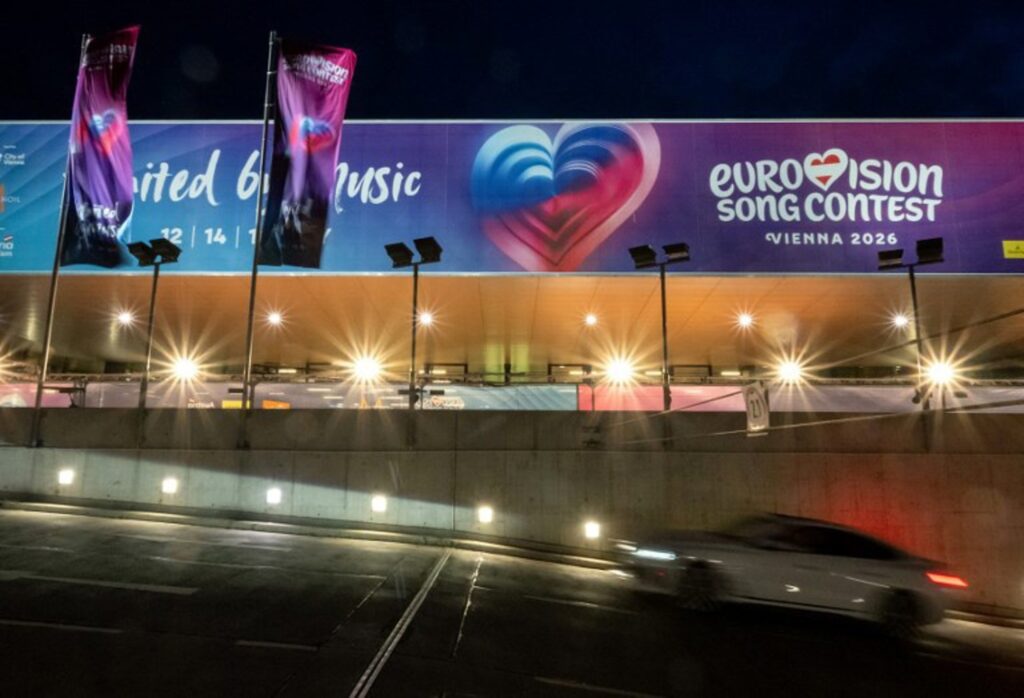
The Eurovision Song Contest, celebrating its 70th anniversary in Vienna, is being held under tight security amid controversy surrounding Israel’s participation.
The semi-finals will be held on Tuesday and Thursday, with the grand finale broadcast live on Saturday, overseen by the European Broadcasting Union (EBU).
While English songs are common, performances in other languages will also be on display, as 35 nations compete this year. Returning countries include Bulgaria, Moldova, and Romania.
The number of participating countries is the lowest in recent years, with Spain, Ireland, Iceland, the Netherlands, and Slovenia boycotting the contest in protest against Israel’s participation.
High-profile artists, including Peter Gabriel and Massive Attack, have added their voices to calls for a boycott.
Protests are expected in Vienna during the event, with demonstrators opposed to Israel’s involvement, citing its "genocidal violence" in Gaza following the Hamas attack on 7 October 2023.
Since 2024, the EBU has enforced stricter neutrality rules for the contest to prevent it being used as a political platform, according to Eurovision scholar Dean Vuletic. Artists now risk penalties for any politically charged actions or statements during the competition.
Vienna’s police and security agencies face a complex challenge in ensuring the event proceeds smoothly. Vice-president of the Vienna police, Dieter Csefan, highlighted concerns about cyberattacks and noted support from the FBI in managing these risks.
Vienna, which previously hosted Eurovision successfully 11 years ago, is familiar with organising major international events, being home to global bodies such as the UN and OPEC.
Security measures include thorough screening of the 16,000 professional staff involved and detailed scans of the 3,500 tonnes of equipment arriving at the Stadthalle venue.
The location adheres to safety standards akin to those of international airports, with agencies determined to avoid incidents like the cancellation of Taylor Swift’s 2024 Vienna concerts due to terror threats.
This year’s contentious spotlight is on Romanian contestant Alexandra Capitanescu and her song Choke Me, which some critics claim contains lyrics that normalise strangulation during sexual acts.
Traditional folk influences that were previously prominent, especially among Eastern European countries asserting post-Soviet identities, are less visible this year, with pop music dominating the entries.
Australia has drawn significant media attention by selecting established star Delta Goodrem to represent the country. She is considered a favourite to win alongside entries from Finland, Greece, Denmark, and France, according to betting odds.
The EBU reports that 95,000 tickets have been sold to fans from 75 countries, with strong demand particularly in the US, Australia, Brazil, Japan, and South Africa.
Last year’s contest drew 166 million viewers worldwide, and the Eurovision’s online presence continues to grow, with its iconic Charpentier Te Deum” prelude maintaining its status as a hallmark of the global celebration.
