
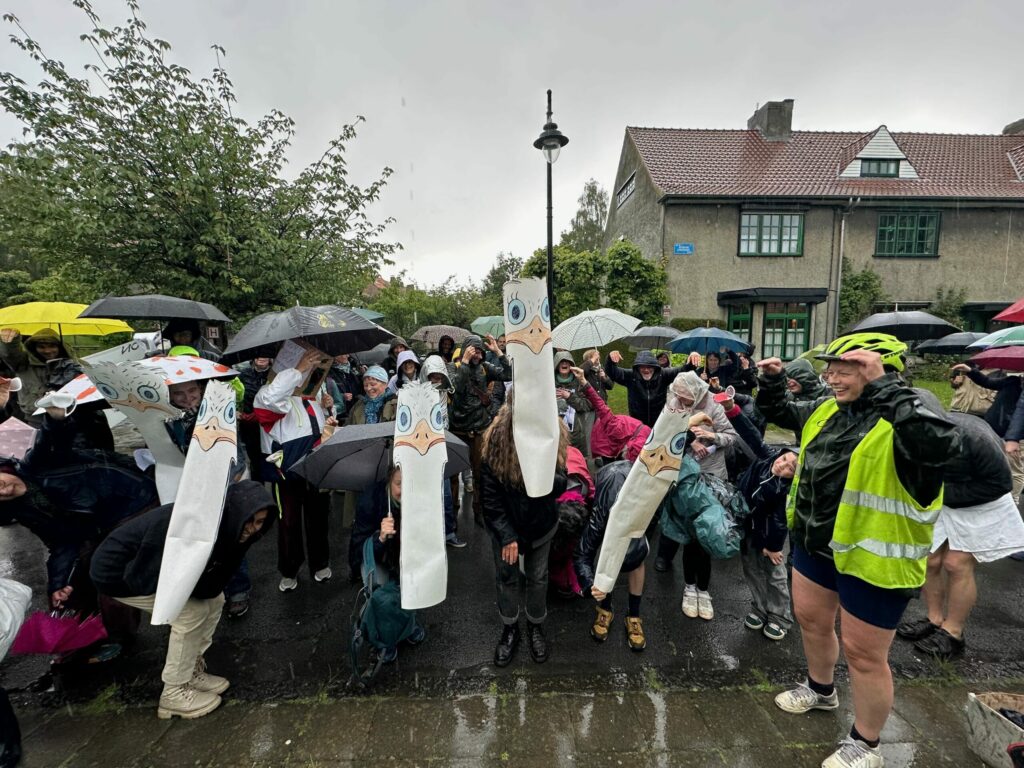
Last week's protest at the Champ des Cailles urban farm in Brussels pitted two of the city's needs against each other: building social housing and preserving green land.
On Sunday, 17 May, nearly 100 people gathered in the pouring rain in Watermael-Boitsfort to protest against plans to build housing on part of the Champ des Cailles urban farm, a site that has become a symbol of citizen-led agriculture and environmental activism in Brussels.
Organised by the citizen collective Friends of Champ des Cailles (ACdC), the demonstration took place on Rue de l’Autruche (Ostriche street), bordering the farmland.
Protesters carried small ostriches and embraced an Ostrich-led theme to denounce what they see as political leaders "burying their heads in the sand" over the environmental consequences of building on green urban land.
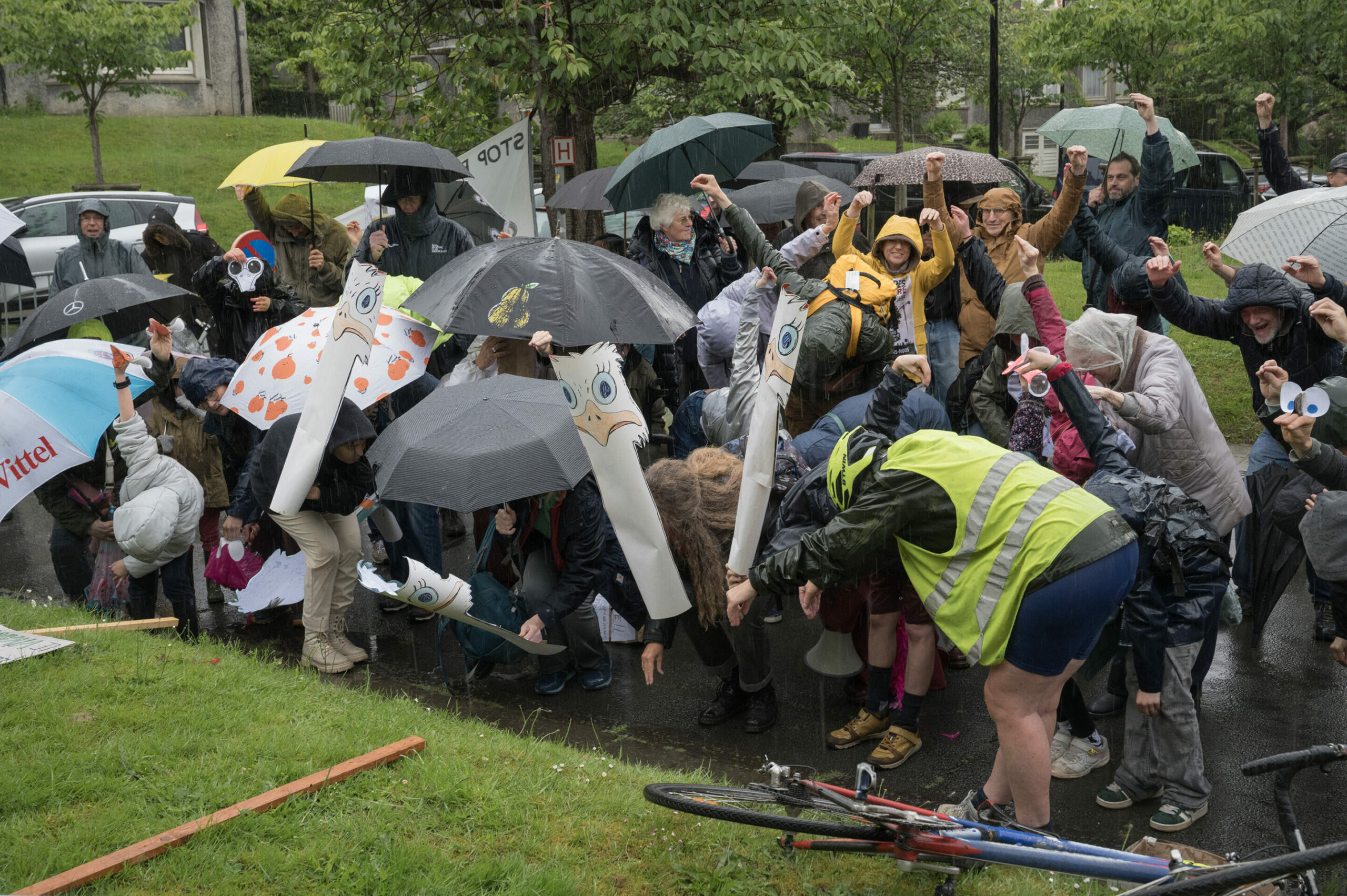
Operation Ostrich. Credit: handout
The mobilisation comes amid ongoing opposition to a housing project backed by the SLRB (social housing society of Brussels Region), which plans to construct around 70 social housing units and additional middle-income housing on land currently used by the farm.
"We have been fighting this since 2013 because it makes no sense to build on land dedicated to urban agriculture," said Fanny Vinet, a member of the Friends of Champ des Cailles collective, to The Brussels Times. "Little by little, green spaces are disappearing across Brussels. All these losses add up, and we are reducing nature to almost nothing."
'A model to multiply, not destroy'
The Champ des Cailles project, located near the protected Logis-Floréal garden city, combines several agricultural and community initiatives on more than three hectares of land.
The site includes organic vegetable production, flower-picking areas, aromatic herb cultivation, collective gardens and a sheepfold producing dairy and cheese products.
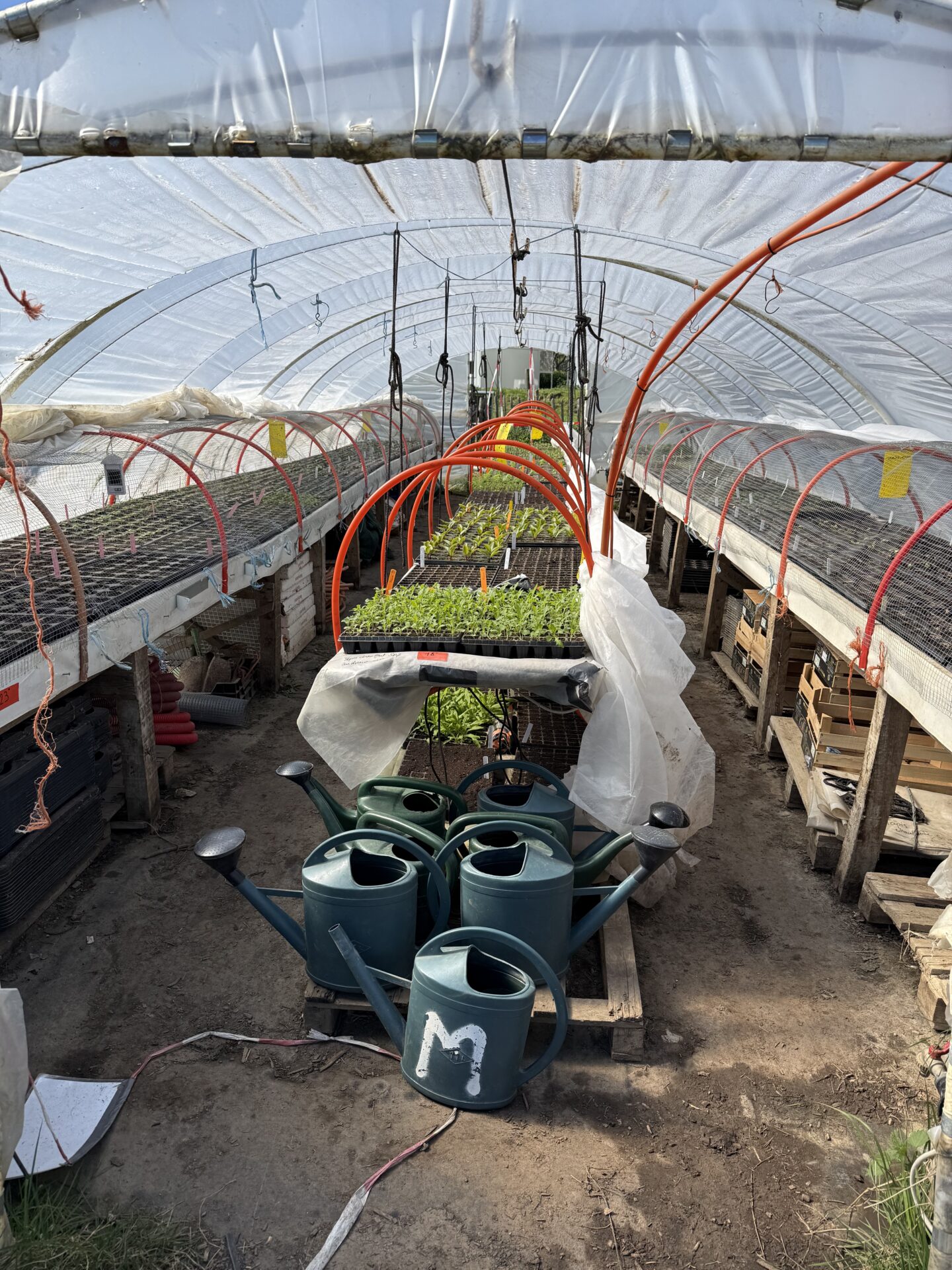
La ferme du Champ des Cailles. Credit: handout
The farm operates partly through a citizen subscription model, allowing residents to harvest seasonal vegetables themselves while participating in the cultivation process.
"For us, this is not only about ecology," Vinet explained. "It is also about trust, solidarity and humanity. People support the farm because they believe in local organic production, but also because they believe in sharing resources and caring for others."
According to the collective, the farm had already been forced to give up roughly half of its land three years ago to accommodate modular housing containers initially installed for Ukrainian refugees.
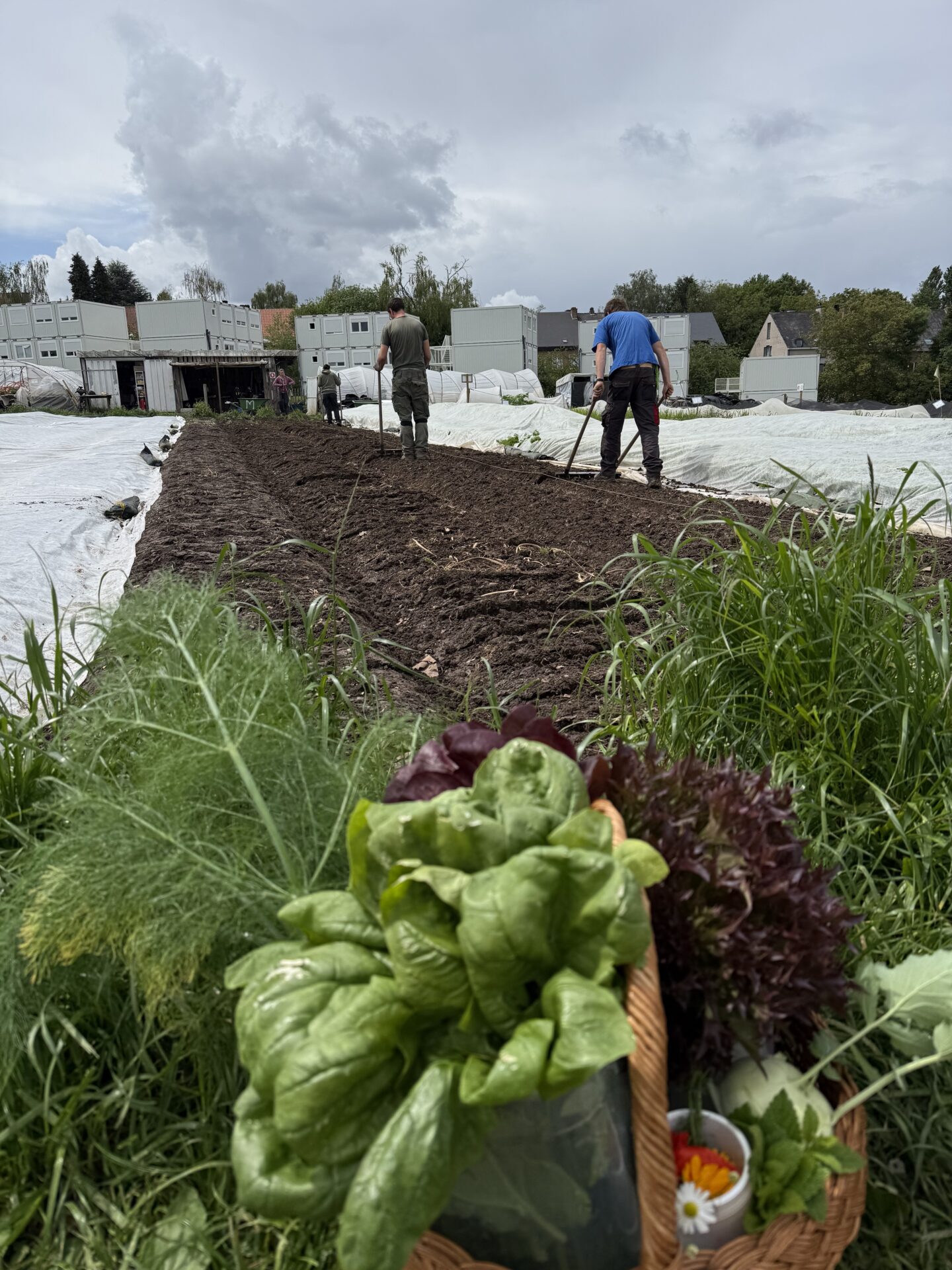
In the back, we can see the modular housing for Ukrainian refugees. Credit: handout
Activists say this first occupation of the land has already altered the site’s ecological balance.
"When the soil was stripped bare to install the containers, erosion started appearing during heavy rain," Vinet said. "You can now see water runoff forming small streams because the field’s natural sponge function has been disrupted."
Criticism of regional housing policy
The collective argues that the project contradicts Brussels’ broader environmental ambitions, including the Region’s Good Food strategy promoting urban agriculture and the future regional land-use plan (PRAS).
The activists also criticised the financial situation of the SLRB, which has announced plans to resell hundreds of housing units and buildings to finance other projects.
"Why continue building on green land if there are already existing buildings available?" Vinet asked. "There are many already artificialised ‘grey spaces’ in Brussels. Yes, using them would require more creativity and planning, but that is where we should be heading."
The protesters further stressed that the housing project still requires several authorisations, including approval from the Royal Commission for Monuments and Sites because of the heritage status of the surrounding Logis-Floréal neighbourhood.
Long-running tensions
The Champ des Cailles debate has for years highlighted tensions in Brussels between the need for additional housing and demands for greater environmental protection.
The site has already been the focus of several mobilisations. In February 2022, nearly 900 demonstrators protested against earlier plans for social housing construction on the farmland.
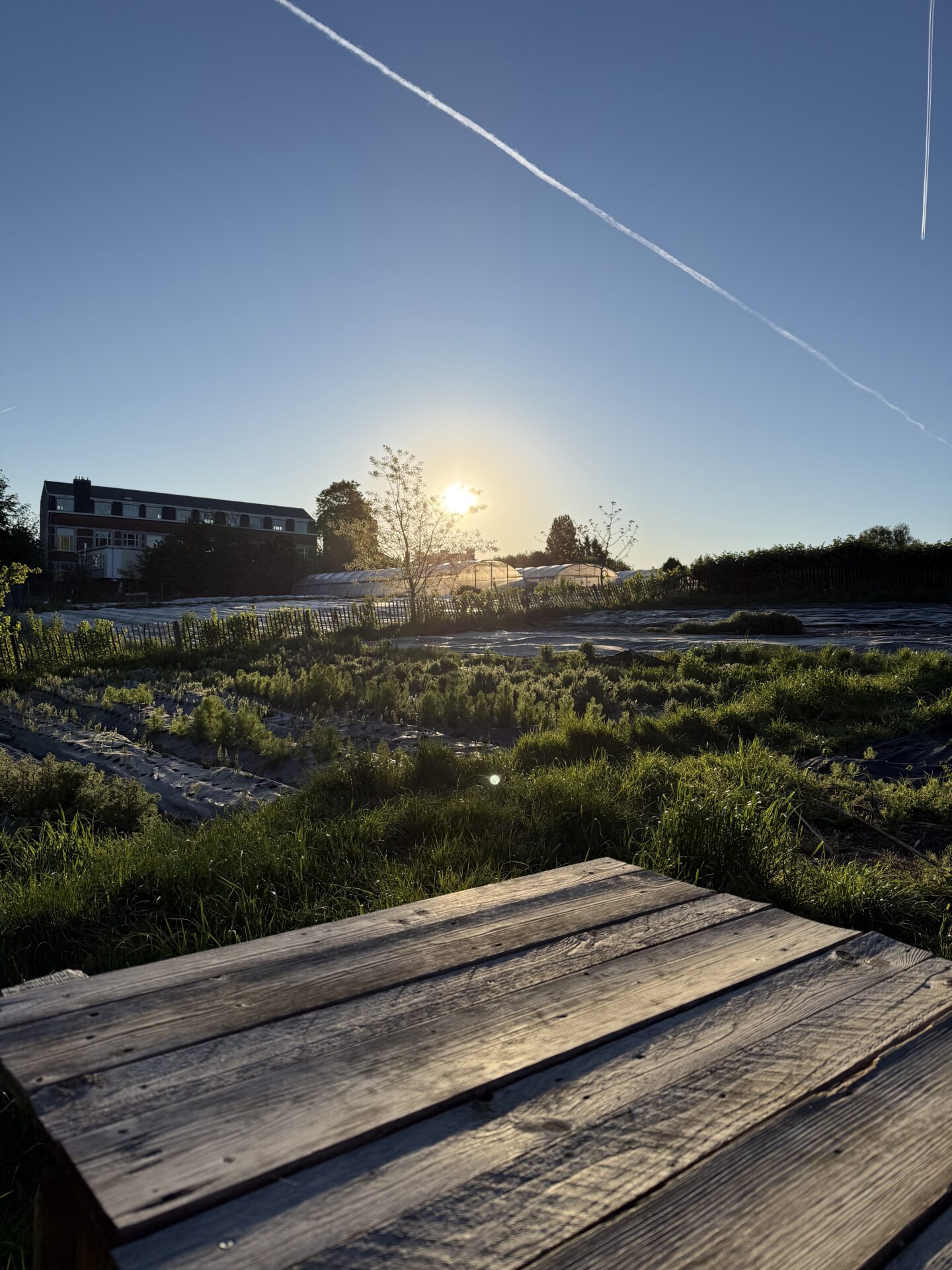
Part of this farmland could become social housing. Credit: handout
For supporters of the farm, the issue goes beyond a single field. "At one point, people even imagined replicating this model in every Brussels municipality," Vinet said. "It creates wellbeing, connections between neighbours and a different relationship with nature. This is a model that should be multiplied, not reduced."
Despite the heavy rain during the protest, organisers considered the turnout a success. "It was moving to see elderly people and local residents still come out in those conditions," Vinet said. "We wanted to show that many people still believe in the importance of keeping an urban field here."
The need for social housing
Yet the debate also unfolds against the backdrop of Brussels’ severe housing shortage and the growing pressure on the social housing sector.
In late 2025, the Brussels Region reported that more than 60,000 households were on waiting lists for social housing, with waiting times in some municipalities stretching beyond 10 years.
Housing organisations and anti-poverty associations have repeatedly warned that the crisis is worsening as private rental prices continue to rise while many residents struggle to keep up with the cost of living. According to recent figures, the average rent on the private market in Brussels now exceeds €1,300 per month, compared to roughly €400 for social housing tenants.
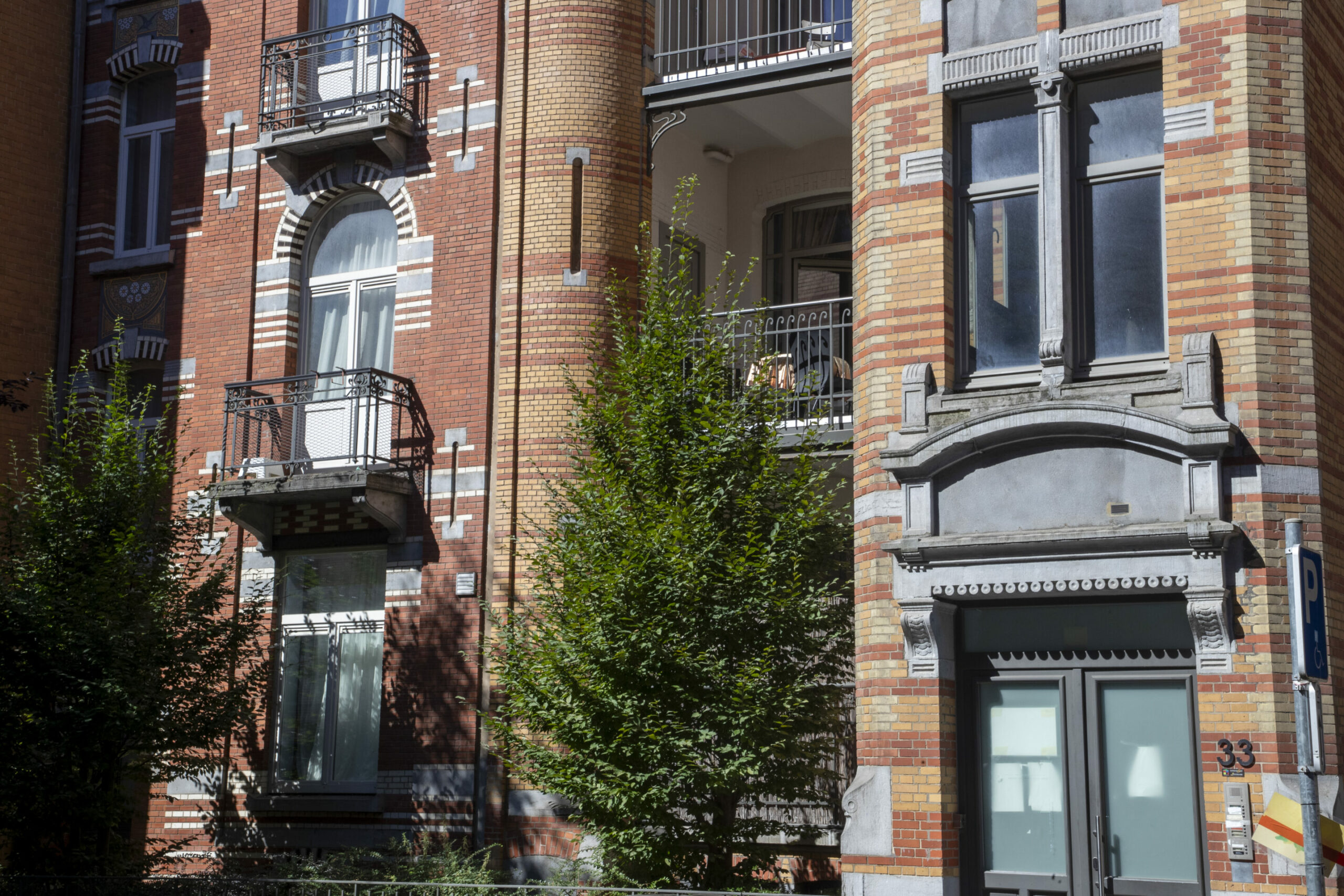
An old social housing project in Brussels. Credit: Belga / Nicolas Maeterlinck
Regional authorities argue that expanding the social housing stock has therefore become a necessity, particularly in a city where a large share of the population qualifies for public housing support.
Brussels has proportionally far less social housing than several other major European cities, with social housing accounting for less than 7% of the capital’s housing stock.
For the SLRB and the Brussels Region, projects such as the one planned at Champ des Cailles are part of broader efforts to address this shortage and reduce social inequalities.
Opponents of the project, however, insist that the housing crisis should not come at the expense of rare urban green spaces and argue that authorities should prioritise already built-up or abandoned sites instead of agricultural land.
