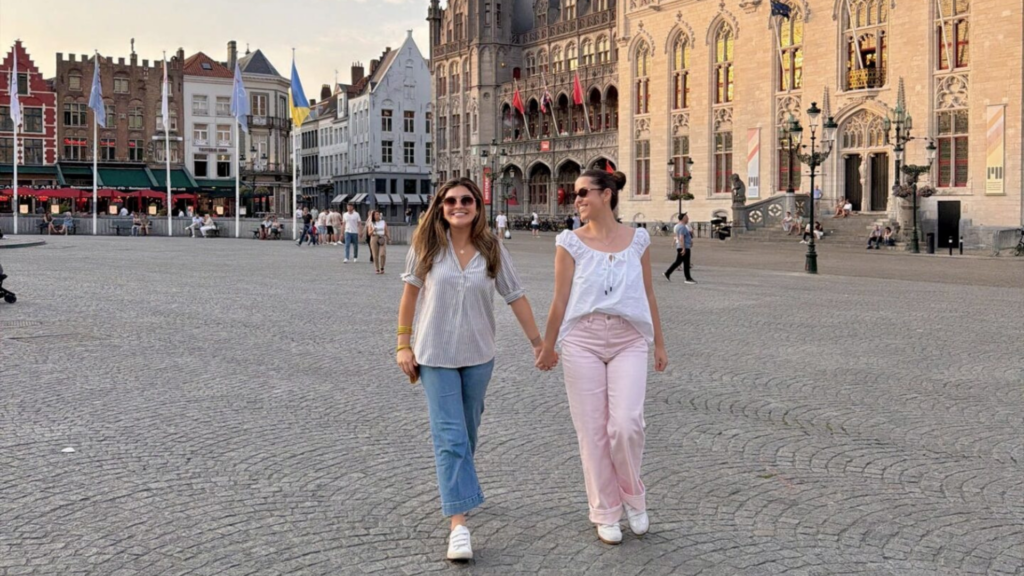
When I moved from the American Midwest to Brussels for the summer, I expected to encounter cultural differences. What I didn't expect was how often conversations would begin with assumptions.
Sometimes, those assumptions appeared the moment people heard my accent. I've been stopped and asked how I feel about US President Donald Trump before even introducing myself.
More than once, I've found myself explaining that no, not every American owns a gun, and yes, many of us travel extensively. Those conversations have made me realise that Europeans often hold simplified ideas about life in the United States.
At the same time, living in Brussels has highlighted some of the assumptions Americans commonly make about Europe.
Despite sharing centuries of history and consuming each other's media every day, Americans and Europeans often understand one another through misconceptions rather than reality. After several weeks living across the Atlantic, I've found that some of the most interesting conversations happen when those assumptions are challenged.
One continent, one country
After telling people in Brussels that I'm from Minnesota, I've often found myself explaining that life there looks very different from life in New York, Los Angeles or Washington DC.
Many Europeans I have spoken with understand that the United States is vast, but American culture is often represented abroad through a handful of major cities.
In reality, food, accents, political attitudes and social norms vary dramatically across the country. A Minnesotan, a Texan and a Floridian may all identify as American, but their experiences can be vastly different.
Living in Brussels has also made me realise how often Americans make similar assumptions about Europe.
Back home, Europe is frequently discussed as if it were a single cultural entity rather than a continent of distinct countries, cultures and political systems. Yet after spending time here, it becomes clear how much can differ from one country to the next, and sometimes even within the same country.
In Belgium alone, language, politics and culture vary significantly across the country. The closer you look, the harder it becomes to treat either Europe or the United States as one uniform culture.
Americans don't travel
Of all the assumptions I've encountered since arriving in Brussels, this is probably the one I've heard most often.
Many Europeans are surprised to learn how much Americans travel within their own country. While it's true that Americans are less likely than Europeans to hold passports and often take fewer international trips, geography helps explain why.
Travelling to another country from the US is rarely as simple as hopping on a train for the weekend. A flight from New York to Los Angeles takes roughly as long as a flight from Brussels to destinations in the Middle East, such as Egypt or Jordan.
The reality is not that Americans travel less. More often, we simply travel differently.

Departure hall in Brussels Airport. Credit: Belga/Nicolas Maeterlinck
Cost is another factor. While budget airlines make international travel relatively affordable within Europe, crossing the Atlantic often requires more planning, time and money.
Living in Brussels has also challenged one of the assumptions that I, like many Americans, grew up with: that Europe is small.
While crossing borders may be easier, travelling from Stockholm to Lisbon is farther than travelling from New York to Miami. Europe may be more connected than the United States, but isn't compact.
Divided America, united Europe
One of the first things people notice about me in Brussels is my accent. More than once, that has immediately led to questions about Trump, American elections and political polarisation.
The interest is understandable. For many Europeans, their understanding of the United States comes through political headlines. Presidential elections and partisan battles often dominate international coverage, creating the impression that Americans fall neatly into two groups: red (Republicans) and blue (Democrats).
While America's political system has become increasingly polarised, many Americans themselves are harder to categorise. Someone might support abortion rights while favouring stricter immigration policies. Another might support government-funded healthcare while opposing certain taxes. The reality is often far more nuanced than the headlines suggest.
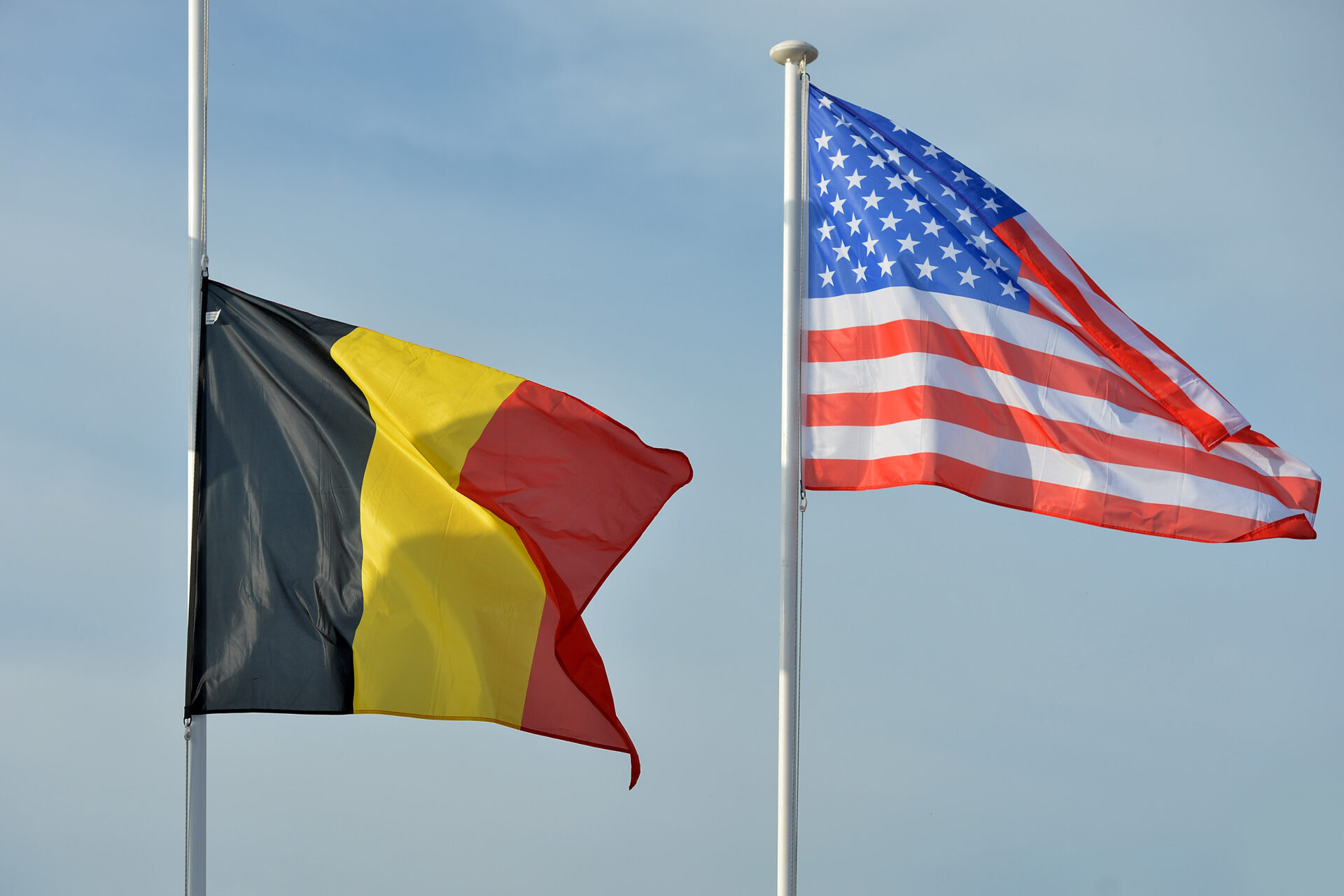
Credit: Belga / David Stockman
Living in Brussels has also made me more aware of a misconception common among Americans. Back home, the European Union can be misconstrued as a "United States of Europe": a collection of countries moving in the same political direction under a common government.
But after spending time here, I've realised that Europe is far from politically uniform. Beneath the 12 stars on the EU flag are 27 governments with their own priorities, interests and political pressures. From migration and defence spending to energy policy and economic reform, member states disagree on many major issues.
Living to work
Before moving to Brussels, one of the stereotypes I heard most often about Europe was that people barely work.
The image is familiar to many Americans: long lunches, month-long summer holidays and generous benefits. It's easy to come away with the impression that Europeans have somehow cracked the code to a stress-free life.
But after a few weeks working in Brussels, that perception feels overly simplistic. On any weekday morning, it's hard to miss the thousands of people heading to offices, meetings and institutions across the city. Work is hardly absent from daily life.

Credit: Canva
Europeans, meanwhile, often view Americans as workaholics who define themselves entirely through their careers. While Americans generally receive fewer days off and often work longer hours, that doesn't necessarily mean they value work more than family, hobbies or leisure. In many cases, those choices reflect economic realities rather than personal preference.
The difference I've noticed is often less about whether people work hard and more about how work fits into their lives. In Europe, there seems to be a stronger emphasis on protecting time outside of work, while in the US, careers are often more closely tied to personal identity.
Armed America
After several weeks in Brussels, I've noticed a pattern: conversations about America often circle back to guns.
The perception is understandable. For many people outside the US, their exposure to America comes through headlines about mass shootings, debates over gun rights and stories about firearms. Those stories can create the impression that guns are a defining feature of everyday American life.
While firearms are far more common in the US than in most European countries, the reality is more nuanced. Many Americans have never owned a gun, and experiences with firearms vary dramatically depending on where someone lives, how they were raised and the communities in which they live.
English-speaking Europe
Living in Brussels has also made me more aware of a misconception many Americans have about Europe: that everyone speaks English.
Before arriving, I knew Europe was multilingual in theory. In practice, however, it has been striking to hear conversations shift seamlessly between French, Dutch, English and countless other languages throughout this city.
In many parts of Brussels, it is entirely possible to get by in English. But that accessibility can create the false impression that English is everyone's primary language.
Credit: Belga
Like many of the assumptions Americans and Europeans make about each other, some stereotypes contain a grain of truth.
During my second week in Brussels, I was buying groceries when someone asked me whether Americans actually cook.
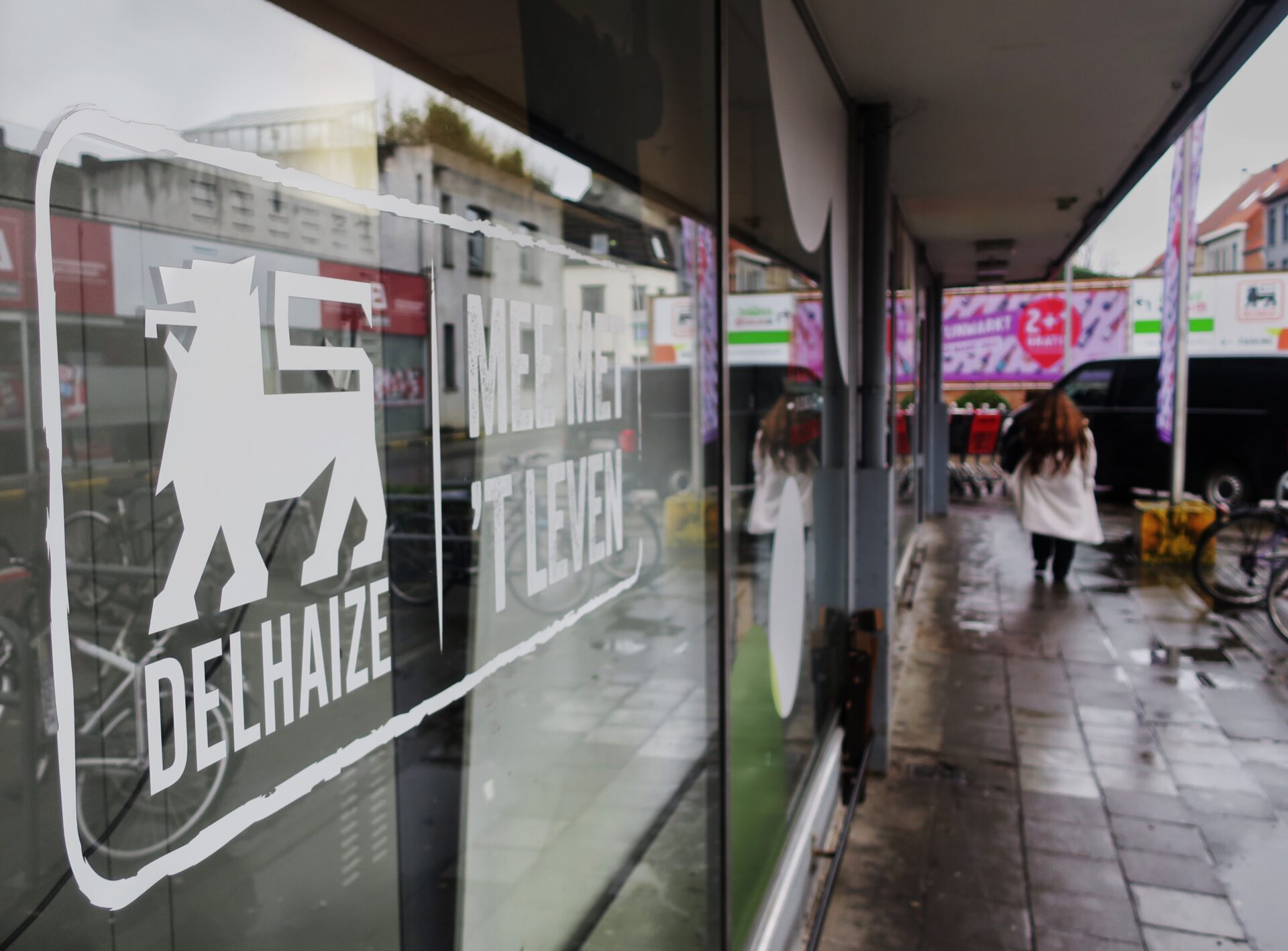
The question made me laugh. There's a reason people associate America with fast food and convenience culture. But standing in a Delhaize with ingredients for dinner in my basket, I couldn't help but think about how easily a country's image can overshadow the everyday lives of the people who live there.
Many of the assumptions Americans and Europeans make about one another work the same way. We often judge entire societies by the most visible things, whether that's fast food, politics, holidays or headlines.
Living abroad has reminded me that the most interesting parts of a culture are often the ones that don't make it into the stereotypes, and those are often the parts you only discover once you leave your misconceptions behind.
