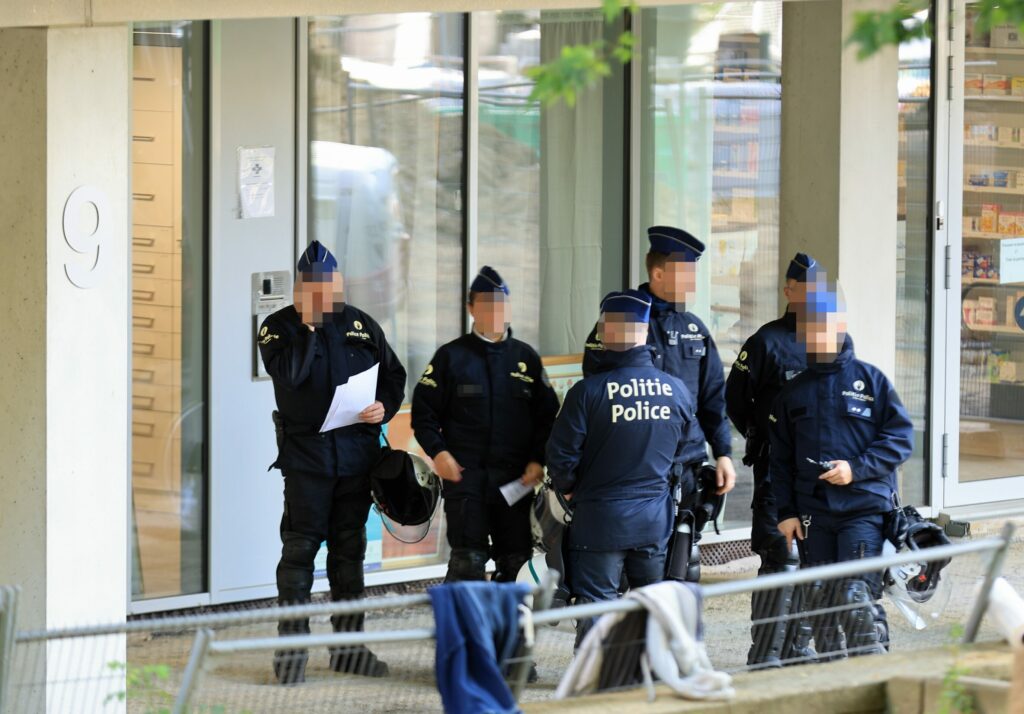
In the early hours of Wednesday morning, just hours after it was confirmed that Brussels would get a new drug commissioner, there was another targeted explosion at an address in Anderlecht.
Emergency services were called around 04:35 on Wednesday over a fire caused by a Molotov cocktail thrown outside the front door of a building in rue des Mégissiers in Anderlecht. The street was also targeted in a similar incident on 5 June.
It is the latest incident in an ongoing spate of small-scale bombings targeting houses in Brussels, with authorities strongly suspecting links to drug trafficking and organised crime. So far, there have not been any casualties, but mayors are concerned, as seen in the recent turf war in Saint-Gilles.
The bombings are affecting multiple municipalities: incidents have been recorded in Anderlecht, Saint-Gilles and Molenbeek, but also in Etterbeek, Laeken and Ganshoren.
While this recent drug-related violence has caused fewer victims than the shooting incidents recorded in 2024 and 2025, Brussels authorities are taking the issue seriously. However, given the scale of the problem, there have been few results so far.
New drug czar
On Tuesday, Brussels Minister-President Boris Dilliès (MR) confirmed that the region would establish a drug commissioner. While speaking in the Brussels Parliament’s Home Affairs Committee, he said the recruitment phase had been launched.
He had previously indicated that such a role would not be created, despite it being included in the regional government agreement. Now, Dilliès has conceded that due to the "strong political appetite", a new role will be created under the auspices of the regional security agency Safe Brussels (safe.brussels) with the funding of €1.5 million.
The new office and role will contribute to better coordination between municipalities and the Brussels Region in the fight against drug trafficking, with a mandate which will push for both security, economic and administrative measures to tackle drug-related organised crime.
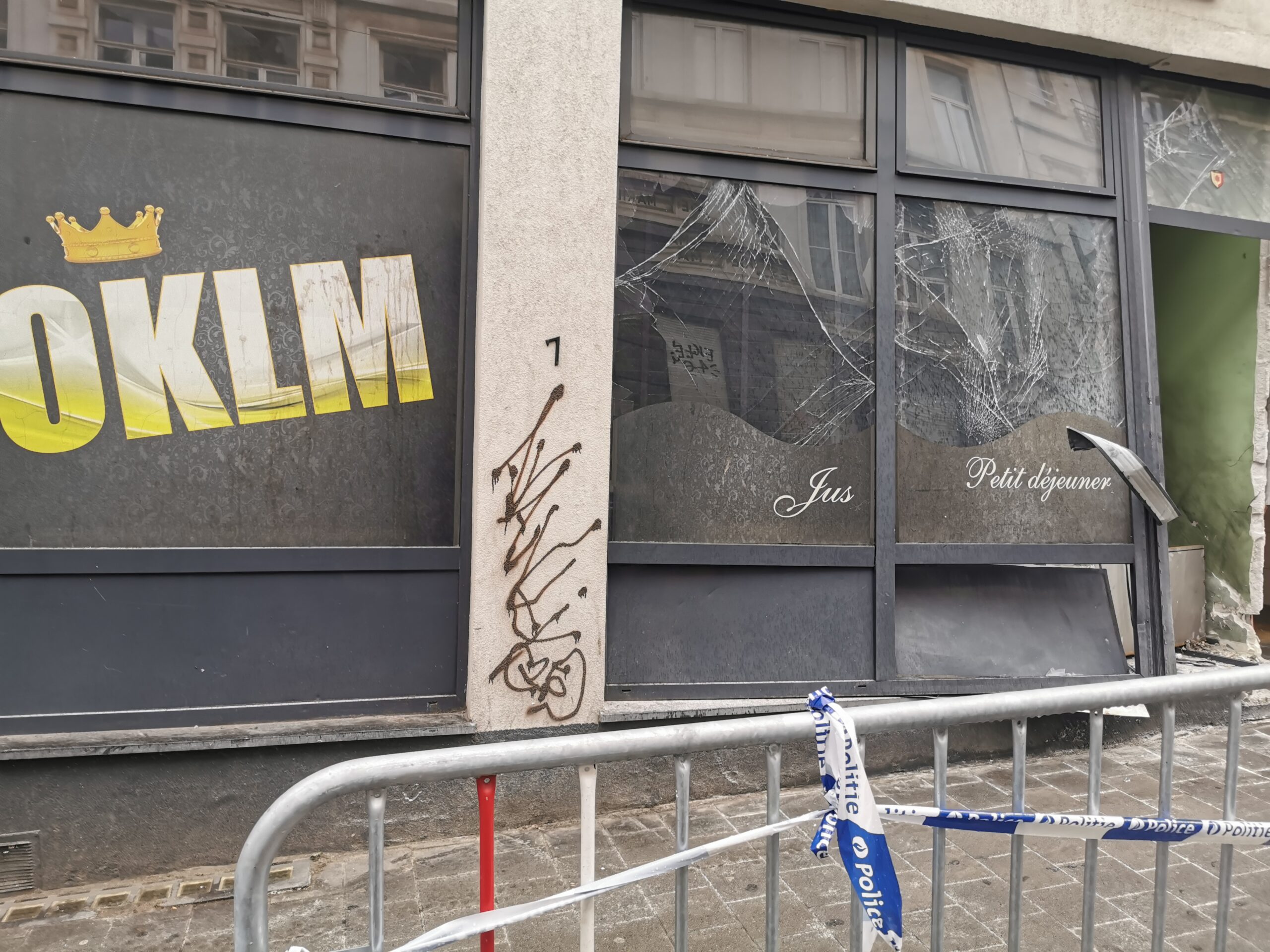
Picture of the aftermath of an explosion in front of the OKLM Chicha Lounge Bar on Rue Théodore Verhaegen in Saint-Gilles. Fifteen windows at the Institut des Filles de Marie were blown out, on Saturday 18 April 2026. Credit: Belga
"There must be a response in this Region to an extremely serious phenomenon which is, in my opinion, one of the hardest and most difficult this Region has faced since the terrorist attacks," Dilliès told Brussels MPs. "I think we can all agree on the urgency and the dramatic nature of the situation".
During the committee meeting, it was acknowledged that the level of violence being seen across the city was pushing more municipalities to become more involved in tackling drug trafficking.
MPs noted that the latest explosions have shed light on the urgent need to cut off organised crime groups from being able to launder money through businesses and property in Brussels.
Since 2024, municipalities have been able to close down businesses which are linked to the drug trade as part of efforts to tackle organised crime’s money laundering, but this mechanism has largely not been used yet.
However, 15 municipalities are currently in a preparatory phase to set up integrity units to monitor businesses that launder drug money, Brussels MP Aline Godfrin (MR) said on Tuesday.
A symbolic role?
Given the already-established role of the national drug commissioner, Ine Van Wymersch, in place since 2023, there is concern among certain MPs that the new Brussels drug commissioner role risks becoming purely symbolic and another level of power in the Regional Government.
The Minister-President rejected this claim."The division of responsibilities with the federal drug commissioner is clear: the future regional commissioner’s office will exercise its missions within the framework of Brussels regional powers," he explained.
"So there is obviously no question of overlap, conflict of powers, or duplication, which would clearly be absurd. On the contrary, the goal is to ensure complementarity between levels of government and avoid any waste of public resources," Dilliès stressed.
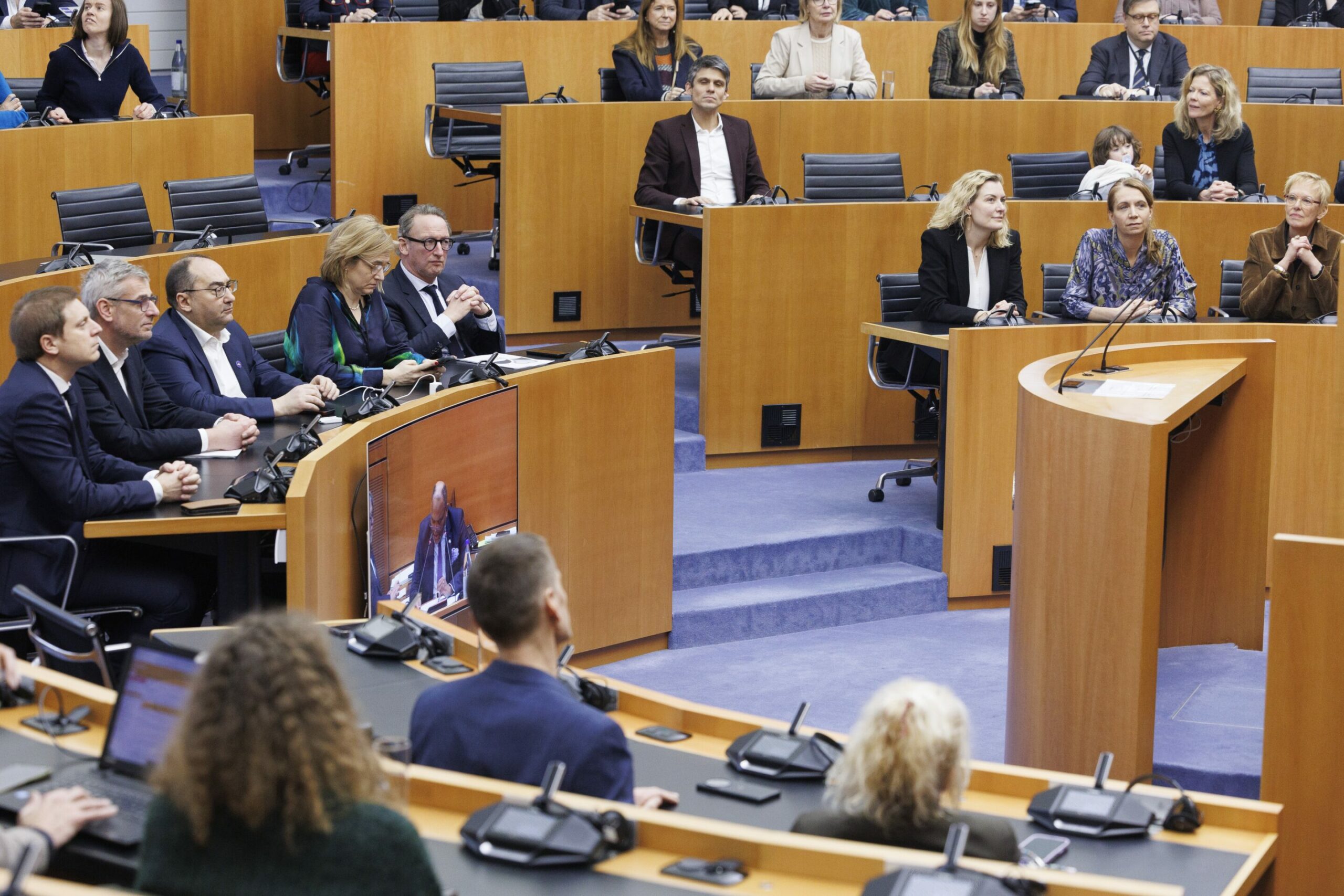
The Brussels parliament in Brussels, Saturday 14 February 2026. Credit: Belga / Nicolas Maeterlinck
The selection procedure will be launched in the coming days, with the precise mandate and more information to be released in the coming weeks, the former mayor of Uccle added.
Flemish Christian democrat MP Benjamin Dalle (CD&V), who said his party were behind the call for a commissioner during the government formation talks, calls it an "important signal" that the government has now decided to launch the recruitment process for the commissioner.
"It shows that the government wants to move quickly to implement a coordinated approach," said Dalle. "Drug policy is not just about the police and the justice system. Anyone who really wants to tackle the problem must also focus on prevention, early detection, support and care."
Brussels woes
Questions over Brussels budgetary situation were also omnipresent in discussions about the new drug commissioner's office.
Brussels opposition MP Fouad Ahidar (Team Fouad Ahidar) accused the government of cutting funding for security and Safe Brussels while at the same time trying to tackle drug trafficking.
He criticised the announcement, accusing Dilliès of "having unclear budgetary choices, the operational resources remain vague, and there is also little clarity about the concrete powers of that commissioner."
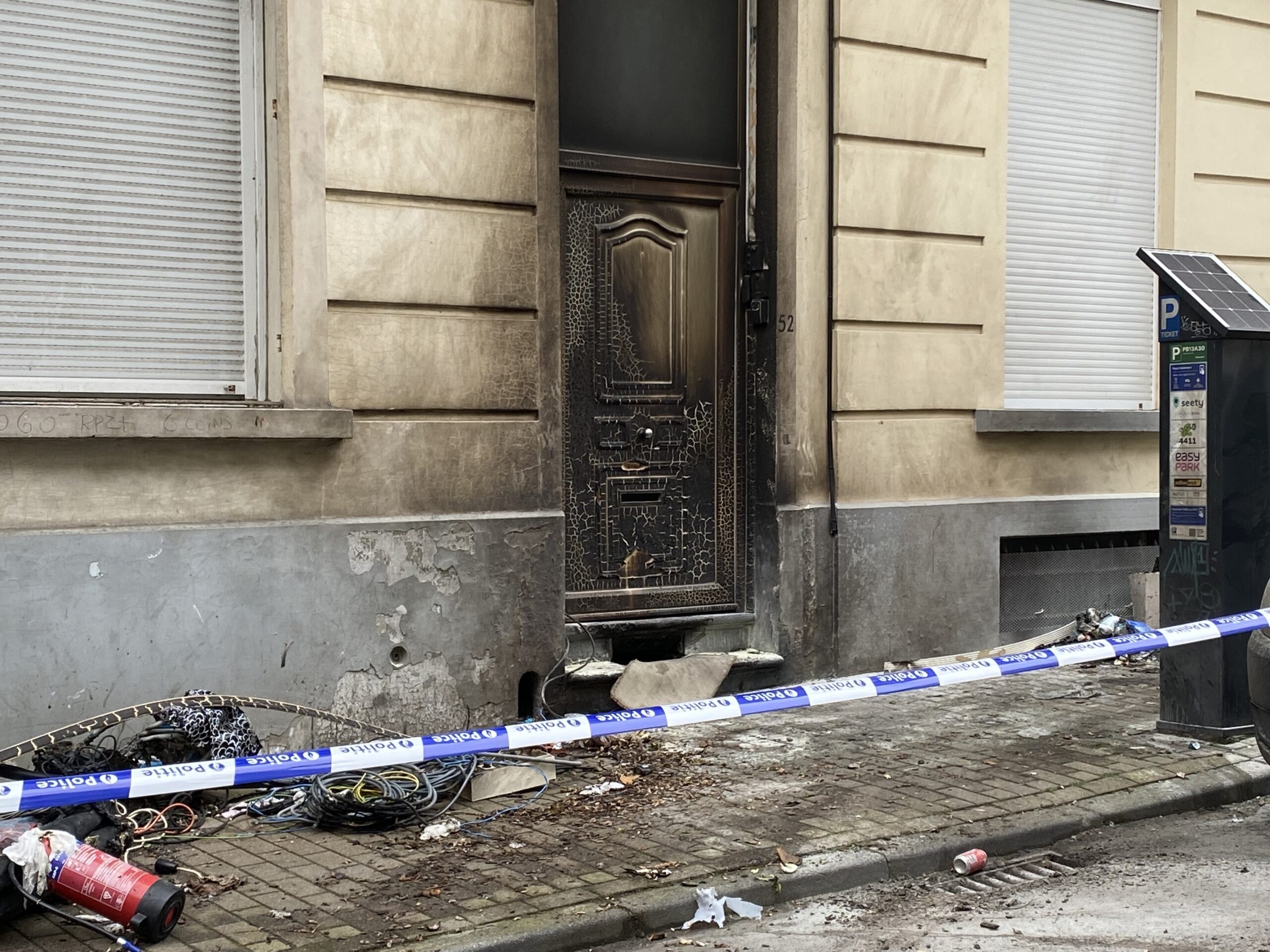
Damage outside the house in Rue de Prague, Saint-Gilles. Credit: The Brussels Times
Despite saying that his government’s priority is to tackle the drug trafficking problem, the Brussels Minister-President also stressed that another "essential priority" of the government is restoring the regional budgetary balance.
"All administrations and public institutions must contribute to the collective effort. Brussels cannot escape that," Dilliès responded. "The objective is not to weaken public action on security, but to steer the administration toward a more effective operation, better targeted and more oriented toward the concrete priorities of the people of Brussels."
However, the Brussels justice system is in dire need of investment, as articulated by the Brussels chief prosecutor, Julien Moinil, who has campaigned for more funds in the context of a lack of youth detention spaces and inadequate social support follow-up for offenders.
Yet during Tuesday's meeting, the Brussels leader was also very frank about the problems they were facing and how the Brussels Region should respond to them.
"I do not have a fixed view on exactly how things should be done. I have experience as a mayor, but frankly, it would be ridiculous and presumptuous of me to claim that I therefore know exactly what must be done."
