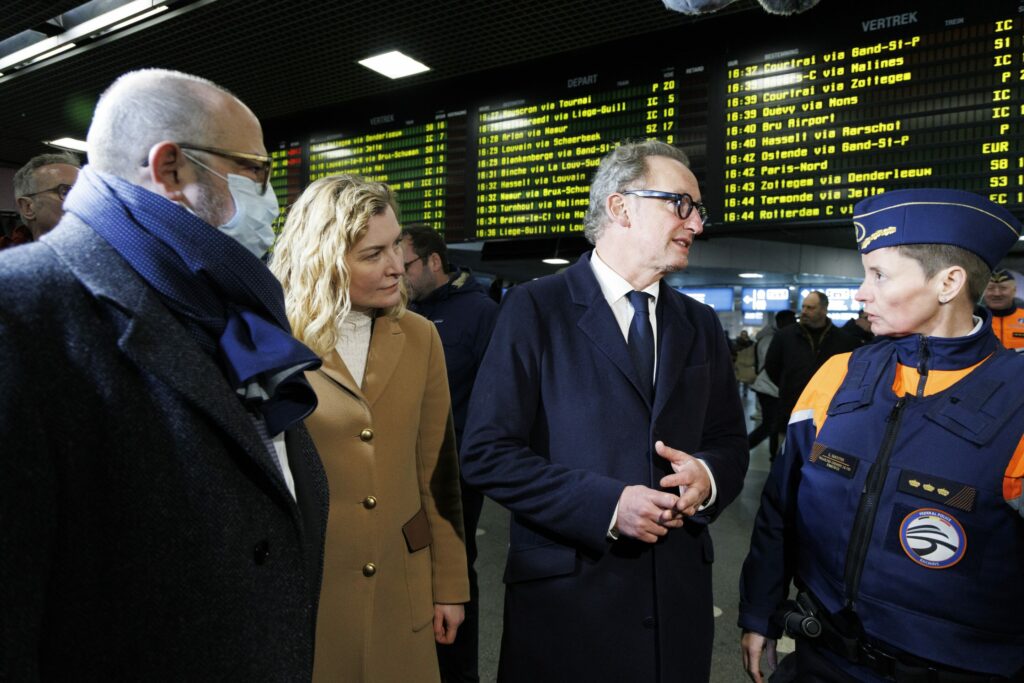
The new regional Brussels Government has released the details of its anticipated plan to improve cleanliness and safety at the Midi and North stations, including more CCTV and a one-off deep-cleaning operation.
After announcing it as a priority right after taking office in February, Brussels Minister-President Boris Dilliés (MR) shared details on Thursday of what he plans to do to improve the situation around the two major transport hubs in the Belgian capital.
It came after the Council of Ministers of the Brussels-Capital Region approved a framework designed to coordinate the measures decided upon as part of the ‘Station Plan’.
The government plans to prioritise five key areas to guide action, starting from September.
Measures include strengthening the use of CCTV with an extra 60 cameras in the area, boosting the presence of security and public services on the ground and engaging a private contractor for a one-off deep-cleaning operation.
Moreover, the Brussels Region wants to rethink the urban areas by using security-by-design principles, while also strengthening the socio-health support for vulnerable groups, such as those experiencing homelessness and/or addiction.
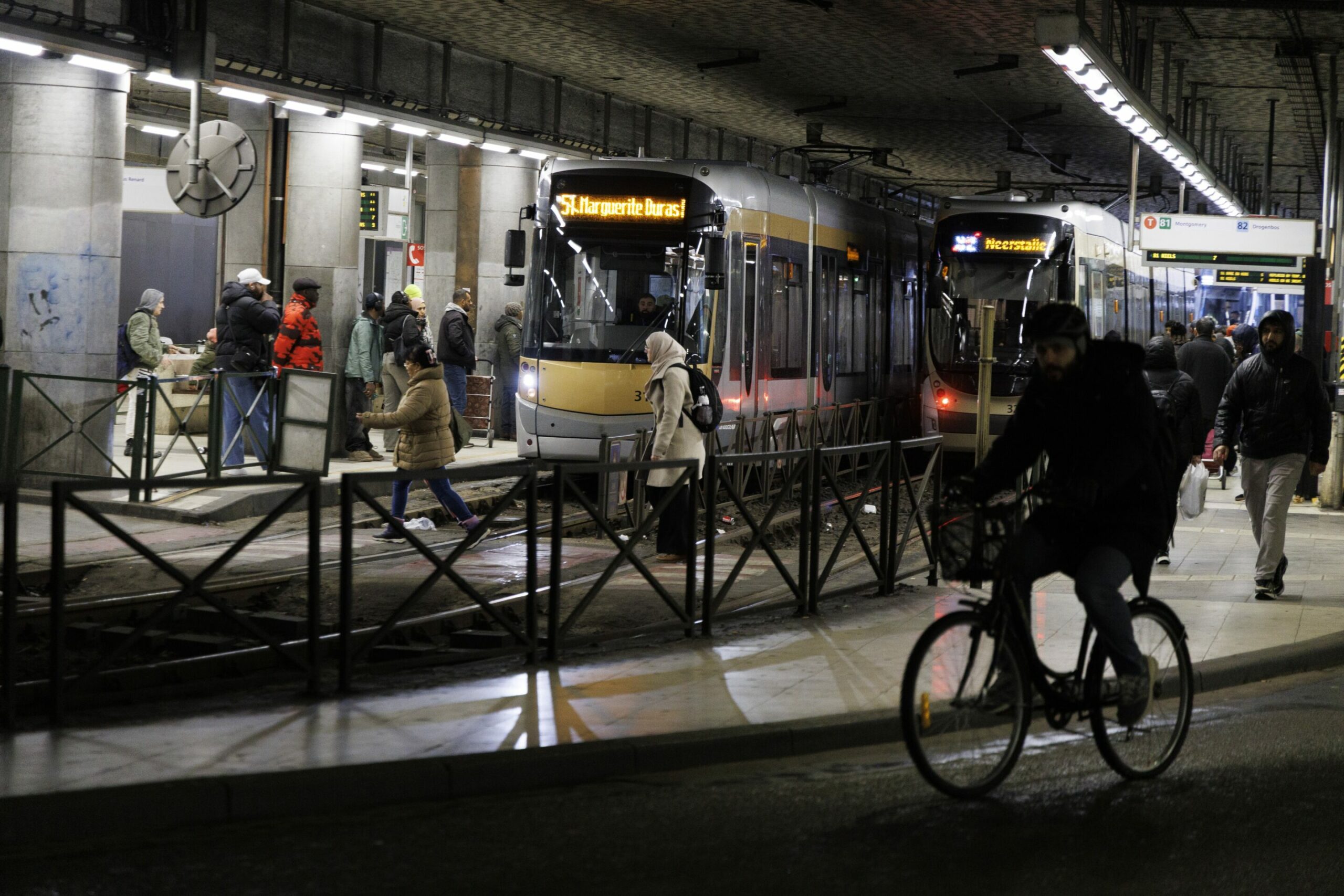
STIB public transport pictured during a visit to the Brussels-Midi railway station, in Brussels, on Monday, 16 February 2026. Credit: Belga
Every day, tens of thousands of passengers pass through the Brussels-North and Brussels-Midi stations. The areas around the station are key hubs for transport, economic activity. They are naturally a big part of Brussels' image.
However, both Brussels-Midi and Brussels-North have been affected by longstanding social issues, petty crime and general feelings of insecurity and uncleanliness.
Both stations have seen high concentrations of homeless people, which worsened with the Covid-19 pandemic and by the Federal Government’s decision not to provide asylum seekers with a legal right to shelter, leaving them in the street.
High drug use among vulnerable and precarious populations, including cheaply available crack cocaine, has also worsened the problem.
In response, the Brussels Government has set up a Stations Plan designed to act on two fronts simultaneously: providing rapid solutions to the problems encountered on the ground whilst preparing the structural changes needed for the years ahead, according to a statement by Dilliés.
"Residents, as well as the many commuters and tourists who arrive in our Region every day, are entitled to safe, clean and welcoming station neighbourhoods," said Dilliès, who will chair various working groups.
"It is our responsibility to deliver concrete solutions in the coming weeks whilst preparing for longer-term changes. That is why our Station Plan will operate on two different timeframes," he added.
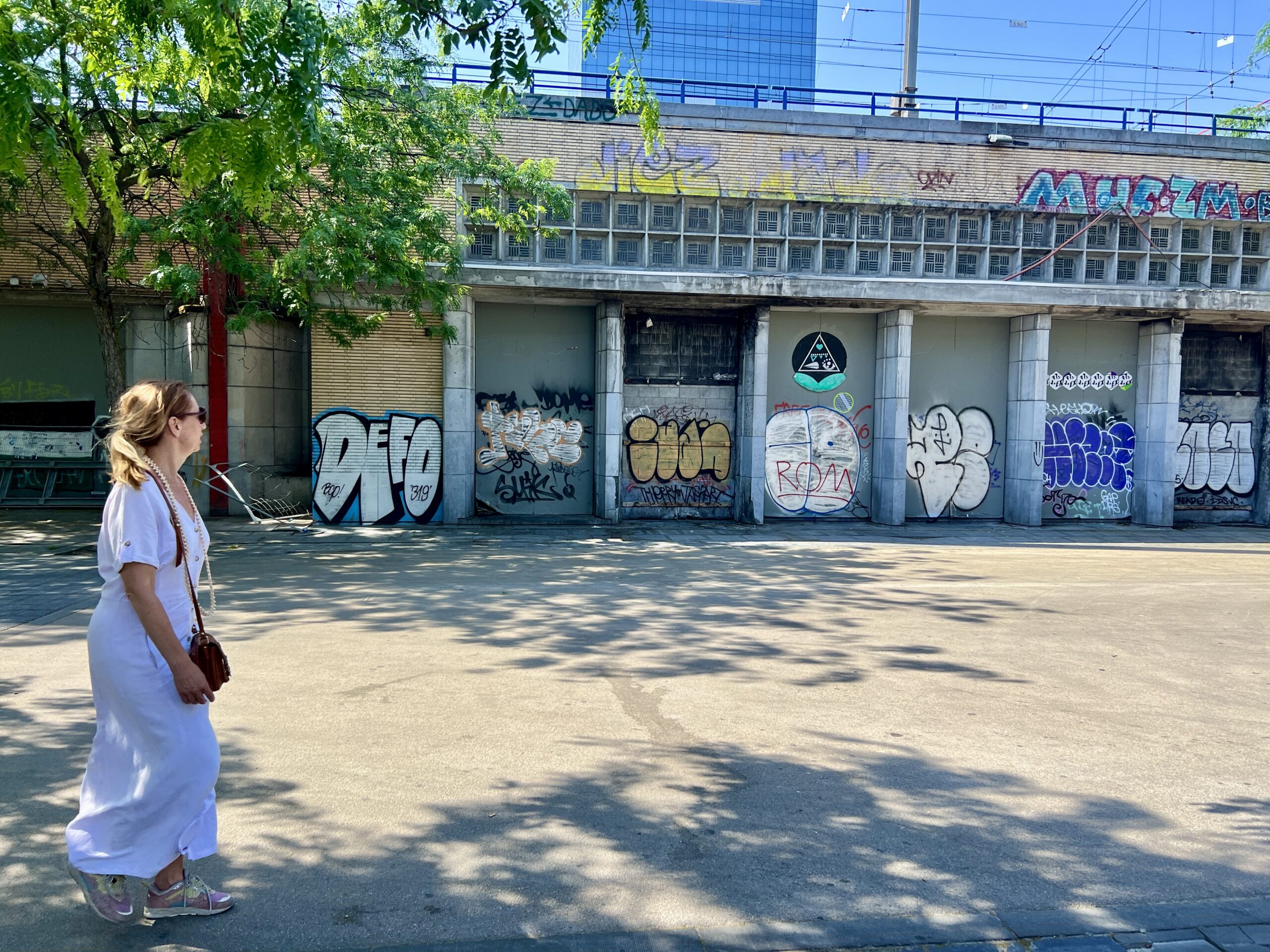
State Secretary Ans Persoons (Vooruit) walking by the unused 'quadrilaterals' in Brussels-Midi station. Credit: Ans Persoons Office
Many stakeholders will be involved in implementing the measures, including police districts, local authorities, the SNCB-NMBS, the STIB-MIVB, Infrabel, federal authorities and the voluntary sector.
For socio-health support, Brussels’help, Samusocial and the Red Cross will be mobilised to draw up a more comprehensive plan for people who are homeless or dependent on others.
"If we want to bring about lasting change to our stations, it is essential that everyone pulls in the same direction," the Minister-President added.
Last month, the Brussels-Midi police zone officially opened its new central police station in the Rue des Deux Gares in Anderlecht, while Belgian soldiers have also been patrolling at Brussels' major stations since April.
Midi as an economic hub?
The situation at Brussels-Midi will also be assessed by the regional Brussels Economy Minister, Laurent Hublet (Les Engagés), who has been tasked with reimagining the area with a view to transforming it into an economic hub.
The Minister for the Economy will carry out a "forward-looking analysis" in order to present an economic development plan and the capital structure required to transform the Brussels-Midi neighbourhood.
"Midi station is a strategic location for the Brussels Region. We have the opportunity to transform the station and its surroundings into a genuine economic driver, capable of creating jobs, attracting investment and restoring a sense of pride among the people of Brussels," said Hublet.
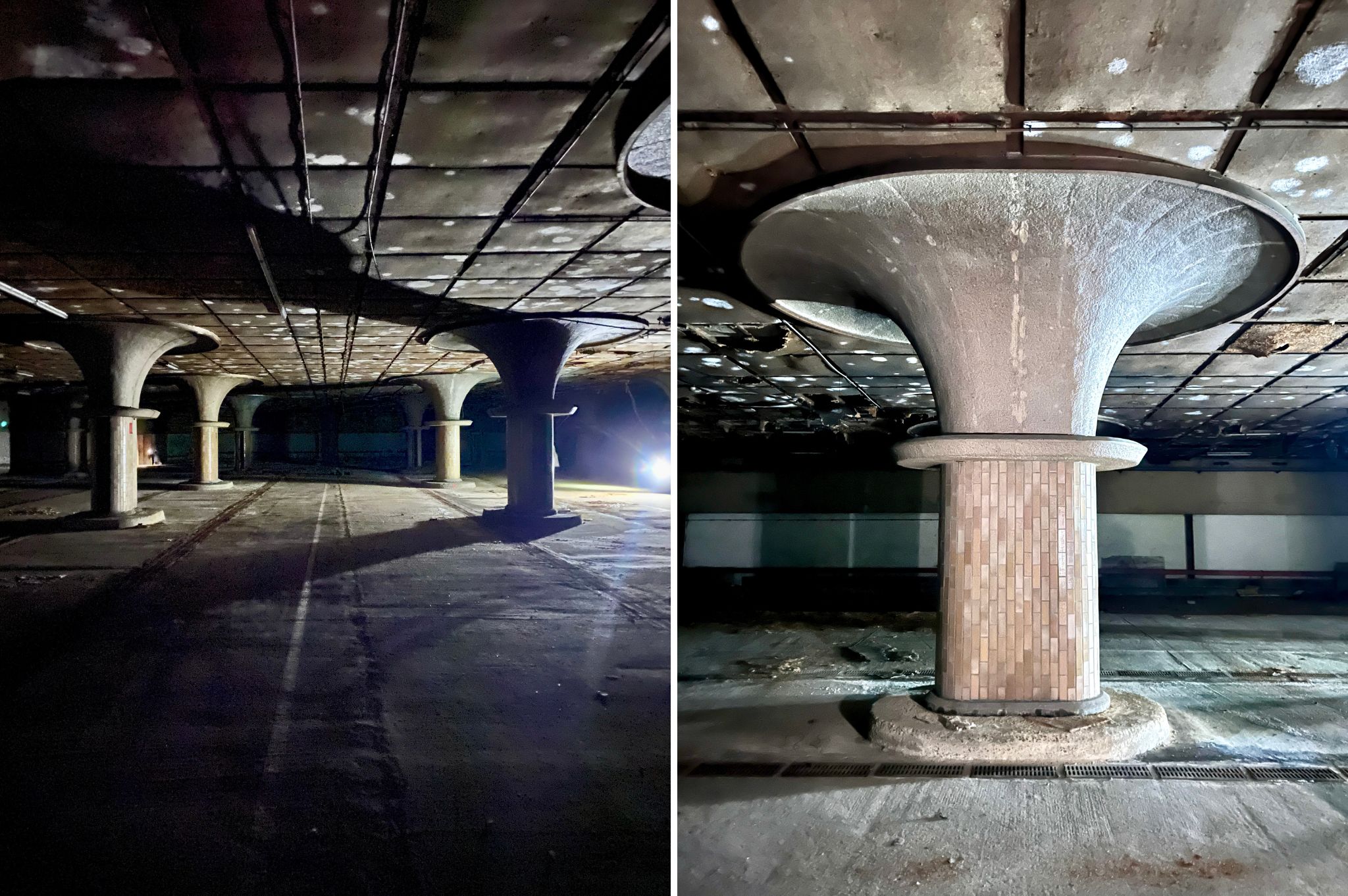
Inside the quadrilaterals under Brussels-Midi station. Credit: Ans Persoons Office
The minister explained that the economic analysis will help to identify potential avenues and the key players to drive. "This ambition must set an example: it must be ambitious, sustainable and carried out hand in hand with all public and private partners," he added.
The plan also provides for the redevelopment of the "quadrilaterals", the unused spaces beneath the railway tracks stretching from Brussels-Midi to the city centre. The aim is to transform these vast yet currently unoccupied spaces into vibrant public areas and to enhance the surrounding public spaces.
"These spaces currently form a long, featureless wall along which nobody likes to walk, especially at night," explains Brussels Secretary of State for Urban Regeneration, Ans Persoons (Vooruit), who will present a specific action plan on the 'quadrilaterals' to the government in September.
"By finally giving these areas a purpose – such as neighbourhood shops, sports facilities, cafés, public toilets, showers or even cycle parking. We want to breathe new life into the area around Brussels-Midi, making it more vibrant and attractive."
On Wednesday, the Brussels Government also announced plans to partially dismantle the Palais du Midi to continue the stalled construction works for the Metro 3 project, which will not open for another 10 years, raising protests from locals and urban activists.
