
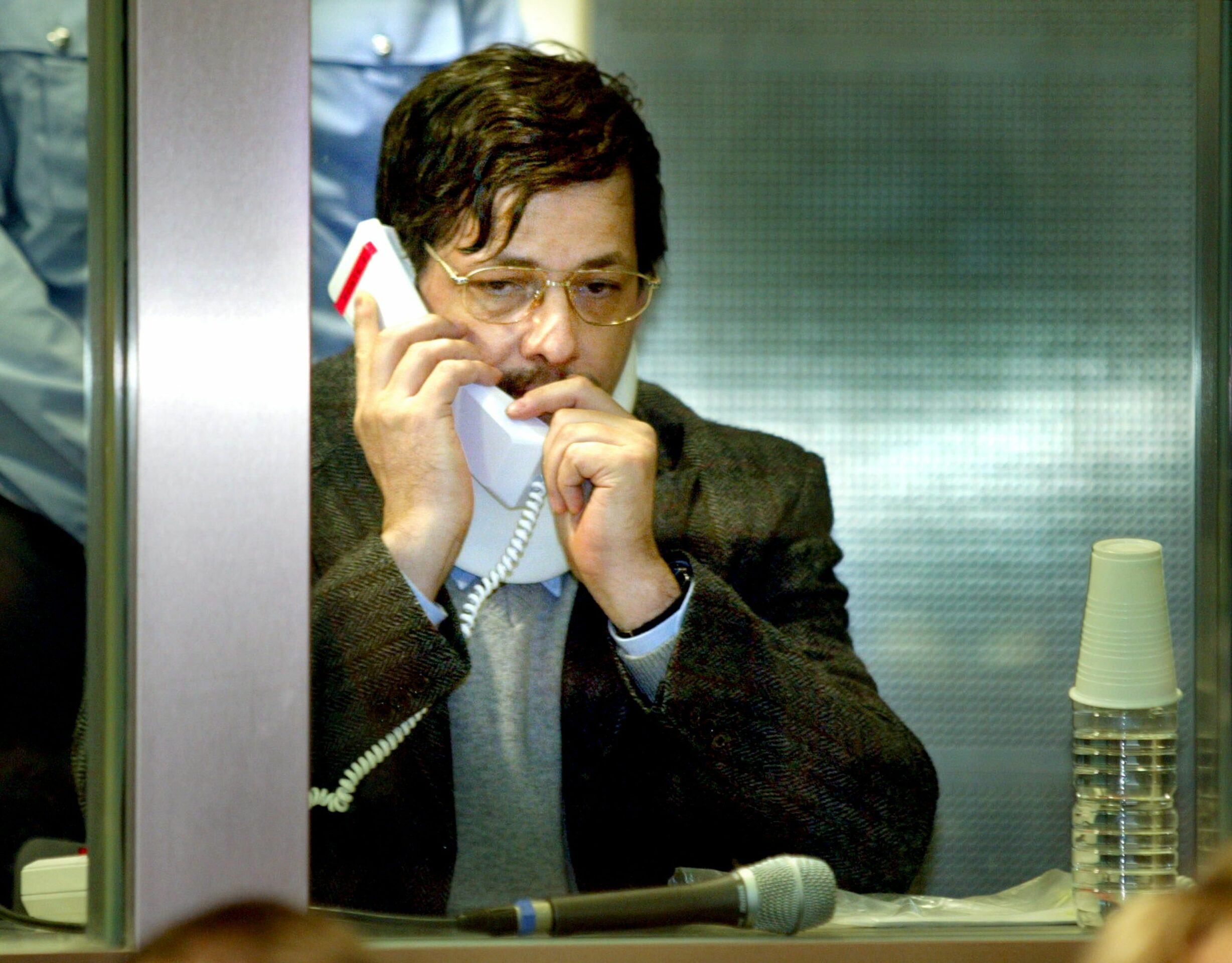
While Belgian police managed to catch Marc Dutroux, one of Europe's most prolific serial killers and paedophiles, and rescued two girls from certain death on 13 August 1996, the investigation revealed massive problems with judicial organisation within the country and broke citizens' trust in the state, culminating in the White March. Here's what happened.
Following the arrest of Marc Dutroux and the discovery of the horrors that took place in his basement in Marcinelle in Charleroi (Hainaut province), fear gripped the country and, importantly, the detectives investigating the serial killer.
Statements from Dutroux and his accomplice, Michel Lelievre, hinted at a larger network of child abductors, rapists and paedophiles at play. Dutroux dropped hints to obfuscate the truth and shift into the role of victim, while Lelievre partially believed he was actually part of a larger network.
The rumours supercharged the pressure on the investigation, led by the court in Neufchâteau (Luxembourg province).
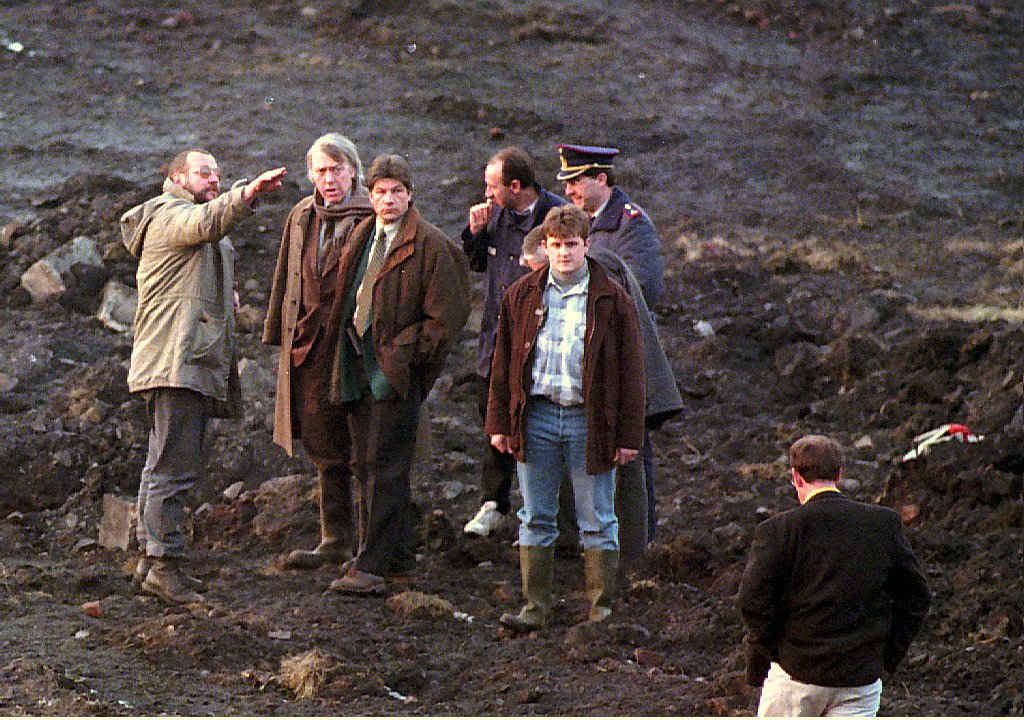
Detectives on a search site in Jumet. Credit: Belga / Denis Dupont
The investigation went into overdrive as it followed any lead provided.
A child molester locked in a prison in Namur initially directed detectives to nine unknown victims of the network around Dutroux, only for it to emerge that he was a compulsive liar who wanted to play a part in the investigation.
Anonymous witnesses signalled cover-ups from the upper echelons of Belgian political power, prompting police to launch a large-scale investigation into a potential government cover-up.
Rumours also started doing the rounds about dozens of high magistrates being involved in sex trafficking.
At the same time, police departments, fearing a structural reorganisation, were incriminating each other. The police were categorised into three main departments: the gendarmerie, the judicial police and the communal police. These departments operated independently and were often in direct competition with one another.
Press leaks became frequent; judicial and gendarmerie departments tried to smear each other to win favour with public opinion. The public prosecutor tasked with bringing the investigation to court found their phone wiretapped by an internal rival.
Spaghetti Judgment
The reveal of Operation Othello was when things hit breaking point. The federal gendarmerie had started shadowing Dutroux in 1985 and kept a case on him updated.
The file included testimonies of Dutroux offering money in exchange for young girls, his plans to build a cellar to hide his victims in, and mentioned that other police departments should be made aware of his possible involvement in the disappearance of Julie Lejeune, 8, and Mélissa Russo, 8, in the summer of 1995.
It started actively monitoring Dutroux's actions on 28 August 1995, a week after he and Michel Lelievre kidnapped An Marchal, 17, and Eefje Lambrecks, 19. The court in Neufchâteau only learnt of the files a year later, after the rescue of Sabine Dardenne, 12, and Laetitia Delhez, 14.
At this point, the public generally assumed that either Dutroux was protected or remained at large for as long as he did because of mistakes and incompetence in the judicial system.
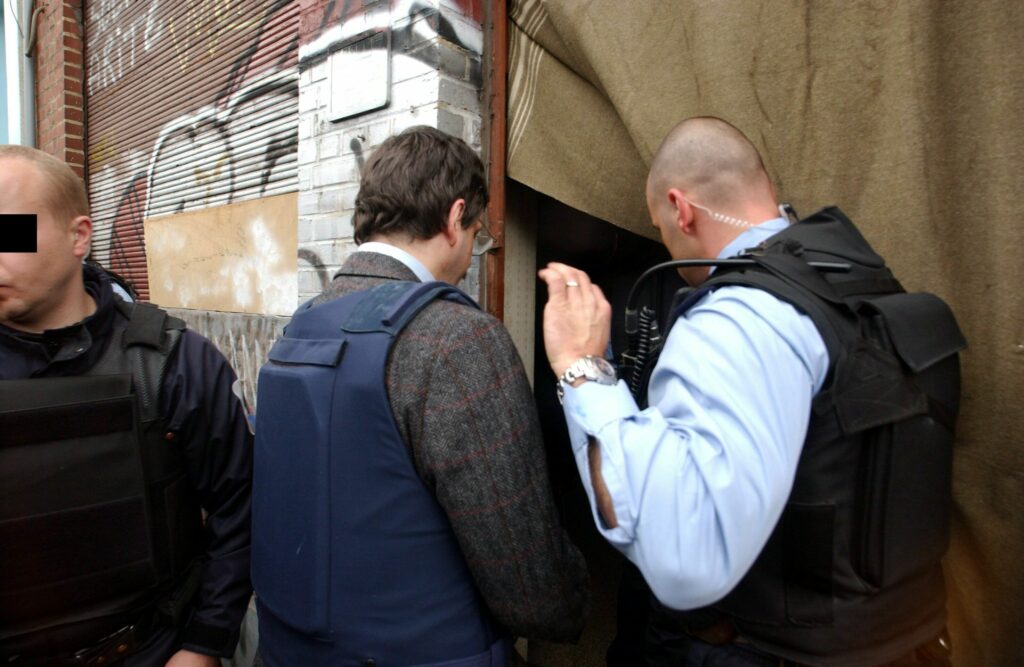
Marc Dutroux enters his house during a court visit to Marcinelle, Tuesday 27 April 2004. Credit: Belga / Tanguy Jockmans
Only a handful of the people involved in the investigation gained the public's trust. Among them were Jean-Marc Connerotte, the investigating judge in Neufchâteau, and lead detective Michel Bourlet. They were given credit for rescuing Sabine and Laetitia and for driving forward the investigation. They are regarded as heroes in Neufchâteau.
Two months after the rescue of the two girls, on 16 October 1995, Connerotte was removed from the investigation by a court ruling, as he had attended a fundraiser for Dutroux's victims and the parents gave him a plate of spaghetti and a pen. Shortly after, Bourlet appeared on television and said that he would "find out the truth in the matter if I'm allowed to". And the heroes became martyrs.
The ruling, known as the Spaghetti Judgment, was the final straw for many Belgians. Protests, strikes and riots broke out across the country.
A small gathering in support of the family of the victims on 20 October turned into a mass protest against the failures of the police in investigating and preventing Dutroux's crimes. Some 300,000 Belgians attended the White March, in which everyone wore or carried something white, symbolising hope. It remains the largest demonstration in the country to this day.
House tour
The federal parliament saw the shift in the country and realised it needed to intervene. A parliamentary committee was established to evaluate the situation. In an attempt to rebuild the public's trust, the hearings were broadcast in full.
The result was devastating.
The hearings exposed Operation Othello and showed that Dutroux had been a suspect since the disappearance of Julie and Mélissa.
Belgium learnt that in December of 1995, the gendarmerie had searched Dutroux's house in Marcinelle while Julie and Mélissa were locked in the hidden cellar. An officer had heard the voices of young girls from behind a wall, but decided not to investigate as he assumed they were coming from the street above them.
Police had to admit that they had confiscated a large number of videotapes during the search, but had never watched them. Later, they discovered that Dutroux had filmed multiple rapes of young girls from Slovakia and had made a tour of the hidden cellar in the basement.
The committee broadcast the dysfunction of the police system on national television. Gendarmes argued with judicial police officers and magistrates in attempts to shift blame. People were caught in blatant lies, but refused to admit to them.

Committee spokesperson hands over talks to Dutroux commission chair Marc Verwilghen. Credit: Belga / Herwig Vergult
The committee concluded that serious errors had been made, but ruled out any organised cover-up. It also recommended changes to the judicial system, paving the way for the Octopus agreement and the creation of an integrated two-tier police force, at the federal and local levels.
Further reforms followed. The Franchimont law of 1998 modernised criminal procedure and significantly strengthened victims' rights, allowing them to request additional investigative steps and to be heard in parole proceedings.
In 1999, the High Council of Justice was created to safeguard the independence of the judiciary. In 2007, a sentence enforcement court began operating to oversee the execution of prison terms.
Some promised reforms, however, were never implemented, including a planned judicial training school. Promised disciplinary sanctions against those responsible for investigative failings also never materialised.
The case unexpectedly made headlines again on 23 April 1998, when Dutroux escaped from the courthouse in Neufchâteau while consulting his case file. Although he remained at large for only a few hours, the former Justice Minister Stefaan De Clerck and Interior Minister Johan Vande Lanotte both resigned.
Dutroux was eventually convicted of abduction, rape and murder and sentenced to life imprisonment in 2004 – eight years after his initial arrest.
