

Salmonella infections have been making headlines in recent weeks following an outbreak at a poultry farm in Geel, Antwerp, that affected over 300 people. What do you need to know?
Salmonella is a group of bacteria that can cause the foodborne illness Salmonellosis, commonly called food poisoning.
Health authorities reported last week that at least 306 people were infected with Salmonella in Belgium after consuming eggs traced back to the egg producer Laerco BV in Geel.
This is a record Salmonella outbreak in Belgium, according to the Federal Agency for the Safety of the Food Chain's (FASFC) communication specialist Liesbeth Van de Voorde.
“The products concerned are eggs, a widely consumed food product that was distributed through several retail chains. The broad distribution of the affected eggs increased the potential for exposure,” she told The Brussels Times, adding that the exact factors that contributed to the high number of cases are being evaluated.
What happened in Geel?
In May, the FASFC issued a recall for all eggs produced by the Laerco BV poultry farm in Geel over a risk of Salmonella contamination. An initial investigation indicated that the presence of the bacteria was limited to one of the four Geel poultry houses.
“Based on the results available at that time, measures were focused on the affected unit, while the other poultry houses were allowed to resume operations under strict biosecurity conditions,” said Van de Voorde.
However, further investigations were carried out after the number of reported Salmonella infections did not drop as expected by health authorities. These revealed that a second poultry house was also contaminated.

Image of recalled eggs. Credit: FASFC
The FASFC subsequently decided to put the entire Geel poultry farm under specific restrictions. “Eggs from the farm can only be directed to an approved processing plant, where they must undergo heat treatment before further use,” Van de Voorde explained.
The Federal Agency issued a second recall on 10 August for the possibly affected eggs.
The potentially contaminated products should no longer be available for sale. However, consumers who purchased eggs before the recall are advised to check the stamp code to ensure they are not part of the recalled batch.
The exact origin of the contamination within the farm is still under investigation.
How does Salmonella spread?
People are mainly infected by Salmonella through the consumption of raw or undercooked contaminated food, such as meat or eggs, according to the Scientific Institute of Public Health, Sciensano.
In some cases, infections may occur through the consumption of food soiled by faeces of an infected animal or through the consumption of safe food that has been contaminated by other contaminated products.
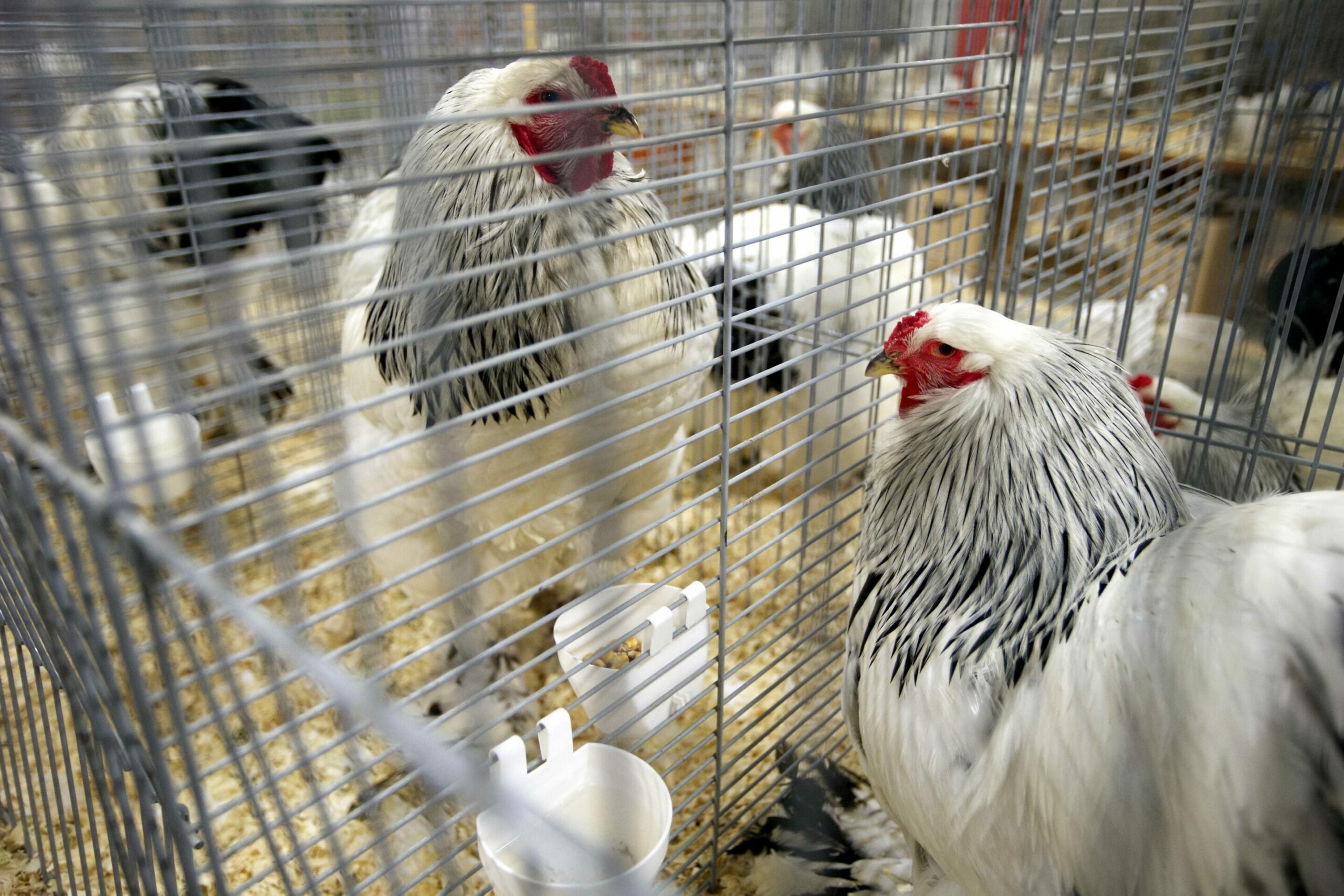
Illustrative image of poultry. Credit: Belga
Additionally, Salmonella may be spread through direct contact with an infected animal.
The bacteria can also spread between people via a faecal-oral route, for example, if someone consumes food that was prepared by a person who used the bathroom and did not wash their hands.
What are the symptoms and who is at risk?
Symptoms of a Salmonella infection are typically mild and are experienced between six and 72 hours after ingesting the bacteria.
Salmonella usually infects the human digestive tract and causes gastroenteritis.
Symptoms typically include fever, diarrhoea, abdominal cramps, nausea, headaches and vomiting. These can be experienced anywhere between two and seven days.
In severe cases, Salmonellosis can cause more serious conditions, including meningitis and septicaemia, a type of blood infection.
While anyone can develop Salmonellosis, some are considered to be at higher risk for the infection. This includes young children, the elderly, pregnant people and those with a weakened immune system.
According to Sciensano, people who are malnourished, take antibiotics or take medication to reduce stomach acidity may be particularly susceptible to the bacteria.
How to treat Salmonella infections
Salmonellosis often does not require any specific treatment, although those infected are typically urged to stay well hydrated.
Antibiotics may be used to treat certain cases of salmonellosis, especially when the infected person is considered to be at high risk.
Illustrattive image of a medical professional. Credit: Belga / Dirk Waem
Notably, some strains of Salmonella have become resistant to several antibiotics due to the overuse of antibiotics in people and animals. However, according to Sciensano, first-line antibiotics are still effective.
The FASFC advises people experiencing symptoms consistent with Salmonella infection to consult their doctor or another healthcare professional.
How to prevent Salmonella infections
To prevent a Salmonella infection, health authorities recommend following basic hygiene rules, particularly when dealing with food. This includes washing hands after coming into contact with an animal that may carry Salmonella, as well as before and after cooking.
In addition, it's recommended to clean surfaces or utensils after preparing high-risk food, such as raw meat, to thoroughly wash fruits and vegetables, and clean the fridge at least once a month.
It is further advised to thoroughly cook meat, keep food chilled as much as possible, and separate cooked food from raw food.
Additionally, several national and EU measures are already in place to curb the spread of Salmonella.
More information on foodborne illnesses and how to prevent them is available on the Health Ministry website.
The Brussels Times contacted Laerco BV for comment but has yet to receive a response as of the time of publication.
