
Since its creation over 10 years ago, the flexi-job system in Belgium has seen frequent tweaks. The latest proposed reform would grant self-employed workers tax-favourable employment, outside of freelancing, for a set number of hours each year.
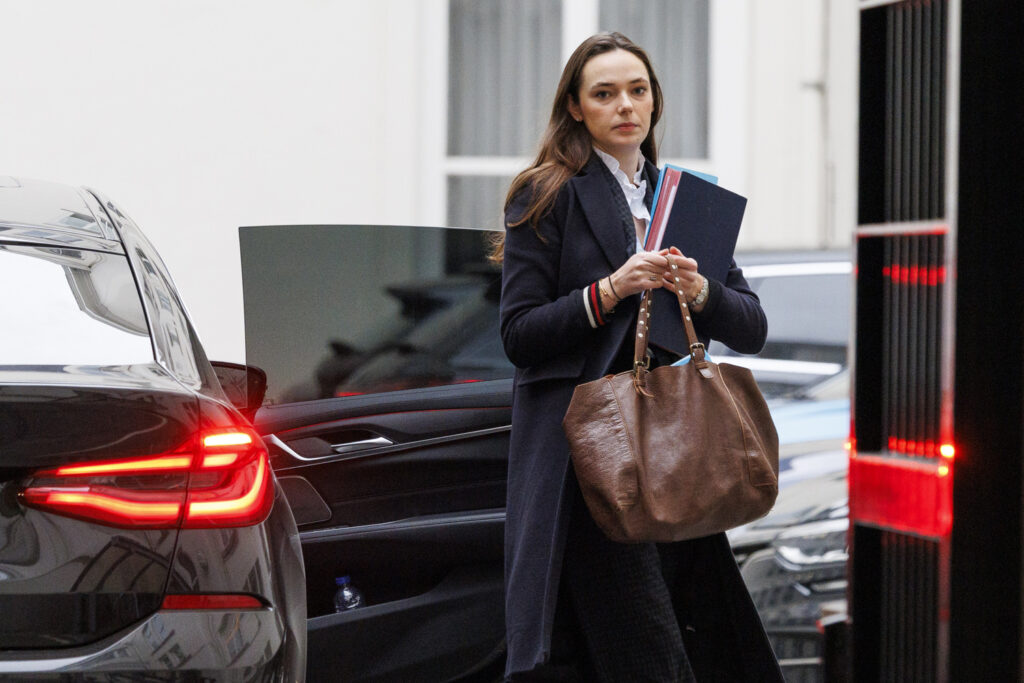
Federal Minister for Small Businesses and the Self-Employed Eléonore Simonet (MR) has confirmed she will propose extending flexi-jobs to self-employed workers as part of the current Federal government's budget negotiations.
Simonet confirmed the move in an interview with Le Soir, following a positive response in March from the General Management Council for the Social Status of Self-Employed Workers (ABC-CGG), the formal consultation body for questions concerning the social status of self-employed workers.
"I am such a strong supporter of flexi-jobs that I am going to propose to the government that our self-employed workers be allowed to make use of them, something which is not currently possible," she said.
A spokesperson for Simonet told The Brussels Times that the proposals are about equalising the status of self-employed workers and employees. "We just want to create a level playing field where independent workers get the opportunity to do a flexi-job. To stop the de facto discrimination of the independent compared to many other categories in our society."
"We all know many independent workers work hard and long hours, but in some cases they might have some spare time," the spokesperson said.
Extending flexi-jobs to self-employed workers is being promoted as a way to give freelancers the opportunity to supplement their income during quieter periods, while also allowing them to work for fellow freelancers on projects legally.
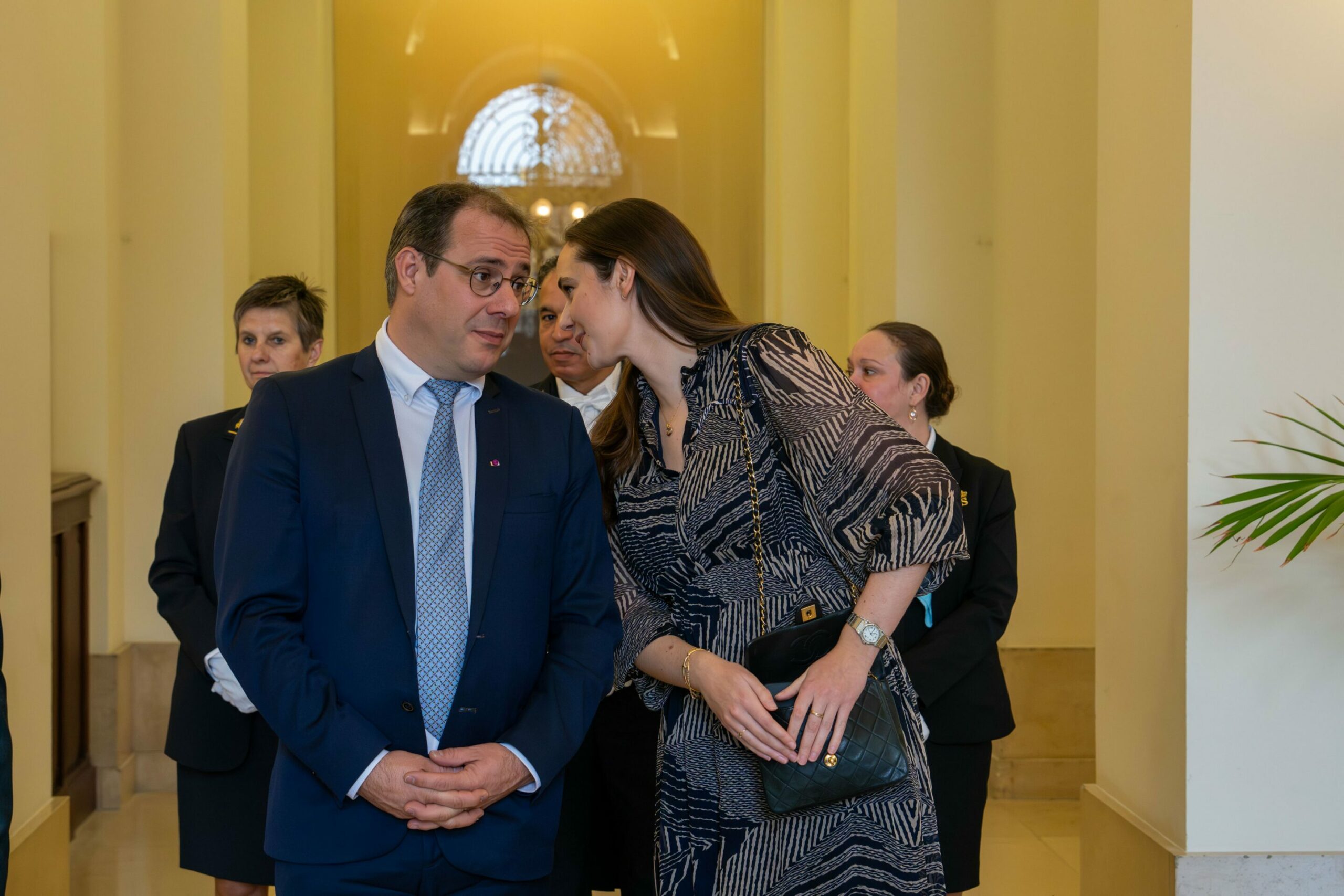
Vice-prime Minister and minister of Economy and Work David Clarinval (MR) and Minister of Middle Classes Eleonore Simonet (MR) pictured during the celebration of the King's Feast, at the federal parliament in Brussels, Saturday 15 November 2025. Credit: Belga / Marius Burgelman
One of the stated benefits of introducing the change, according to ABC-CGG, would be to open the door to an additional pool of labour, while also equalising the treatment freelancers and employees face in the labour market.
Jenny Björklöf, founder and community manager of Freelancers in Belgium, told The Brussels Times that many freelancers would likely welcome the change as a "financial buffer" during quiet periods.
"It could also offer a welcome change: someone doing cognitively demanding work behind a screen might enjoy occasional work in a restaurant, shop, construction or event venue," she said. "Working occasional shifts in hospitality as a freelancer is currently rarely viable because the invoiced rate needed to cover taxes and social contributions is often unaffordable for the restaurant owner."
However, Björklöf expressed caution about the potential blurring of lines between freelancers, employees and flexi-jobs. She noted that "there is also a risk of flexi-jobs replacing regular jobs or freelance assignments."
The flexi-job system is increasingly becoming controversial with each reform, and in July, Budget Minister Vincent Van Peteghem (CD&V) opened an investigation to ensure better governance and to bring Belgium's many different employment schemes into alignment.
The Minister also raised concerns about the impact on the sustainability of the social security system, highlighting a potential €500 million loss in 2025 from lower tax and social security contributions.
How does the flexi-job system work?
Introduced in 2015, the flexi-job scheme was developed to allow employees to earn extra income outside their main employer. For example, by picking up a weekend job.
People wanting to take on a flexi-job must work at least 80% of their time in a full-time role to qualify. The qualifying period is the calendar quarter that falls nine months (three quarters) before they want to take up a flexi-job contract.
They can earn up to €18,440, but they do not have to pay tax or social security on these wages. To make flexi-jobs attractive to employers, the scheme offers them reduced social security and tax contributions.
Originally intended for the seasonal hospitality sector, flexi-jobs were extended to all sectors this July (with a few exceptions). Over 150,000 people held a flexi-job in 2025.
Retired workers can also take on a flexi-job as long as they are registered in the pensions register. This is the only qualifying condition.

Then-prime minister Alexander De Croo pulls a pint behind the bar during a press conference on Open Vld's proposals for flexi-jobs in Blankenberge, 27 May 2024. Credit: Belga / Maaike Tijssens.
How would the system work for self-employed workers?
The extension of flexi-jobs to self-employed independent workers is likely to take a similar qualifying route as pensioners, given that self-employed workers, as independents, do not have 'full-time' hours.
The likely qualifying criteria may require independent workers to be registered with a social insurance fund for self-employed persons, as well as with the Crossroads Bank for Enterprises.
In responding to the proposals in March, ABC-CGG recommended that self-employed workers should only be allowed to work 480 hours in a flexi-job each year, and that the scheme should be limited to self-employed workers in their main occupation (not those freelancing on the side while also working a full-time job).
Björklöf expressed some concern with this limit. "Rather than only a 480-hour limit, I would favour both an hour and an income ceiling. The value of the tax advantage depends considerably on the hourly wage."
"An only hours limit helps prevent excessive workloads, but on its own it benefits higher-paid flexi-job workers much more. Someone earning €15 per hour could earn €7,200 in 480 hours, while someone earning €25 per hour could earn €12,000."
"An income ceiling would therefore place a fairer limit on the total tax advantage."
Self-employed workers will also be expected to have paid their provisional social security contributions for the calendar quarter that takes place nine months before they wish to take up a flexi-job contract.
Simonet's office confirmed to The Brussels Times that the proposals would not confine freelancers to their registered business sector: "Our proposal has no limits concerning sectors. A gardener having some spare time in January can start doing a flexi-job in a restaurant."
The proposal will be discussed this October formally as part of Federal Government budget negotiations. Simonet's spokesperson outlined that this would be promoted as part of a wider push of economic growth measures from the Francophone liberal MR party, to improve the Federal budget deficit.
