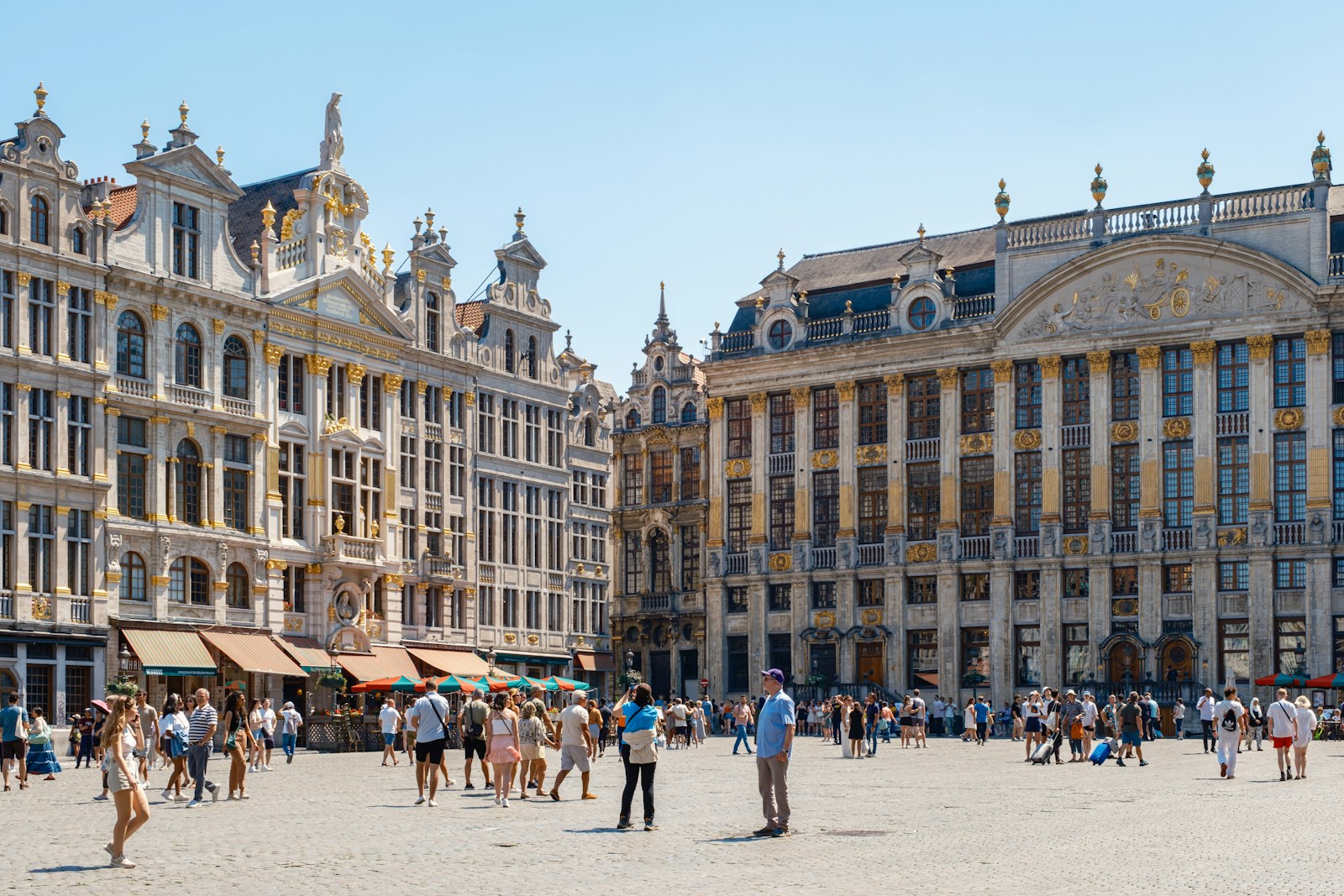
Standing in the Grand Place, amongst the tourists and gilded guild houses, might seem like a strange place to start a Brussels refugee walking tour.
For many, this reality feels recent — the results of ‘crises’ from the large-scale arrivals of 2015-6, the war in Ukraine and the current government’s reception cuts. And yet few of us know the deeper, hidden history – sometimes proud, sometimes shameful – of one of Europe’s greatest capitals of exile.
Long before Brussels became Belgium’s asylum hub and the centre of EU policymaking, asylum has been central to the identity of Belgium as an independent nation and to Brussels as the national and European capital.
A volatile crossroads
The first chapter starts in Brussels’ historic Pentagon – from the Grand Place to the Belgian Parliament – as Belgium’s religious and political institutions offered refuge, albeit discretionary and temporary, to different religious and political allies.
Ever since the Reformation, Belgium occupied a volatile crossroads between empires and religions, with regime loyalists, persecuted Catholics and prized merchants receiving protection from local governors, city councils, guilds and churches.
After the 1830 Revolution, sparked with Bonapartist exiles like future Prime Minister Charles Rogier, asylum became core to Belgium’s independence and its world-leading liberal constitution. Article 191 guarantees equal protection and property rights to all foreigners on Belgian soil.
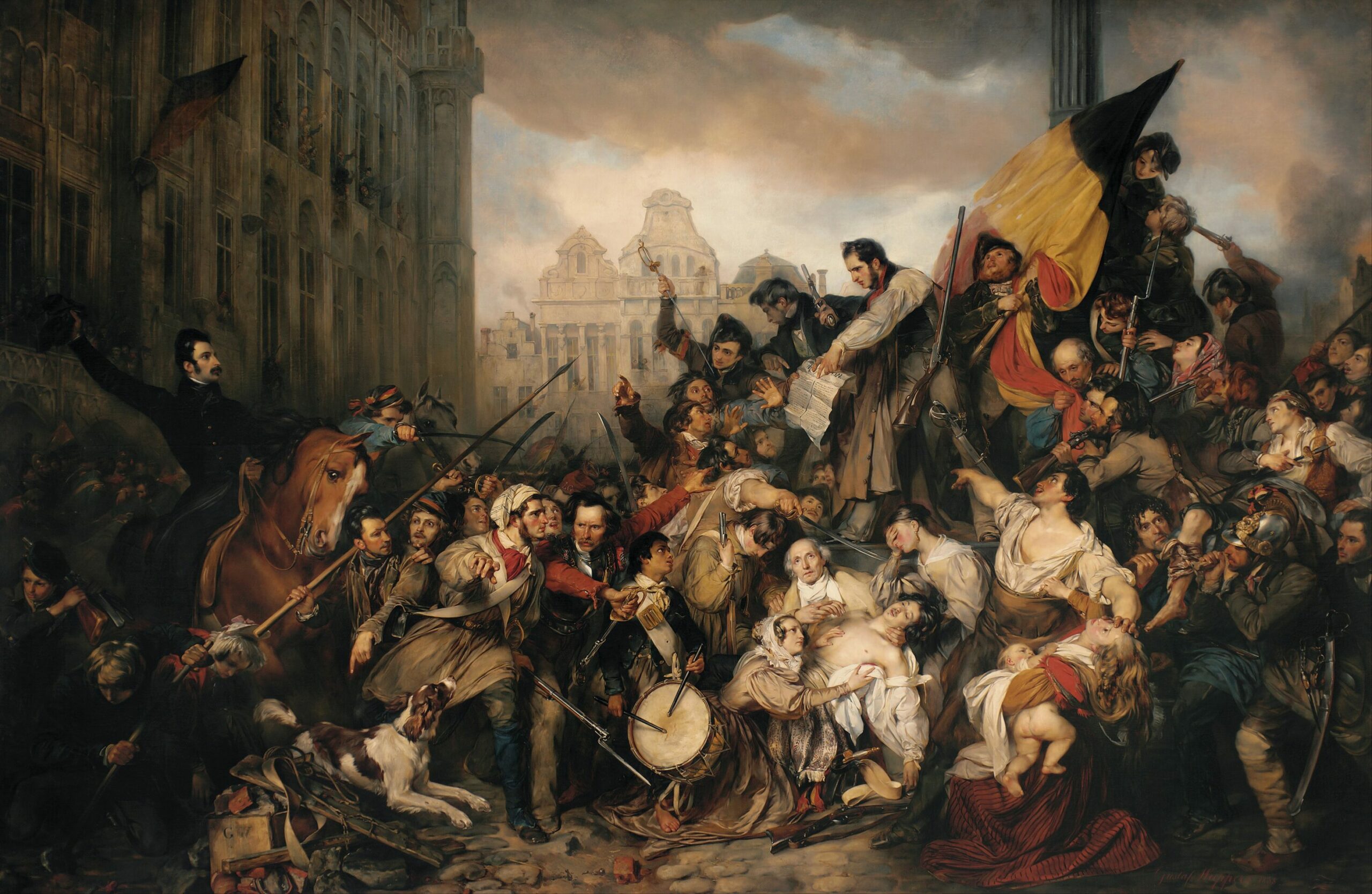
A revolutionary scene on Brussels' Grand Place depicted by Égide Charles Gustave Wappers
Brussels emerged as one of Europe’s few safe havens, alongside London, Paris and Switzerland. Meeting together in the city centre’s cafés, political exiles from France, Italy and Central Europe not only organised together against injustices across Europe, but also for workers’ and political rights in industrialising Belgium.
An exclusive set of exiles
However, foreigners were only ‘tolerated’ in Belgium, regularly monitored by the local police and occasionally expelled for their political activism. For example, while the Grand Place played host to Karl Marx (working out of La Maison du Cygne, number 9) and Victor Hugo (living for a time at number 26-27), both were eventually deported by royal decree.
Belgian officials have also offered sanctuary to a very exclusive set of exiles: deposed rulers and émigrés. The list spans everyone from the English Stuarts to the French Bourbons, the Austrian Hapsburgs, the South American liberator José de San Martín, the last Ethiopian emperor Haile Selassie, all the way up to today’s Catalan separatist Carles Puigdemont and Ecuadorian ex-president Rafael Correa.
Entering the modern era
From Parc Royal, the metro ring south transports Brussels refugee history into the modern era – one of mass displacement and massive political failures. Midi station functioned as a major arrival and transit zone in the early 20th century.
During the First and Second World Wars, nearly 20% of the Belgian and Brussels population, mostly women and children, were displaced, for both short and long periods.
With internationalisation during the interwar years, thousands of stateless Russians and Armenians received international ‘Nansen’ passports but faced stricter national controls. The estimated 40,000 German Jews who passed through Belgium, with the likes of Albert Einstein and Marc Chagall, were treated as illegal aliens to be shipped off elsewhere or forcibly repatriated to Germany.
Their memory lives on in the brass stumbling stones in front of the former homes from which roughly half of Belgium’s Jewish population was deported and then murdered in the Holocaust.
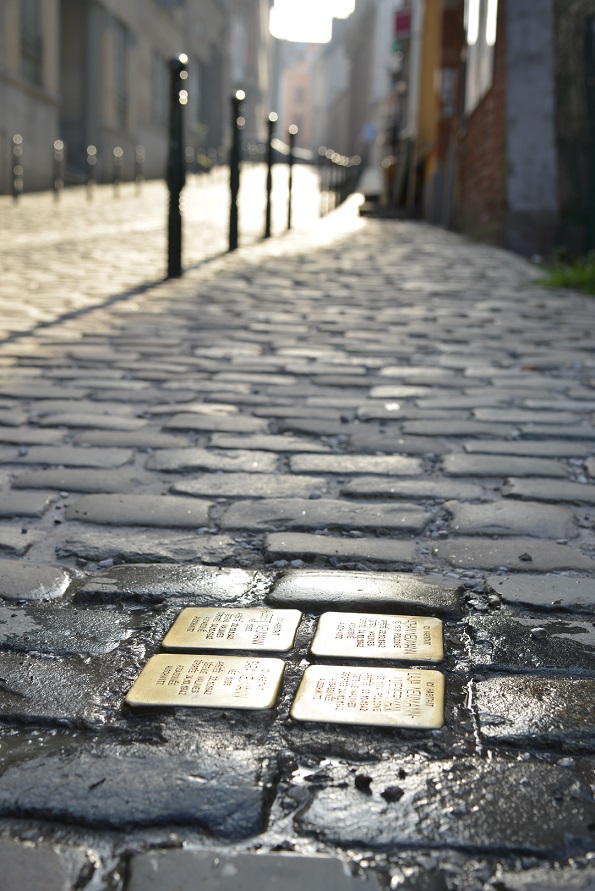
Stolpersteine in Brussels. Credit: Belga
Post-war Belgium
From Brussels-Midi station, the metro ring west traces Belgium’s relatively short history recognising the right to asylum. While post-war Belgium signed the 1951 Geneva Refugee Convention, reception was still ad hoc, procedures discretionary and rights temporary. Belgium only adopted its first asylum law with the 1980 Aliens Act, with a specific application procedure, reception standards and secure rights.
Brussels was designated as Belgium’s official asylum hub, where all asylum-seekers had to apply and often wait for asylum. Along the canal, the former Petit-Château barracks were transformed into the first large-scale reception centre in 1986 and, until 2015, the main intake centre.
The canal zone was already home to guest-workers and their families seeking basic housing and work in local industry and construction projects. These basic, overcrowded conditions for Brussels asylum-seekers led to greater support from NGOs, but also racist pushback in the neighbouring communes.
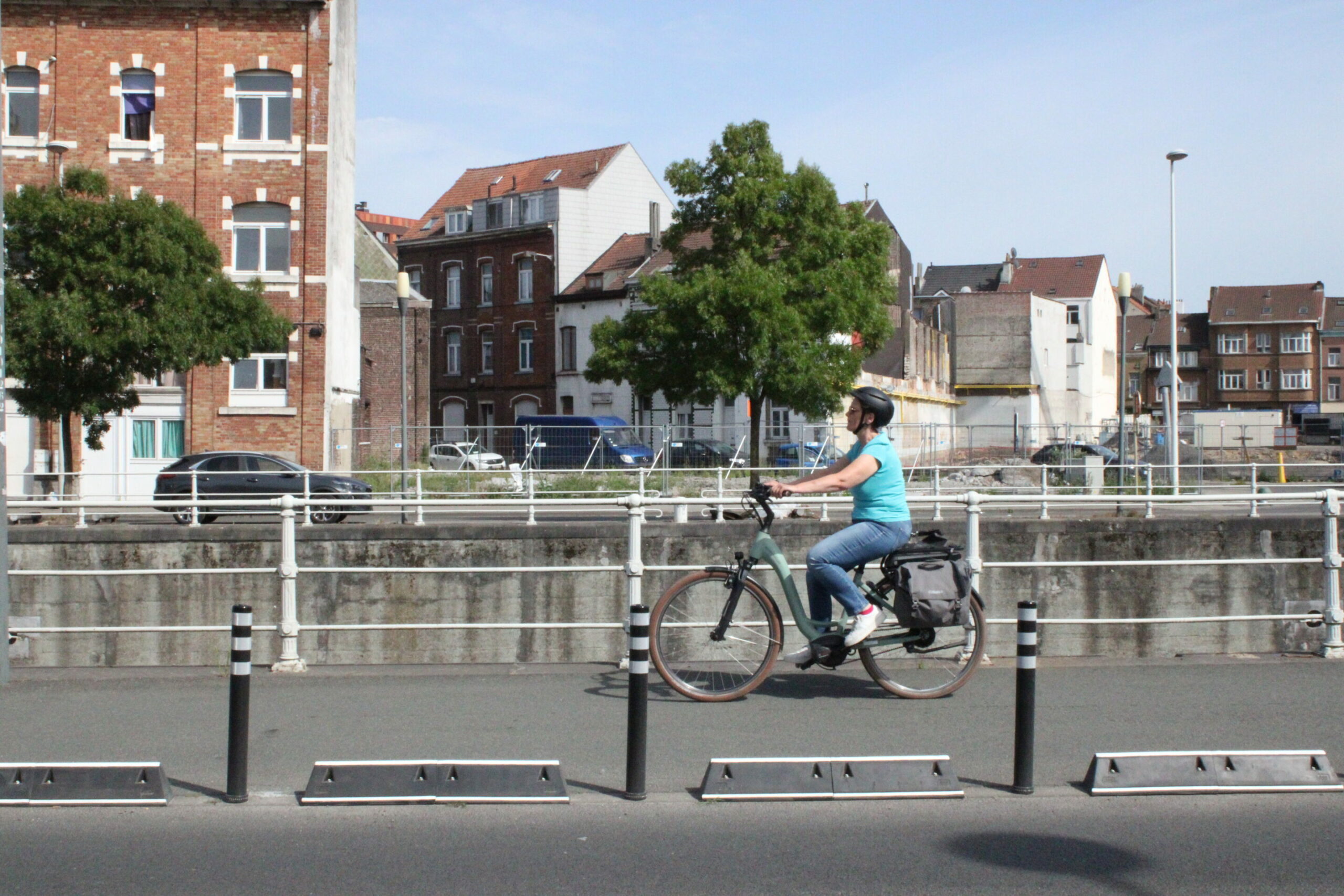
A cyclist riding along the canal path in Anderlecht. Credit: The Brussels Times.
The present day
Circling around to Brussels-North station reminds us that we can, with the will and the resources, create safe, welcoming communities for refugees and locals alike. In response to the EU’s large-scale arrivals in 2015-16, the asylum office moved from the Petit-Château to the former World Trade Centre, where asylum-seekers queued for hours alongside Brussels-North station commuters and Manhattan district office-workers.
Maximilian Park emerged as both the de facto hub and powerful symbol of citizen solidarity. This #RefugeesWelcome movement was organised into the Citizens Platform (now BelRefugees) – full of innovative initiatives and volunteer hosting—and, since 2017, the Humanitarian Hub, whose essential frontline services depend on volunteers and support from the region.
From the North station, head in any direction to appreciate how much these solidarity solutions and reception infrastructure had expanded across Brussels and Belgium. Reception centres opened across the country, from NGOs like Caritas and Red Cross and from Fedasil, the federal asylum agency since 2002.
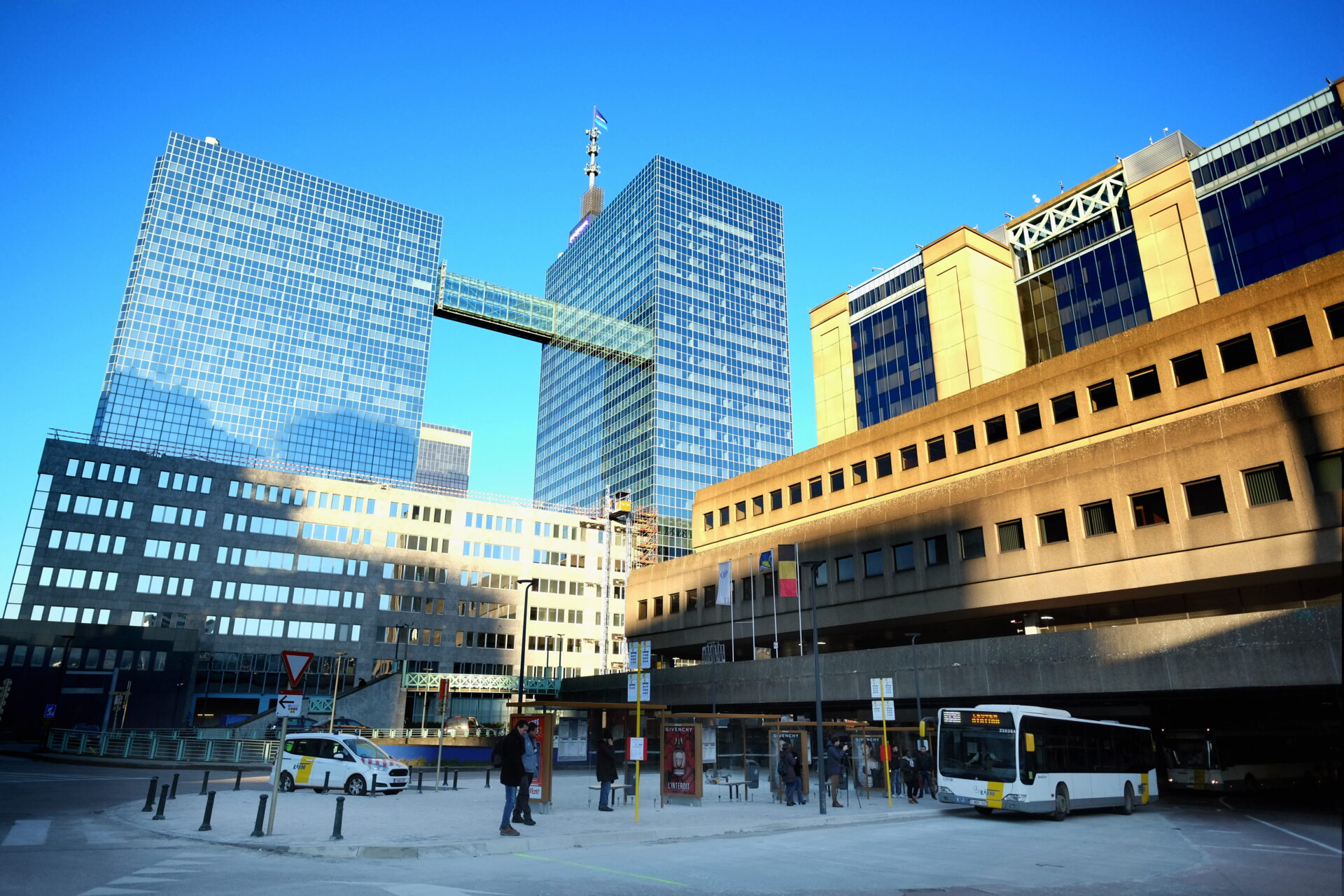
Brussels North Station. Credit: Belga/ Eric Lalmand
Thousands of Ukrainians were welcomed at the Brussels Expo and communal reception points. And yet even now as new global conflicts emerge, Belgium’s ‘Arizona’ coalition is reducing staff and reception capacity nationwide, leaving thousands of asylum-seekers homeless every night in the capital’s streets and metro stops.
World Refugee Day
Today, Belgium’s asylum processing centre is located on Rue Belliard, in the shadow of the EU institutions and, until the recent regional funding costs, across the street from the Ukrainian Voices and the Umbrella Refugee Committees. The geography is almost too perfect.
In the same few blocks, where EU officials fantasise about enforcing the new EU Pact on Migration and Asylum, Belgian officials are undermining it in practice, as reception cuts and backlogs force asylum seekers to wait even longer for appointments, shelter places and essential services.
Your refugee walking tour should not end there. This Saturday, come celebrate World Refugee Day with a human chain in front of the Petit Château (11:00 to 12:00), followed by a Community Festival Place du Béguinage (13:00 to 18:00), in partnership with Amitié Sans Frontières, BelRefugees, House of Compassion, Umbrella Refugee Committee and Vluchtelingenwerk Vlaanderen.
And learn more about Brussels’ refugee history at the Brussels Migration Museum (open from Thursday to Saturday, 10:00 to 17:00, Rue des Ateliers 17, Molenbeek).
Whenever you are riding the metro, pulling into North or Midi station or walking around the EU Quarter or Grand Place, you are wandering through centuries-old stories of individual exiles and community rebirth.
Persecuted minorities, deposed monarchs, political revolutionaries and wartime refugees have tried to find protection here and, along the way, built up the city they still call home: French, Jewish, Armenian, Russian, Chilean, Vietnamese, Turkish, Kurdish, Congolese, Rwandan, Syrian, Afghan, Ukrainian, Palestinian… And remember that you too are part of this story.
