
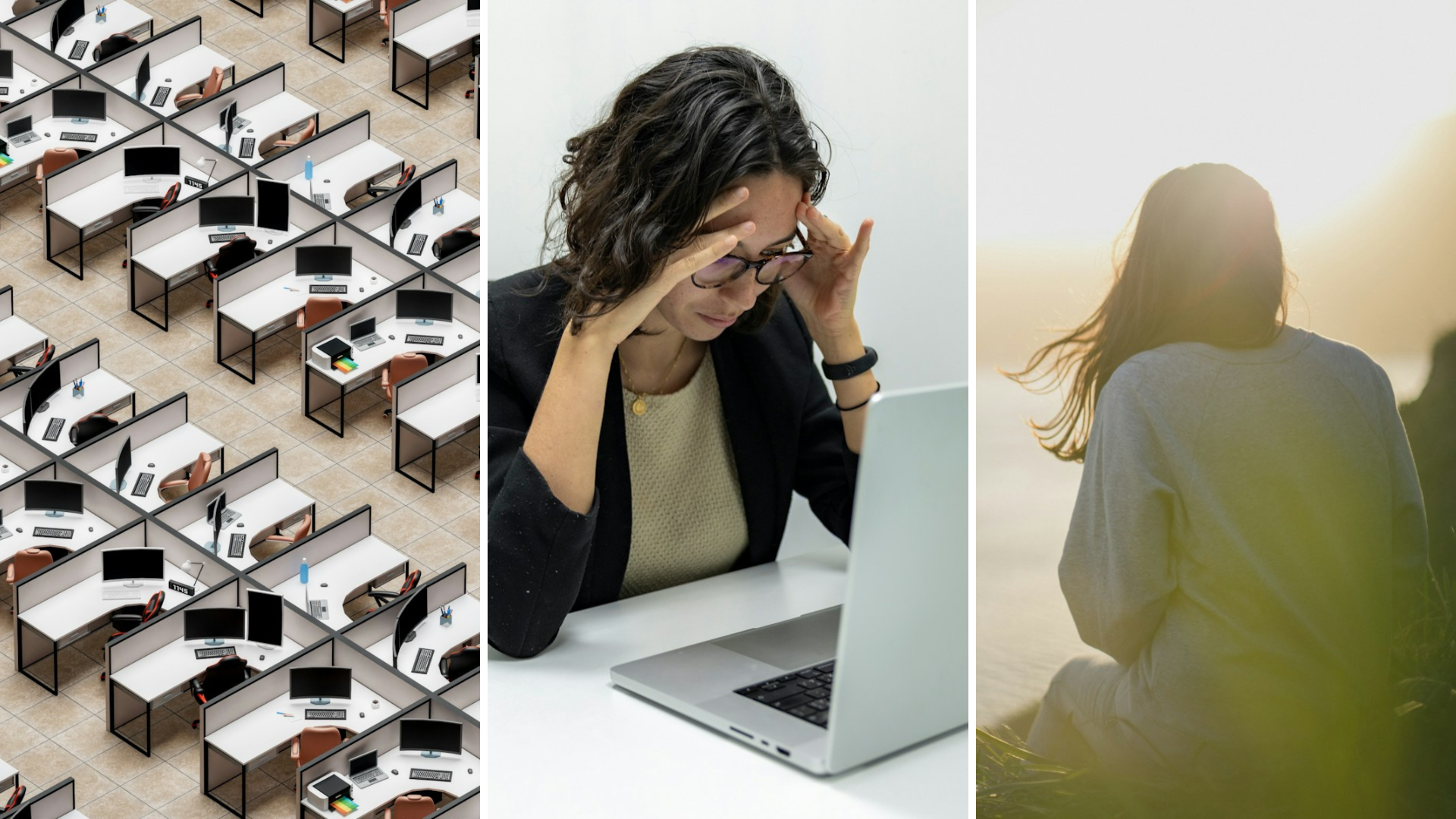
Kristina Chetcuti, a registered health coach (UKIHCA) specialising in behaviour change and lifestyle medicine (ELMO), answers your lifestyle dilemmas.
Q. I don’t know what is happening to me. I feel permanently shattered, yet there’s nothing physically wrong that I can point to. Every time I open my inbox, I get a knot in my stomach. I struggle to concentrate, even though I don’t work excessively long hours. It’s as though I’m physically present but mentally somewhere else.
Sleep is inconsistent, but even when I do clock the hours, I still wake up tired, and even simple tasks feel like a chore. Work that I used to enjoy now feels draining. People tell me I’m stressed and suggest I take a holiday, but I’ve taken holidays and the feeling comes back within days. What can I do?
A. I’m really touched by your letter, because you have essentially described burnout – and I know how tough it can be to get through it. Most people imagine burnout as something very dramatic. They think that unless you are sobbing at your desk, or dragging yourself off the floor, or staging a melodramatic resignation scene, it cannot really be that serious. This theatrical version is the one we see in films.
Real-life burnout is different: it creeps in silently, and stays longer than you expect. It’s pretty much like standing in a Brussels drizzle; you hardly notice it at first, then one day you realise you’ve been wet and miserable for months. That’s burnout in a nutshell.
In your longer letter, you describe a feeling of being ‘abducted’, as though you have been pulled out of your own life. It is understandable that you struggle to relate this to burnout, given how many misconceptions there are about it.
Myths around burnout
The first myth is that burnout only happens to workaholics. That is not the case. Some people work extremely long hours and never go anywhere near burnout. It is not really about the hours worked. It tends to happen when life keeps asking more and more of you and your mind and body cannot keep up because there is not enough time or space to recover properly and you’re slowly worn down. Please don’t think of it as a personal weakness, but as a misalignment of all things you’re juggling.
Another myth is that burnout is only about work, and that changing jobs will automatically fix it. But it is not that simple. It is difficult to separate ‘work problems’ from ‘life problems’, because they tend to feed into each other.
Burnout is what happens when pressure builds up across different parts of life at the same time: work demands, family responsibilities, financial strain, health worries, or even a gradual loss of life purpose. None of these on their own is necessarily enough to tip someone over the edge, but together they add up.
This is why two people can have identical workloads and life responsibilities, and one may cope perfectly well while the other struggles. Essentially, it depends on your ability to recover. And sadly, we now live in environments that increasingly do not help this recovery because we are always switched on.
Intermingled work and home life
There was a time when work and life had clearer edges. At the end of day, the office door closed, the lights went off, and papers were left on desks. Today, we carry work in our pockets and it follows us home. Également, we take life with us at work – with our children/ parents partners/ friends/ family texting with all sorts of problems. Even writing this makes me feel like I need to lie down: we truly are living one long sentence without a full stop.
You describe how you are feeling exhausted, unfocused and detached, and I want to tell you how these are all symptoms of something that we were not prepared for, biologically. We were not built for this kind of constant, low-level pressure without proper recovery.
Studies of hunter-gatherer groups show that while they still have to deal with extraordinarily stressful things like food shortages, serious bacterial infections, injury, and hard physical work, pressure tends to come in short bursts rather than continuing all the time in the background. Not to mention that the burdens of life are shared more collectively, not individually.
Burnout, therefore, seems to have stemmed as a biproduct of the industrial era. Victorian doctors already described something called ‘neurasthenia’, a fashionable diagnosis blamed on the pressures of modern life, from railways to telegraphs. Every generation tends to feel its technologies are overwhelming although the difference is, of course, that back then you could not take the telegraph to bed with you.
By the 1960s, burnout patterns were becoming more common, although it was labelled as ‘nervous breakdown’. Luckily, it is not longer the taboo it once was.
How do you recover from burnout?
As you mention, holidays often don’t quite do the trick. In fact, the first part of a holiday is often simply spent ‘coming down’ from overload. Many people even get ill at this point, as the body finally drops its guard. It is only towards the end of the holiday that things start to feel better, which means the recovery window can be surprisingly short. And then it’s time to go back to the same workload, pressure, and environment, leading to a post-holiday crash within days of being back at work.
So, you might go to glamorous spa retreats in Belgium, or plunge into the cold waters of Pool is Cool, both of which are pretty great ideas, but they are quick fixes rather than real recovery. What we need is to allow stress levels to come down gradually, rather than relying on short bursts of fun. Instead, the reality of recovery, actually begins with observation.
Start paying attention to what actually helps you feel calmer and rested in everyday life. Are you taking a proper lunch break, or eating over a keyboard? Are you seeing friends while half your attention is on your phone? Most importantly, are you sleeping properly?
1. Sleep
Sleep is one of the body’s main ways of recovering from stress. At night, stress levels drop, and the brain processes events and emotions that happened during the day, and stores memories. When sleep is disrupted over time, stress levels remain higher, and concentration becomes harder. Things that would normally feel simple can start to feel oddly difficult.
2. Spend time in nature
Spending time in nature helps you sleep better, and is one of the most reliable, low-cost tools for burnout recovery. It is linked to lower stress hormone levels, better attention spans and less overthinking. Nature helps the mind settle again. Even a slow walk through Parc Léopold, or the Étangs d’Ixelles, can make a difference.
3. Breathe
Do you hold your breath unnecessarily when opening your inbox (you’re not alone – it’s even got a name: email apnoea). In the morning, at midday and at night, stop for a few minutes and breath in to the count of four, and out to the count of six. This is part of the US Navy Seals’ training to cope with stress – because this kind of breathing slows the heart rate and interrupts the stress reaction.
4. Ask questions
Of course, neither walking in nature, sleeping better or breathing pockets will address what sits underneath. They won’t fix a too-heavy workload, ongoing pressure, or an environment that keeps you constantly switched on. They soften the moment, rather than the conditions that keep creating the moment.
The truth is, you cannot put a ‘psychological’ plaster on burnout. In other words, you cannot meditate your way out of an excessive workload or say, financial pressures. Therefore, you need to be asking yourself questions: does your workplace allow you to function and recover properly? Or is the environment itself part of what is wearing you down?
The same question can then be extended more broadly to other parts of your life: family responsibilities, financial pressure, health concerns, a sense of purpose, and social connections. This will help you to slowly take a step back and notice where the pressure is building. From there, recovery is about gradual change to slowly eliminate the conditions that brought about the burnout.
Throughout all this, remember one thing: you do not need to reinvent yourself and become different person. You just need more space to be the person you already are.
