
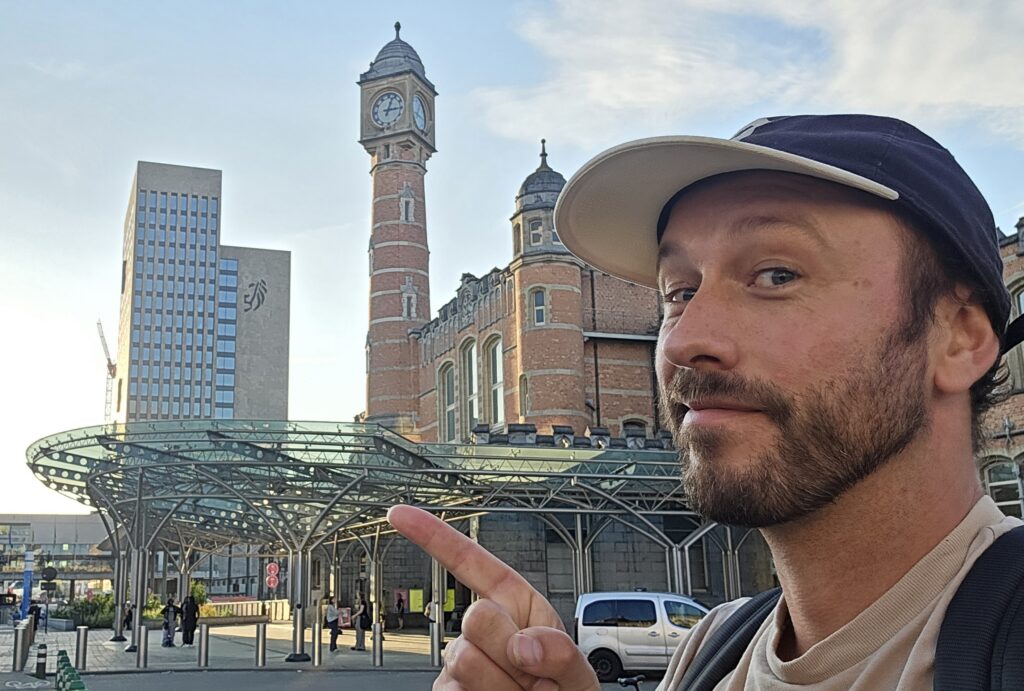
In what might seem like grim times for the arts in the age of AI, a Belgian artist is captivating audiences worldwide by using the technology to resurrect lost cityscapes across the country and beyond.
Reinhard, 41, who lives in Ghent, remembers how, as a child, he was fascinated by building things. He used to build castles with LEGO plastic bricks, tear them down and repeat the process.
"My interest in history also started when I was a kid," Reinhard tells The Brussels Times. "As a painter and somebody interested in art history, I always look at buildings and wonder what used to be there before."
A passion for the arts, cultivated through years of art history study, eventually paved the way for a career in teaching. He is now an art teacher, painter, avid sightseer and online content creator.
His online videos recreate historical time-lapse footage using AI, taking Instagram users back to how a place used to be or how a building used to look. Reinhard's first experiments were simple before-and-after comparisons. The breakthrough came while visiting Mont des Arts in Brussels.
Reinhard recalls looking at a picture of the area around 1900 and realising it was completely different back then.
"I had been reading about AI and decided to try creating a transition between the old image of Mont des Arts and the current one," he says.
The process
Final videos often last no more than a minute. Behind the scenes, Reinhard goes on a hunting spree for historical photos and online collections, then takes to streets to re-create the exact spot where a photo might have been taken.
Brussels, he says, represents a real challenge because "the city has changed enormously", with large tracts of Brussels being razed to make way for new building projects.
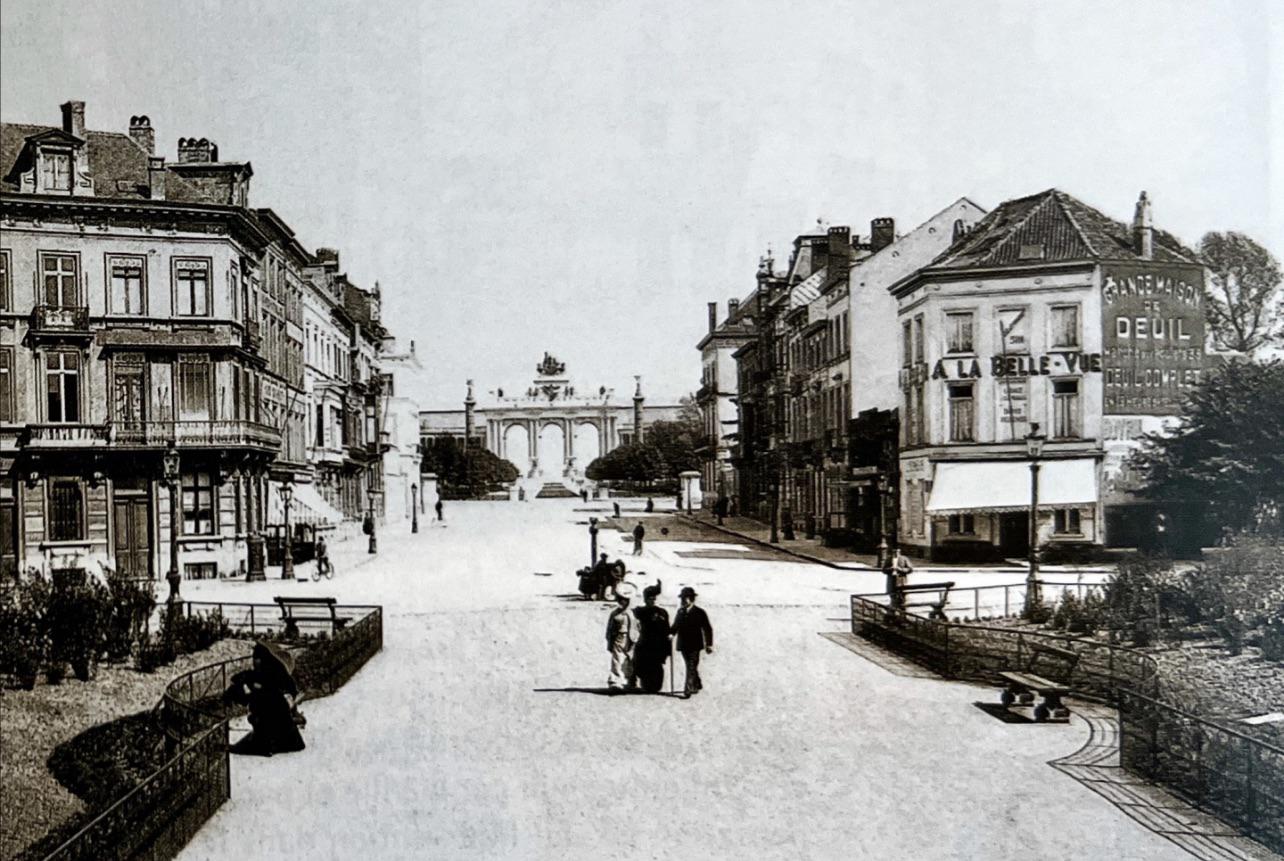
A view from Brussels' Schuman roundabout towards Cinquantenaire Park in the early 1900s. Credit: Unknown
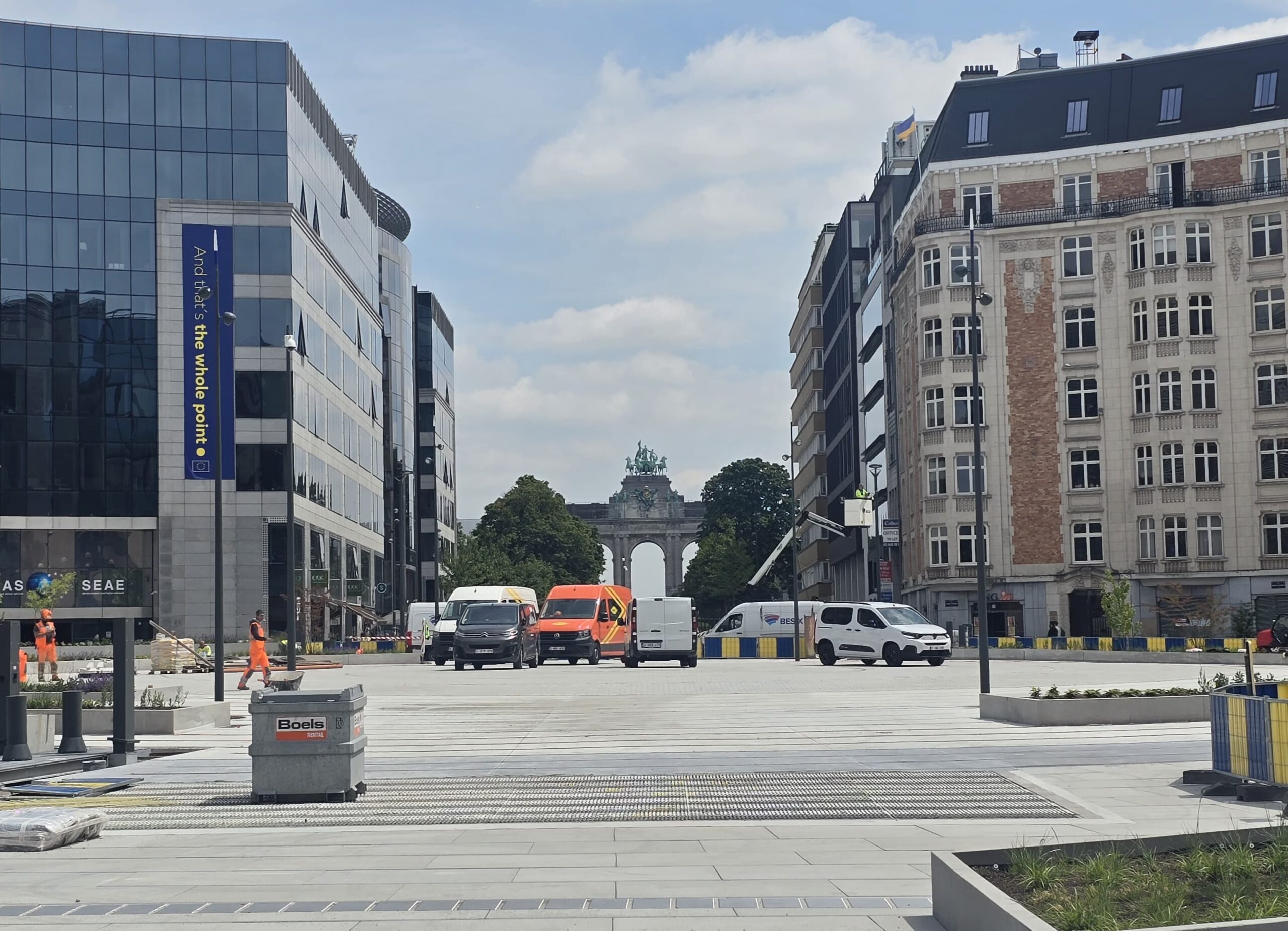
The same view, recently. Credit: Handout/Instagram
Fish market
Sainte-Catherine is one of Reinhard's favourite places in the city. Few visitors strolling around the area today realise that the district was once a busy port area. Until the 19th century, ships travelled along the Willebroek Canal deep into the city centre, unloading fish, timber, grain and other goods at a network of docks and quays.
Between 1854 and 1874, Sainte-Catherine's Church was built on part of the former dock, symbolising the neighbourhood's shift away from its maritime roots. Other sections of the harbour followed, including the Merchants' Dock, where Brussels' fish market operated until 1955.
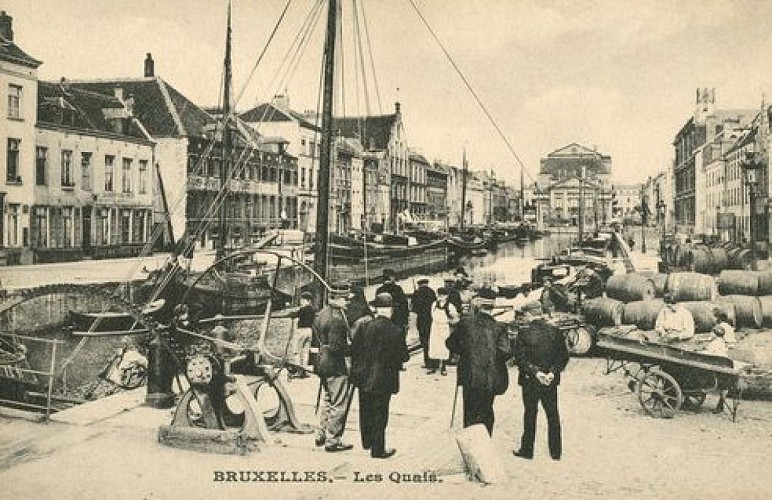
Place Saint Catherine in 1900. Credit: Unknown
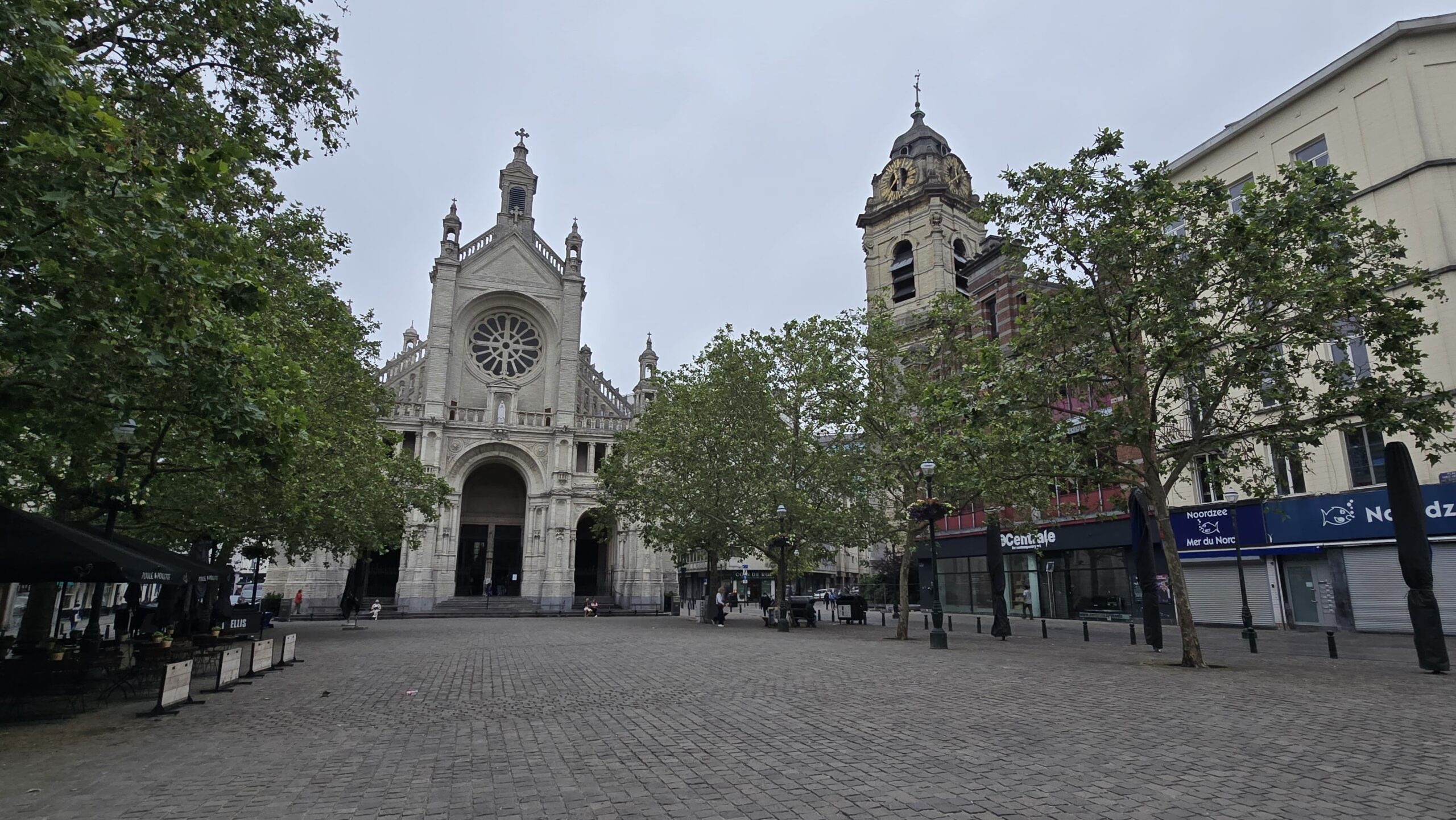
Place Saint Catherine recently. Credit: Handout/Instagram
View this post on Instagram
Going viral
Reinhard estimates that his recreations are more than 90% accurate because his contemporary photographs are always taken from the same position as the historical originals.
"Any inconsistencies generally stem from AI attempting to reconstruct architectural elements that have since been altered or demolished," he says.
Over the past month, his short videos have amassed 3.6 million views and gone viral, attracting attention from France, the Netherlands, Morocco and the United States.
The growing popularity of his videos has brought him unexpected attention. He says people have started recognising him in public, including a café worker in Ghent who recently offered him a free coffee after recognising him from social media.
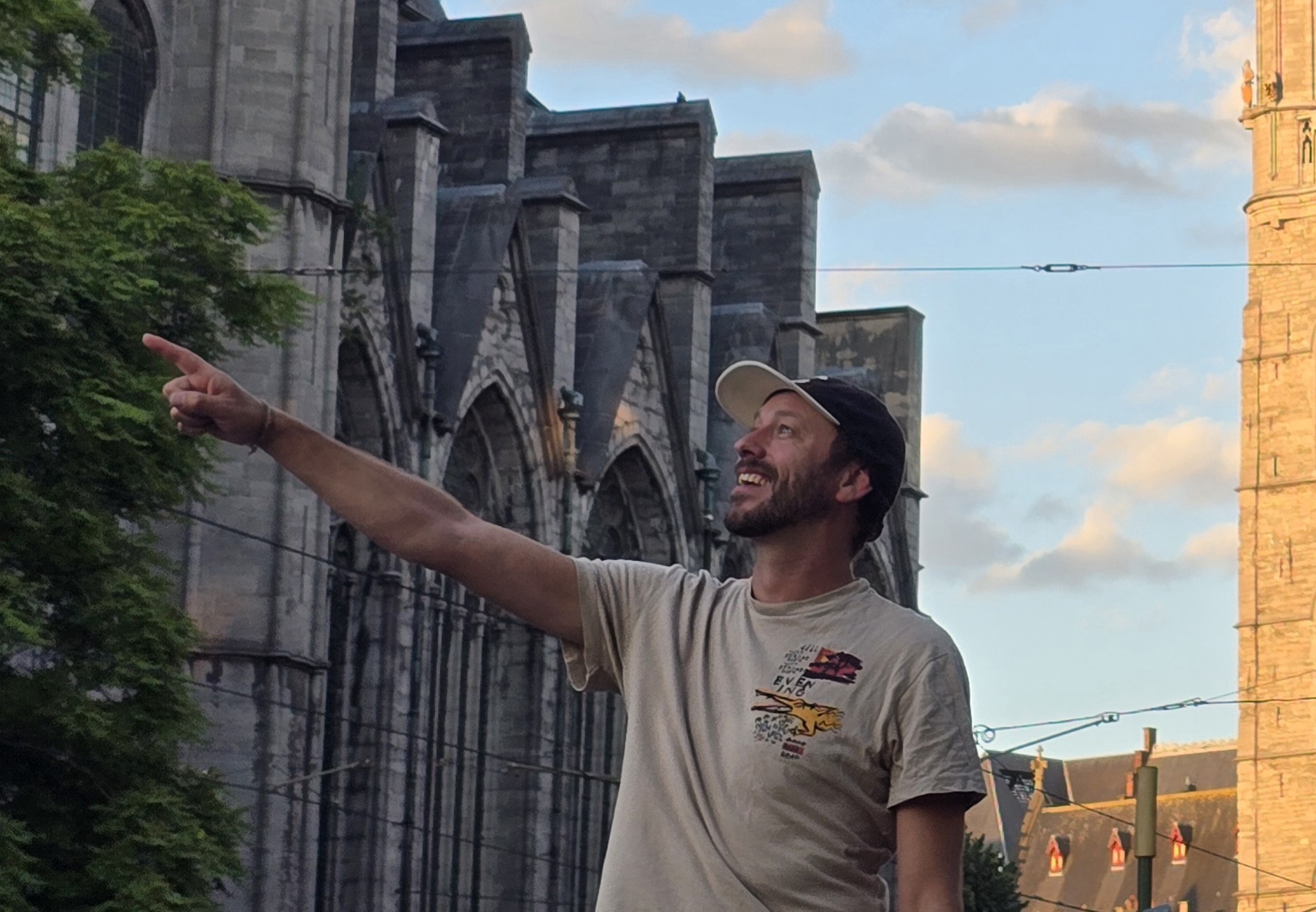
"Every time I go to Brussels, I discover something new." Credit: Handout by Reinhard to The Brussels Times.
Relying on artificial intelligence as an art teacher might be seen as dishonest or subversive. "I think people should see AI as a tool," he says. "There always needs to be a human story behind it, and it is felt."
He thinks that students should remain critical of AI, but be aware that it can also help them. "It's good to be sceptical," he said. "But don't be afraid of it."
The project is also expanding beyond Belgium. Reinhard plans to spend several weeks travelling through Colombia and Ecuador later this year and hopes to apply the same approach to cities in Latin America, provided he can find enough historical photographs to work with.
